Supreme Court Allows States to Close FIRs Against Student Protesters
Student protesters get relief, States can close FIRs, Supreme Court limits 'criminal antecedents' to grave offences
'%3E%3Crect%20width%3D'96'%20height%3D'96'%20fill%3D'%231A5276'%2F%3E%3Ccircle%20cx%3D'30'%20cy%3D'24'%20r%3D'44'%20fill%3D'%23fff'%20opacity%3D'.12'%2F%3E%3Ccircle%20cx%3D'60'%20cy%3D'74'%20r%3D'40'%20fill%3D'%23000'%20opacity%3D'.10'%2F%3E%3C%2Fg%3E%3Cg%20fill%3D'%23fff'%3E%3Cpath%20d%3D'M31%2041%20L48%2031%20L65%2041%20Z'%2F%3E%3Crect%20x%3D'33'%20y%3D'43'%20width%3D'4'%20height%3D'17'%2F%3E%3Crect%20x%3D'41'%20y%3D'43'%20width%3D'4'%20height%3D'17'%2F%3E%3Crect%20x%3D'51'%20y%3D'43'%20width%3D'4'%20height%3D'17'%2F%3E%3Crect%20x%3D'59'%20y%3D'43'%20width%3D'4'%20height%3D'17'%2F%3E%3Crect%20x%3D'30'%20y%3D'62'%20width%3D'36'%20height%3D'4'%20rx%3D'1'%2F%3E%3C%2Fg%3E%3C%2Fsvg%3E)
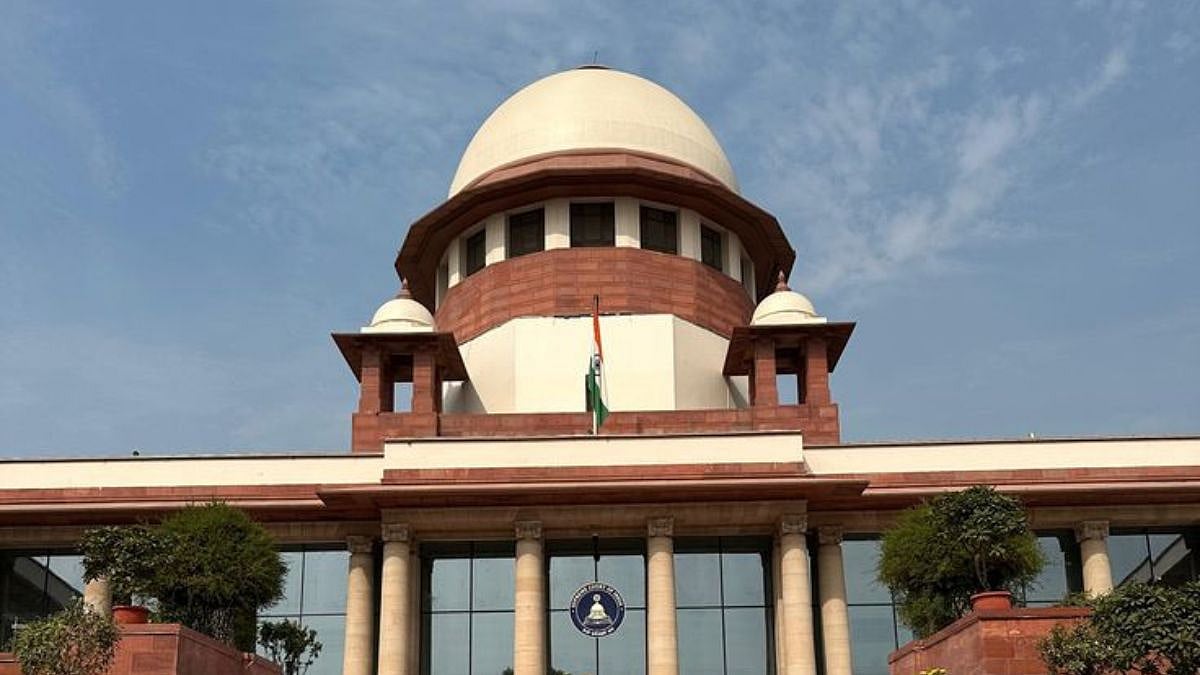
The Supreme Court clarified on August 3 that Delhi and other states can close or withdraw first information reports (FIRs) against students involved in recent protests, excluding those with grave and heinous criminal antecedents.
A Bench comprising Chief Justice of India Surya Kant and Justices Joymalya Bagchi and V Mohana provided the clarification after petitioners argued that the earlier direction could create hurdles in withdrawing cases against students.
The Court said the expression 'criminal antecedents' used in its July 28 order should be read as referring to 'grave and heinous offences', rather than petty offences or minor violations.
This clarification is significant because the July 28 order had allowed investigations into FIRs to continue while protecting students without criminal antecedents from coercive action.
Petitioners told the Court that the broad expression could be used to deny protection even to students facing cases involving minor offences, such as driving violations or earlier protests.
Senior Advocate Abhishek Manu Singhvi sought clarification of the expression, saying its ambiguity could cause harassment to students with petty cases against them.
The Court's clarification draws a clearer distinction between students facing minor cases and people with serious criminal records.
It also addresses concerns that a broadly worded exception could dilute the protection granted to protesters.
Solicitor General of India Tushar Mehta told the Court that the government was serious about its commitment to address cases against student protesters, but there was some confusion over the legal process because criminal law does not provide for simply 'withdrawing' an FIR.
He said options included filing closure reports, seeking withdrawal of prosecution or approaching courts for quashing of cases.
The government's commitment to address cases against student protesters is a significant development in the ongoing protests.
The Supreme Court's clarification provides relief to students facing petty cases, while also ensuring that those with serious criminal records are not protected.
This decision is likely to have a significant impact on the ongoing protests and the treatment of student protesters by the government.
In conclusion, the Supreme Court's clarification is a welcome development for student protesters, and it is likely to have a positive impact on the ongoing protests.
The government's commitment to address cases against student protesters is also a significant step forward, and it is likely to help reduce tensions between the government and the protesters.
Overall, the Supreme Court's decision is a significant development in the ongoing protests, and it is likely to have a lasting impact on the treatment of student protesters in India.
Frequently asked questions
Can states close FIRs against student protesters?
Yes, the Supreme Court has clarified that states can close or withdraw FIRs against student protesters, excluding those with grave and heinous criminal antecedents.
What does the Supreme Court's clarification mean for student protesters?
The clarification provides relief to students facing petty cases, while also ensuring that those with serious criminal records are not protected.