Iran-GCC Talks On Strait Of Hormuz Postponed
Tensions escalate in West Asia, oil prices rise amid postponed talks
'%3E%3Crect%20width%3D'96'%20height%3D'96'%20fill%3D'%234A235A'%2F%3E%3Ccircle%20cx%3D'30'%20cy%3D'24'%20r%3D'44'%20fill%3D'%23fff'%20opacity%3D'.12'%2F%3E%3Ccircle%20cx%3D'60'%20cy%3D'74'%20r%3D'40'%20fill%3D'%23000'%20opacity%3D'.10'%2F%3E%3C%2Fg%3E%3Cg%20fill%3D'none'%20stroke%3D'%23fff'%20stroke-width%3D'3'%3E%3Ccircle%20cx%3D'48'%20cy%3D'48'%20r%3D'16'%2F%3E%3Cellipse%20cx%3D'48'%20cy%3D'48'%20rx%3D'6.5'%20ry%3D'16'%2F%3E%3Cline%20x1%3D'32'%20y1%3D'42'%20x2%3D'64'%20y2%3D'42'%2F%3E%3Cline%20x1%3D'32'%20y1%3D'54'%20x2%3D'64'%20y2%3D'54'%2F%3E%3C%2Fg%3E%3C%2Fsvg%3E)
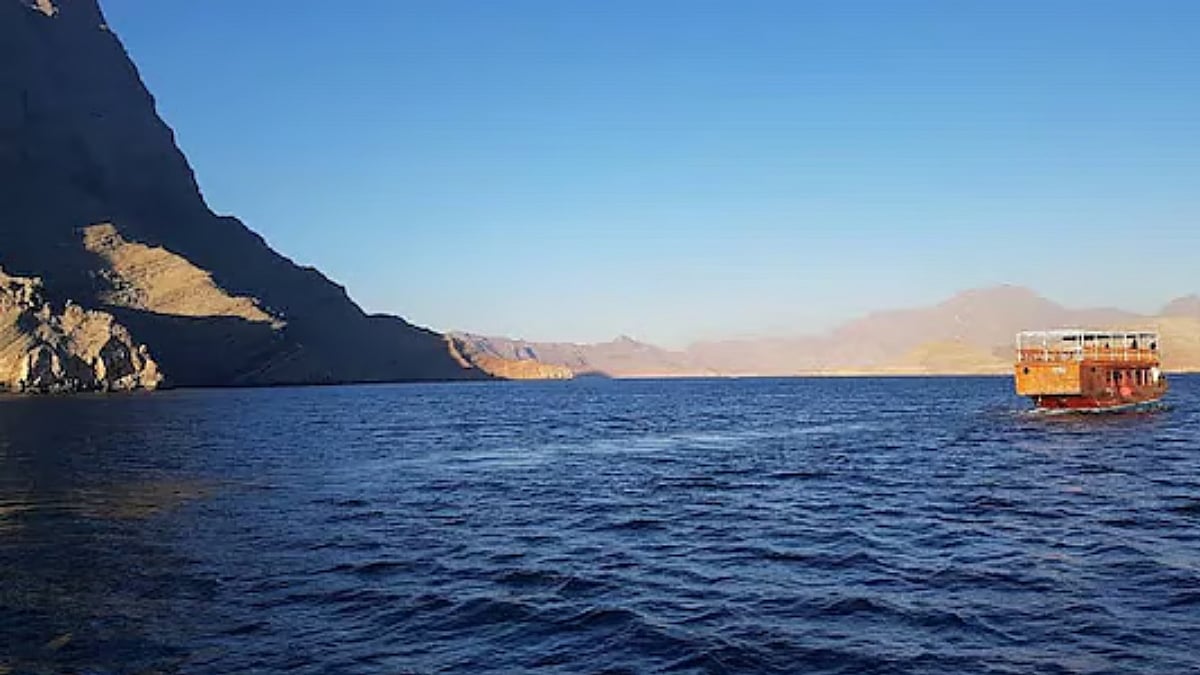
A key meeting between Iran and Gulf countries to discuss arrangements for commercial shipping through the Strait of Hormuz has been postponed. The meeting, which was scheduled to take place in Salalah, Oman, was aimed at exploring a plan to reopen the strategic waterway.
The postponement was announced by Oman's Foreign Minister Badr bin Hamad Al Busaidi, who stated that the meeting had been deferred 'in the interest of consensus'. He reiterated Oman's commitment to dialogue, regional stability, and long-term cooperation.
According to Iranian state-affiliated media, the meeting was postponed at the request of some regional countries, with the decision jointly taken by Iran and Oman. Tehran had earlier said it reached an understanding with Oman on establishing a new maritime route through the strait.
The postponement comes amid escalating tensions in West Asia, which have led to mounting pressure on two of the world's key shipping corridors, the Strait of Hormuz and the Red Sea. The developments have also fuelled fresh concerns over global energy supplies, with oil prices climbing again on Monday.
Brent crude futures traded above $107 a barrel, while West Texas Intermediate (WTI) rose above $102. The increase in oil prices is a result of the uncertainty surrounding the Strait of Hormuz, which is a vital waterway for international shipping.
The Strait of Hormuz is a strategic waterway that connects the Persian Gulf to the Gulf of Oman and the Arabian Sea. It is a critical route for oil tankers and other ships, with approximately 20% of the world's oil passing through it.
The tensions in West Asia have been escalating in recent months, with several incidents involving ships and oil tankers in the region. The situation has been further complicated by the presence of various regional and international players, including the United States, China, and the European Union.
The postponement of the Iran-GCC talks is a setback for diplomatic efforts to ease the disruption to shipping through the Strait of Hormuz. However, Oman's commitment to dialogue and regional stability is a positive sign, and it is hoped that the talks will resume soon.
In the meantime, the international community will be closely watching the situation in West Asia, which has significant implications for global energy supplies and the economy. The uncertainty surrounding the Strait of Hormuz is likely to continue, and it remains to be seen how the situation will unfold in the coming days and weeks.
The escalation of tensions in West Asia is a complex issue, involving multiple regional and international players. The situation is further complicated by the presence of various economic and strategic interests, including oil and gas reserves, shipping lanes, and military bases.
As the situation continues to unfold, it is likely that the international community will be called upon to play a more active role in resolving the crisis. The United Nations and other international organizations may be involved in efforts to ease the tensions and promote dialogue between the various parties involved.
In conclusion, the postponement of the Iran-GCC talks on the Strait of Hormuz is a significant development in the escalating tensions in West Asia. The situation has significant implications for global energy supplies and the economy, and it remains to be seen how the situation will unfold in the coming days and weeks.
The international community will be closely watching the situation, and it is hoped that diplomatic efforts will soon resume to ease the disruption to shipping through the Strait of Hormuz. The commitment of Oman and other regional players to dialogue and regional stability is a positive sign, and it is likely that the situation will be resolved through a combination of diplomatic and economic efforts.
Frequently asked questions
What is the Strait of Hormuz and why is it important?
The Strait of Hormuz is a vital waterway that connects the Persian Gulf to the Gulf of Oman and the Arabian Sea, with approximately 20% of the world's oil passing through it.
Why were the Iran-GCC talks postponed?
The talks were postponed 'in the interest of consensus', according to Oman's Foreign Minister Badr bin Hamad Al Busaidi, with the decision jointly taken by Iran and Oman.