China Holds 1.4 Billion Barrels of Oil
China's oil reserves surpass US, India warned to prepare for price impact.
'%3E%3Crect%20width%3D'96'%20height%3D'96'%20fill%3D'%234A235A'%2F%3E%3Ccircle%20cx%3D'30'%20cy%3D'24'%20r%3D'44'%20fill%3D'%23fff'%20opacity%3D'.12'%2F%3E%3Ccircle%20cx%3D'60'%20cy%3D'74'%20r%3D'40'%20fill%3D'%23000'%20opacity%3D'.10'%2F%3E%3C%2Fg%3E%3Cg%20fill%3D'none'%20stroke%3D'%23fff'%20stroke-width%3D'3'%3E%3Ccircle%20cx%3D'48'%20cy%3D'48'%20r%3D'16'%2F%3E%3Cellipse%20cx%3D'48'%20cy%3D'48'%20rx%3D'6.5'%20ry%3D'16'%2F%3E%3Cline%20x1%3D'32'%20y1%3D'42'%20x2%3D'64'%20y2%3D'42'%2F%3E%3Cline%20x1%3D'32'%20y1%3D'54'%20x2%3D'64'%20y2%3D'54'%2F%3E%3C%2Fg%3E%3C%2Fsvg%3E)
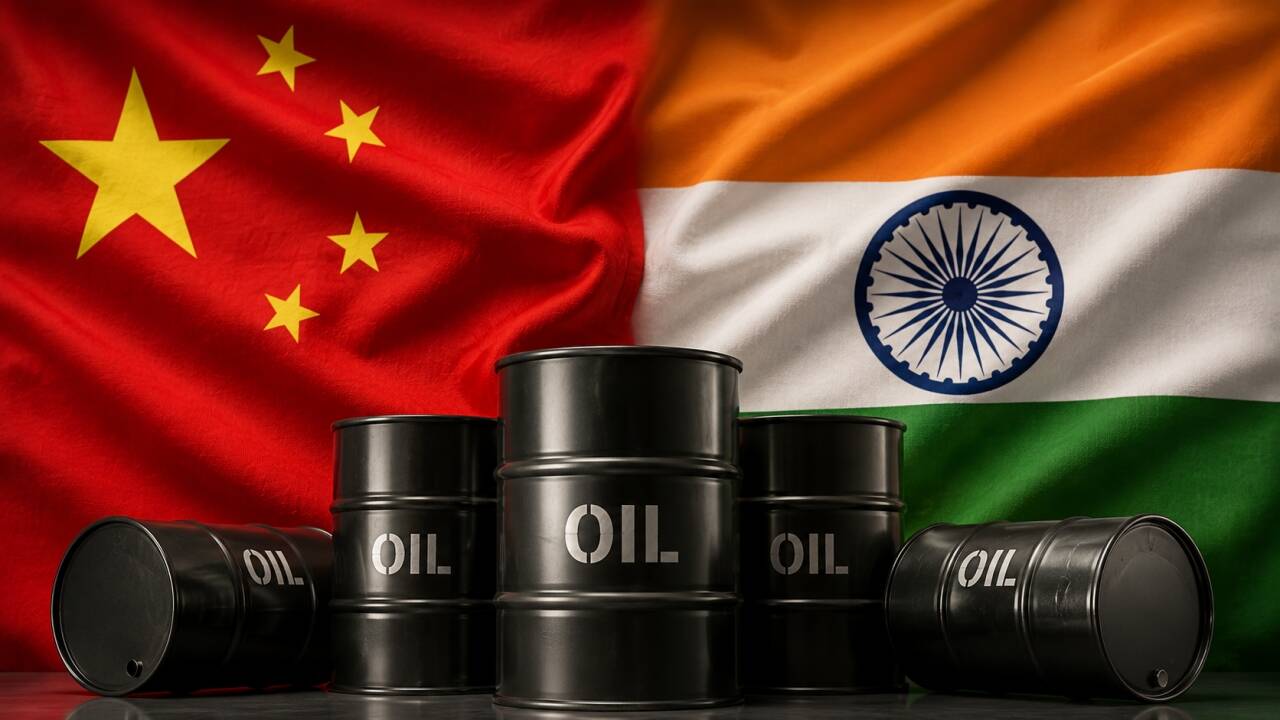
China has accumulated a massive 1.4 billion barrels of oil in its strategic and enterprise-controlled inventories, according to a recent study by RAND. This staggering amount exceeds the US government's Strategic Petroleum Reserve, which holds approximately 413 million barrels, by more than three times.
The study highlights the significant oil reserves China has built up, giving it considerable influence over global oil prices. With such a large stockpile, China has the potential to impact the global oil market, potentially driving prices up or down depending on its actions.
India, as a major oil-importing country, is particularly vulnerable to fluctuations in global oil prices. The country relies heavily on imported oil to meet its energy demands, making it essential for India to prepare for potential price shocks driven by China's oil reserves.
China's strategic oil reserves are a result of its efforts to secure energy supplies and reduce its dependence on foreign oil. The country has been actively building up its reserves over the years, taking advantage of low oil prices to stock up on crude.
The RAND study notes that China's oil reserves are not only a strategic asset but also a potential tool for the country to exert its influence on the global energy market. With its massive reserves, China can potentially impact oil prices, affecting the economies of other countries, including India.
India must take steps to mitigate the potential impact of China-driven oil price fluctuations. This could include diversifying its energy sources, increasing domestic oil production, and implementing policies to reduce its dependence on imported oil.
The Indian government has already taken some steps to address the issue, including investing in renewable energy sources and promoting energy efficiency. However, more needs to be done to prepare the country for potential oil price shocks.
In conclusion, China's massive oil reserves pose a significant challenge for India, and the country must take proactive steps to mitigate the potential impact of China-driven oil price fluctuations. By diversifying its energy sources and reducing its dependence on imported oil, India can reduce its vulnerability to global oil price shocks and ensure a more stable energy future.
The global oil market is complex and influenced by a variety of factors, including geopolitical tensions, supply and demand, and weather events. However, with China's massive oil reserves, the country has gained significant influence over the market, and its actions can have far-reaching consequences for other countries, including India.
As the global energy landscape continues to evolve, India must remain vigilant and take proactive steps to secure its energy future. This includes monitoring China's oil reserves and taking steps to reduce its dependence on imported oil, as well as promoting energy efficiency and investing in renewable energy sources.
In the long term, India's energy security will depend on its ability to diversify its energy sources and reduce its dependence on imported oil. The country must continue to invest in renewable energy sources, promote energy efficiency, and implement policies to reduce its vulnerability to global oil price shocks.
Overall, China's billion-barrel oil reserves are a significant development that India must take seriously. By taking proactive steps to mitigate the potential impact of China-driven oil price fluctuations, India can reduce its vulnerability to global oil price shocks and ensure a more stable energy future.
Frequently asked questions
How much oil does China have in its reserves?
China has accumulated as much as 1.4 billion barrels of oil in its strategic and enterprise-controlled inventories.
Why is India concerned about China's oil reserves?
India is concerned because it relies heavily on imported oil and is vulnerable to fluctuations in global oil prices, which could be driven by China's actions.