Iran Separates Oman Talks From Strait Of Hormuz Reopening
Iran's foreign minister says Oman talks are separate from Strait of Hormuz reopening. US must meet conditions for reopening.
'%3E%3Crect%20width%3D'96'%20height%3D'96'%20fill%3D'%234A235A'%2F%3E%3Ccircle%20cx%3D'30'%20cy%3D'24'%20r%3D'44'%20fill%3D'%23fff'%20opacity%3D'.12'%2F%3E%3Ccircle%20cx%3D'60'%20cy%3D'74'%20r%3D'40'%20fill%3D'%23000'%20opacity%3D'.10'%2F%3E%3C%2Fg%3E%3Cg%20fill%3D'none'%20stroke%3D'%23fff'%20stroke-width%3D'3'%3E%3Ccircle%20cx%3D'48'%20cy%3D'48'%20r%3D'16'%2F%3E%3Cellipse%20cx%3D'48'%20cy%3D'48'%20rx%3D'6.5'%20ry%3D'16'%2F%3E%3Cline%20x1%3D'32'%20y1%3D'42'%20x2%3D'64'%20y2%3D'42'%2F%3E%3Cline%20x1%3D'32'%20y1%3D'54'%20x2%3D'64'%20y2%3D'54'%2F%3E%3C%2Fg%3E%3C%2Fsvg%3E)
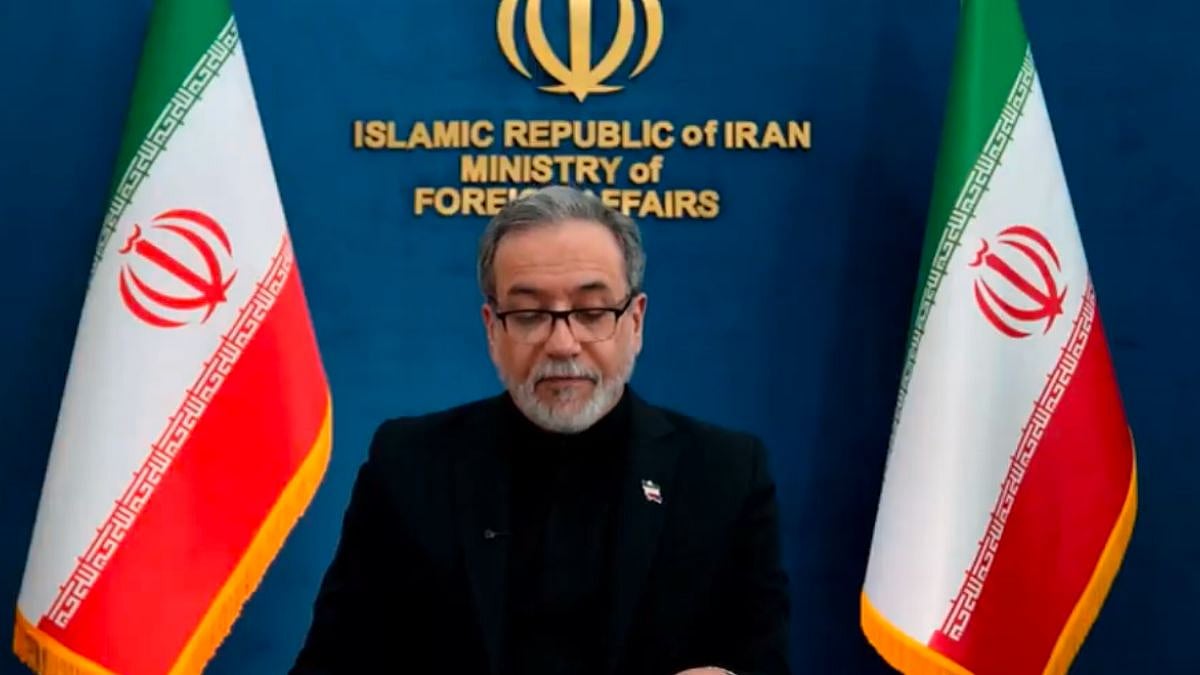
Iran's Foreign Minister Abbas Araghchi has stated that the country's ongoing negotiations with Oman are completely separate from the reopening of the Strait of Hormuz. The talks with Oman are focused on establishing new maritime routes for ships, as the previous routes are no longer operational.
Araghchi told Shahrara News that the negotiations with Oman are a technical issue concerning the designation of maritime routes in the Strait of Hormuz for the passage of ships. He added that Iran and Oman are working on a temporary navigation route that could eventually become permanent.
The Iranian foreign minister indicated that the negotiations could yield an agreement soon, but stressed that establishing the maritime route would not automatically mean the Strait of Hormuz would reopen. He emphasized that the reopening of the Strait depends on the US meeting certain conditions.
Once the route is finalized, the resumption of shipping through the strategic waterway will depend on the fulfillment of other conditions to which the United States must adhere. Araghchi's comments come after Iranian Deputy Foreign Minister Kazem Gharibabadi rejected US President Donald Trump's remarks that he would declare the Strait of Hormuz a territory of the United States after defeating Iran.
Gharibabadi said the strategic waterway cannot be seized by tweet or military force, and that Iran neither fears threats nor cowers before displays of power. He asserted that the Strait of Hormuz has been Iranian, is Iranian, and will remain Iranian.
The Strait of Hormuz is a critical waterway for international shipping, and its closure has significant implications for global trade. The US and Iran have been engaged in a standoff over the Strait, with the US seeking to ensure the safe passage of ships and Iran seeking to exert its control over the waterway.
The ongoing negotiations between Iran and Oman are an attempt to find a solution to the impasse, but the US must meet certain conditions for the Strait to be reopened. The situation remains tense, with both sides dug in and refusing to back down.
The Iranian parliament's National Security Commission has also warned the US against taking any action that could escalate the situation. Ebrahim Azizi, the head of the commission, warned Trump against US threats, saying that Iran will continue to enforce the blockade until the US accepts the reality of defeat.
The standoff over the Strait of Hormuz has significant implications for global trade and security. The US and Iran must find a way to resolve their differences and ensure the safe passage of ships through the strategic waterway.
In conclusion, the situation over the Strait of Hormuz remains complex and tense. Iran's negotiations with Oman are separate from the reopening of the Strait, and the US must meet certain conditions for the waterway to be reopened. The standoff has significant implications for global trade and security, and a resolution is urgently needed.
Frequently asked questions
What is the current status of the Strait of Hormuz?
The Strait of Hormuz is currently closed, and its reopening depends on the US meeting certain conditions.
What are the implications of the Strait of Hormuz closure?
The closure of the Strait of Hormuz has significant implications for global trade and security.