Govt Introduces Public Examinations Amendment Bill In Lok Sabha
Bill aims to strengthen provisions against unfair means in public exams
'%3E%3Crect%20width%3D'96'%20height%3D'96'%20fill%3D'%231A5276'%2F%3E%3Ccircle%20cx%3D'30'%20cy%3D'24'%20r%3D'44'%20fill%3D'%23fff'%20opacity%3D'.12'%2F%3E%3Ccircle%20cx%3D'60'%20cy%3D'74'%20r%3D'40'%20fill%3D'%23000'%20opacity%3D'.10'%2F%3E%3C%2Fg%3E%3Cg%20fill%3D'%23fff'%3E%3Cpath%20d%3D'M31%2041%20L48%2031%20L65%2041%20Z'%2F%3E%3Crect%20x%3D'33'%20y%3D'43'%20width%3D'4'%20height%3D'17'%2F%3E%3Crect%20x%3D'41'%20y%3D'43'%20width%3D'4'%20height%3D'17'%2F%3E%3Crect%20x%3D'51'%20y%3D'43'%20width%3D'4'%20height%3D'17'%2F%3E%3Crect%20x%3D'59'%20y%3D'43'%20width%3D'4'%20height%3D'17'%2F%3E%3Crect%20x%3D'30'%20y%3D'62'%20width%3D'36'%20height%3D'4'%20rx%3D'1'%2F%3E%3C%2Fg%3E%3C%2Fsvg%3E)
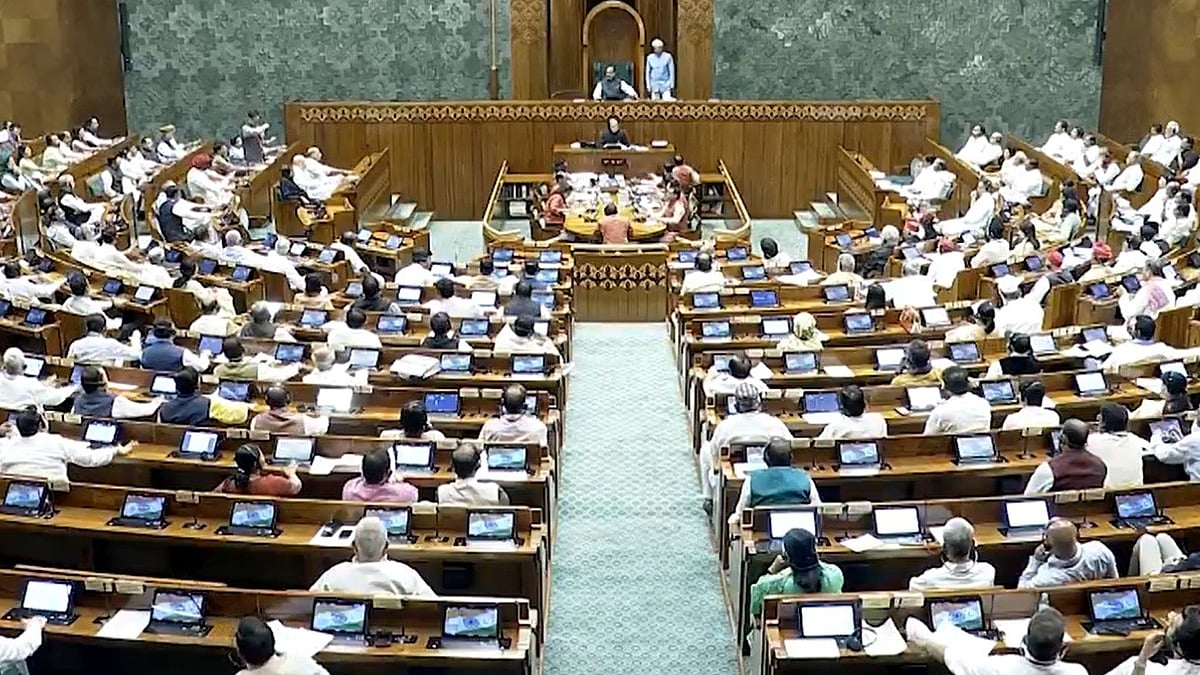
The Public Examinations (Prevention of Unfair Means) Amendment Bill, 2026, was introduced in the Lok Sabha on Monday. Minister of State for DoPT Jitendra Singh moved the Bill in the House. The discussion on the Bill is expected to be held for four hours.
The Bill aims to strengthen provisions against unfair means in public examinations. The Central government has proposed seven key amendments to the Public Examinations (Prevention of Unfair Means) Act, 2024. These amendments are aimed at strengthening the anti-paper leak law through time-bound investigations, fast-track trials, enhanced punishments, and a stronger enforcement framework.
Several young MPs from the NDA are expected to speak on the Bill, including Bansuri Swaraj and Tejasvi Surya from the BJP. Other MPs who are expected to participate in the discussion include JDU's Alok Kumar Suman, TDP's Lavu Sri Krishna Devarayalu, and Shiv Sena's Shrikant Shinde.
The proposed amendments empower State Governments and Union Territory Administrations to designate any Court of Session as a Special Fast Track Court to try offences under the Act. The proceedings in such courts will be conducted on a day-to-day basis, and trials will be completed within three months from the date of filing of the chargesheet.
The Centre has also proposed empowering the Central Government to constitute a Special Task Force (STF) to investigate offences under the Act whenever required. To ensure speedy investigations, the Bill proposes that probes into offences under the Act be completed within two months.
Another amendment empowers State Governments and Union Territory Administrations to appoint one or more Special Public Prosecutors for conducting cases under the Act. The proposed legislation also seeks to enhance the terms of imprisonment and fines for offences committed under the Act.
The Bill provides for an appeal mechanism under which appeals against any order or judgment of the Special Fast Track Court can be made. This amendment is expected to strengthen the provisions against unfair means in public examinations.
The introduction of the Bill is a significant step towards reforming the examination system in India. The government has also announced a high-powered task force led by Nandan Nilekani to reform the examination system.
The proposed amendments are expected to have a significant impact on the education system in India. The government's efforts to strengthen the provisions against unfair means in public examinations are likely to be welcomed by students and educators alike.
In conclusion, the introduction of the Public Examinations (Prevention of Unfair Means) Amendment Bill, 2026, is a significant step towards reforming the examination system in India. The proposed amendments are expected to strengthen the provisions against unfair means in public examinations and ensure a fair and transparent examination process.
Frequently asked questions
What is the purpose of the Public Examinations Amendment Bill?
The Bill aims to strengthen provisions against unfair means in public examinations.
Who will move the Bill in the Lok Sabha?
Minister of State for DoPT Jitendra Singh will move the Bill.