Centre Proposes Ban on Carbosulfan Insecticide
Carbosulfan ban proposed due to health risks, agrochemical industry opposes
'%3E%3Crect%20width%3D'96'%20height%3D'96'%20fill%3D'%230B6E4F'%2F%3E%3Ccircle%20cx%3D'30'%20cy%3D'24'%20r%3D'44'%20fill%3D'%23fff'%20opacity%3D'.12'%2F%3E%3Ccircle%20cx%3D'60'%20cy%3D'74'%20r%3D'40'%20fill%3D'%23000'%20opacity%3D'.10'%2F%3E%3C%2Fg%3E%3Cg%20fill%3D'none'%20stroke%3D'%23fff'%20stroke-width%3D'3.2'%20stroke-linecap%3D'round'%20stroke-linejoin%3D'round'%3E%3Cpolyline%20points%3D'31%2C59%2041%2C49%2049%2C54%2063%2C37'%2F%3E%3Cpolyline%20points%3D'55%2C37%2063%2C37%2063%2C45'%2F%3E%3C%2Fg%3E%3C%2Fsvg%3E)
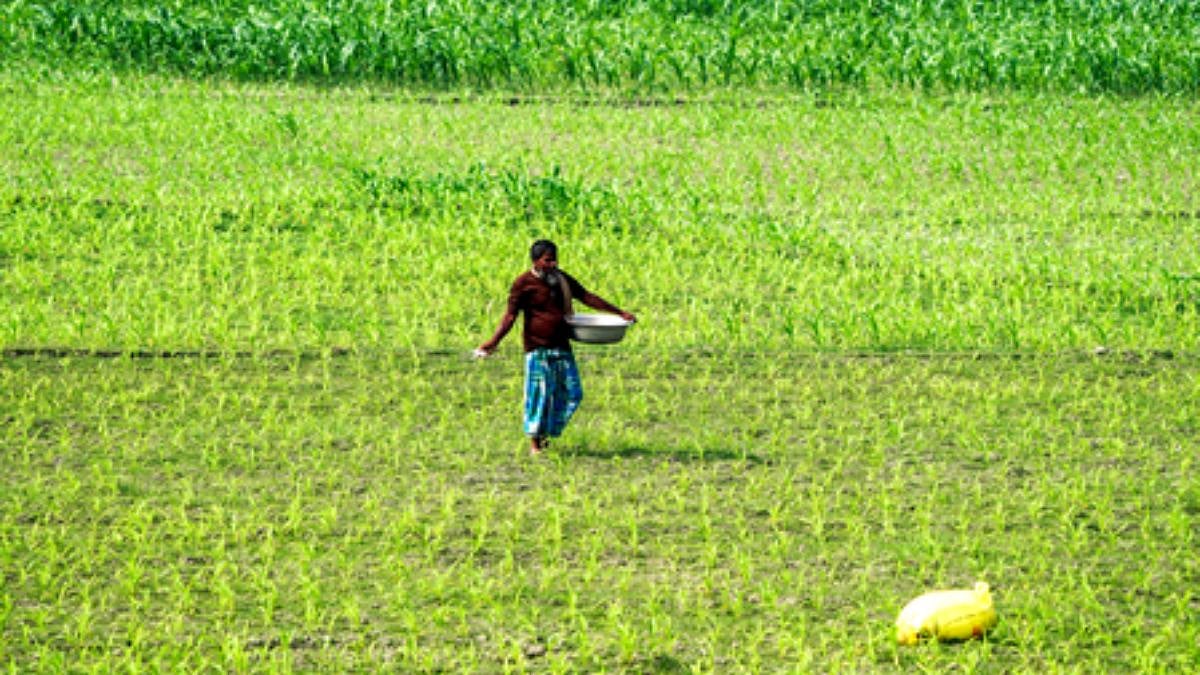
The Ministry of Agriculture has proposed a complete ban on carbosulfan, a widely used agricultural insecticide, due to concerns over its potential risks to human and animal health and the environment.
The proposal was made after an expert committee, set up in January 2026, submitted its report on June 12, recommending an immediate prohibition on the manufacture, import, transport, distribution, sale and use of carbosulfan under the Insecticides Act, 1968.
The committee classified carbosulfan as a highly hazardous carbamate insecticide that is rapidly converted into carbofuran, a toxic metabolite associated with severe cholinesterase inhibition and acute systemic toxicity.
The panel also highlighted risks to birds, pollinators, aquatic organisms and other non-target species, noting that while atropine and supportive treatment can be used to manage poisoning symptoms, there is no specific antidote capable of reversing carbosulfan toxicity.
The proposed prohibition would cover the chemical’s use across crops including rice, cotton, chilli, brinjal and cumin, with the domestic market for carbosulfan-based products estimated at around Rs 250-400 crore annually.
The draft order will be open for public comments for 30 days before the government takes a final decision.
The agrochemical industry has raised concerns over the proposal, arguing that carbosulfan remains an important tool for controlling a broad range of pests, including stem borers, sucking pests, leaf feeders and soil pests.
Industry representatives pointed to its relatively low cost and role in resistance-management programmes, with the Agro Chem Federation of India (ACFI) estimating that carbosulfan supports pest management across nearly 32 lakh acres and represents a domestic market estimated at about Rs 400 crore.
The industry has urged the government to reconsider the proposal through a science-based assessment focused on regulated and responsible use rather than an outright prohibition.
The proposed ban on carbosulfan is significant, as it could impact the agricultural sector and farmers who rely on the chemical for pest control.
The government's decision will be closely watched, as it balances the need to protect human and animal health and the environment with the need to support the agricultural sector and ensure food security.
In conclusion, the proposed ban on carbosulfan highlights the ongoing debate over the use of agrochemicals in India and the need for a balanced approach that takes into account both the benefits and risks of these chemicals.
Frequently asked questions
What is carbosulfan and why is it being banned?
Carbosulfan is a widely used agricultural insecticide that is being proposed for ban due to concerns over its potential risks to human and animal health and the environment.
What is the estimated domestic market for carbosulfan-based products?
The estimated domestic market for carbosulfan-based products is around Rs 250-400 crore annually.