Sierra Nevada Ponds See 20°C Daily Temperature Swings
California's mountain ponds experience extreme temperature fluctuations. Climate change affects these ecosystems.
'%3E%3Crect%20width%3D'96'%20height%3D'96'%20fill%3D'%23B3261E'%2F%3E%3Ccircle%20cx%3D'30'%20cy%3D'24'%20r%3D'44'%20fill%3D'%23fff'%20opacity%3D'.12'%2F%3E%3Ccircle%20cx%3D'60'%20cy%3D'74'%20r%3D'40'%20fill%3D'%23000'%20opacity%3D'.10'%2F%3E%3C%2Fg%3E%3Cg%20fill%3D'%23fff'%3E%3Crect%20x%3D'29'%20y%3D'49'%20width%3D'8'%20height%3D'19'%20rx%3D'1'%2F%3E%3Crect%20x%3D'39'%20y%3D'40'%20width%3D'9'%20height%3D'28'%20rx%3D'1'%2F%3E%3Crect%20x%3D'50'%20y%3D'45'%20width%3D'8'%20height%3D'23'%20rx%3D'1'%2F%3E%3Crect%20x%3D'60'%20y%3D'53'%20width%3D'7'%20height%3D'15'%20rx%3D'1'%2F%3E%3Crect%20x%3D'41'%20y%3D'34'%20width%3D'5'%20height%3D'6'%2F%3E%3C%2Fg%3E%3C%2Fsvg%3E)
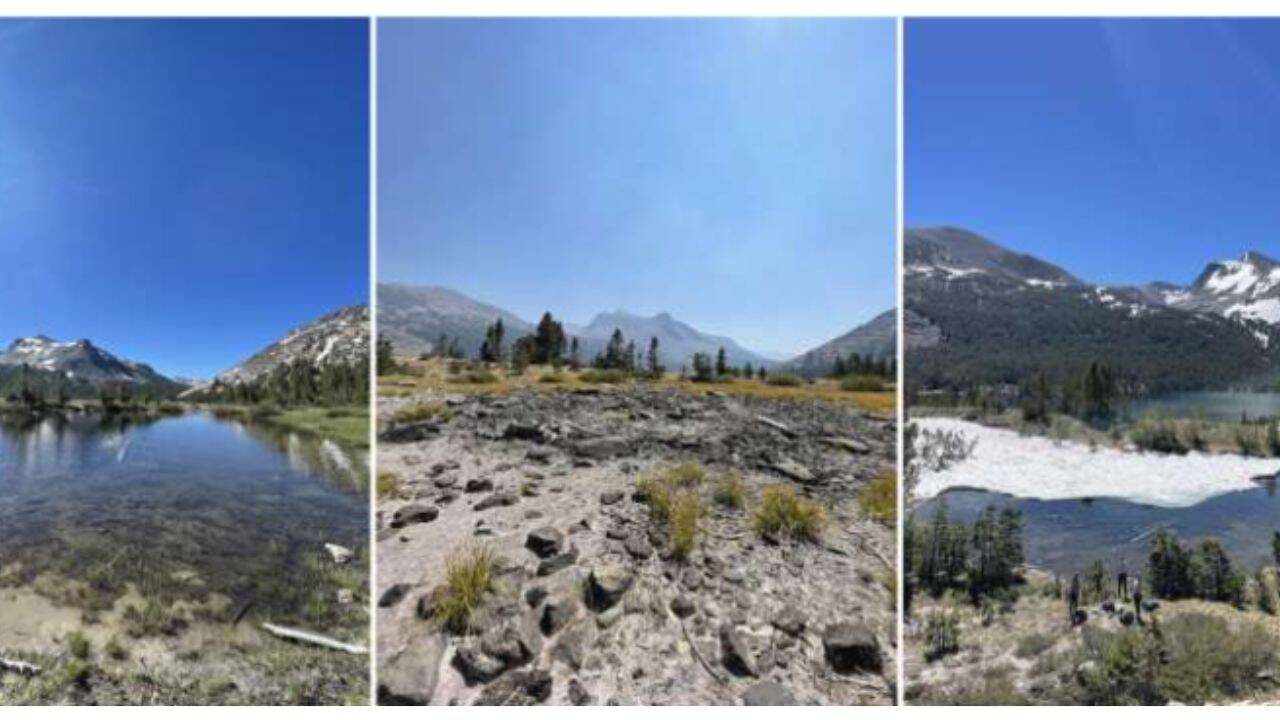
A recent study has revealed that mountain ponds in California's Sierra Nevada region exhibit significant daily temperature changes, with some ponds experiencing a 20°C swing in a single day.
These extreme temperature fluctuations are influenced by the winter snowpack, which has a profound impact on the size and water temperature of the ponds throughout the summer.
The study found that when snowfall is scarce, the ponds become warmer and smaller, with a higher concentration of nutrients. This is a concern, as climate change projections indicate that snowpack in the region will continue to decline, potentially disrupting the delicate ecosystems of these mountain ponds.
The Sierra Nevada mountain ponds play a crucial role in maintaining biodiversity and nutrient cycling in the region. They provide a habitat for a variety of plants and animals, and their unique characteristics make them an important area of study for scientists.
The impact of climate change on these ecosystems is a major concern, as reduced snowpack can lead to changes in the size, temperature, and nutrient levels of the ponds. This, in turn, can have a ripple effect on the entire ecosystem, potentially leading to the loss of certain species and disrupting the balance of the environment.
The study highlights the importance of continued research into the effects of climate change on mountain ecosystems, particularly in regions like the Sierra Nevada, where the impacts are already being felt.
By understanding the complex relationships between snowpack, temperature, and nutrient levels in these ponds, scientists can better predict the potential consequences of climate change and work to develop strategies for mitigating its effects.
In the context of global climate change, the study of Sierra Nevada mountain ponds serves as a reminder of the far-reaching impacts of rising temperatures and changing precipitation patterns on delicate ecosystems.
The findings of this study have significant implications for our understanding of the complex relationships between climate, water, and life in mountain ecosystems, and underscore the need for continued research and monitoring of these critical environments.
In conclusion, the Sierra Nevada mountain ponds are a unique and fascinating ecosystem that plays a vital role in maintaining biodiversity and nutrient cycling in the region. The study of these ponds and their response to climate change is essential for developing effective strategies for mitigating the impacts of a changing climate and preserving the delicate balance of these ecosystems.