IT Stocks Fall 2.5% After 5-Day Rally
IT stocks decline, Sensex and Nifty trade higher, AI trade volatility hits Asian markets
'%3E%3Crect%20width%3D'96'%20height%3D'96'%20fill%3D'%230B6E4F'%2F%3E%3Ccircle%20cx%3D'30'%20cy%3D'24'%20r%3D'44'%20fill%3D'%23fff'%20opacity%3D'.12'%2F%3E%3Ccircle%20cx%3D'60'%20cy%3D'74'%20r%3D'40'%20fill%3D'%23000'%20opacity%3D'.10'%2F%3E%3C%2Fg%3E%3Cg%20fill%3D'none'%20stroke%3D'%23fff'%20stroke-width%3D'3.2'%20stroke-linecap%3D'round'%20stroke-linejoin%3D'round'%3E%3Cpolyline%20points%3D'31%2C59%2041%2C49%2049%2C54%2063%2C37'%2F%3E%3Cpolyline%20points%3D'55%2C37%2063%2C37%2063%2C45'%2F%3E%3C%2Fg%3E%3C%2Fsvg%3E)

Indian IT stocks experienced a decline of 2.5% on July 31, following a strong five-day rally. This decline was largely due to volatility in the global artificial intelligence trade, which affected the sector's performance. Despite this, the IT index remains on track for its biggest monthly gain in six years, having risen around 16% in July.
The decline in IT stocks was led by major companies such as Infosys and Tata Consultancy Services, which fell nearly 3%. Other notable losers in the sectoral index included Persistent Systems, Wipro, and LTM. The broader technology rally globally was supported by Microsoft's strong earnings outlook, which helped revive investor confidence in technology stocks.
Microsoft shares jumped more than 15% on Wall Street after the company issued an optimistic forecast. This, in turn, led to significant gains in Asian markets, with investors increasing their exposure to semiconductor companies following strong earnings from major technology firms. The MSCI Asia Pacific Index rose as much as 4.3%, marking its second consecutive week of gains despite recent market fluctuations.
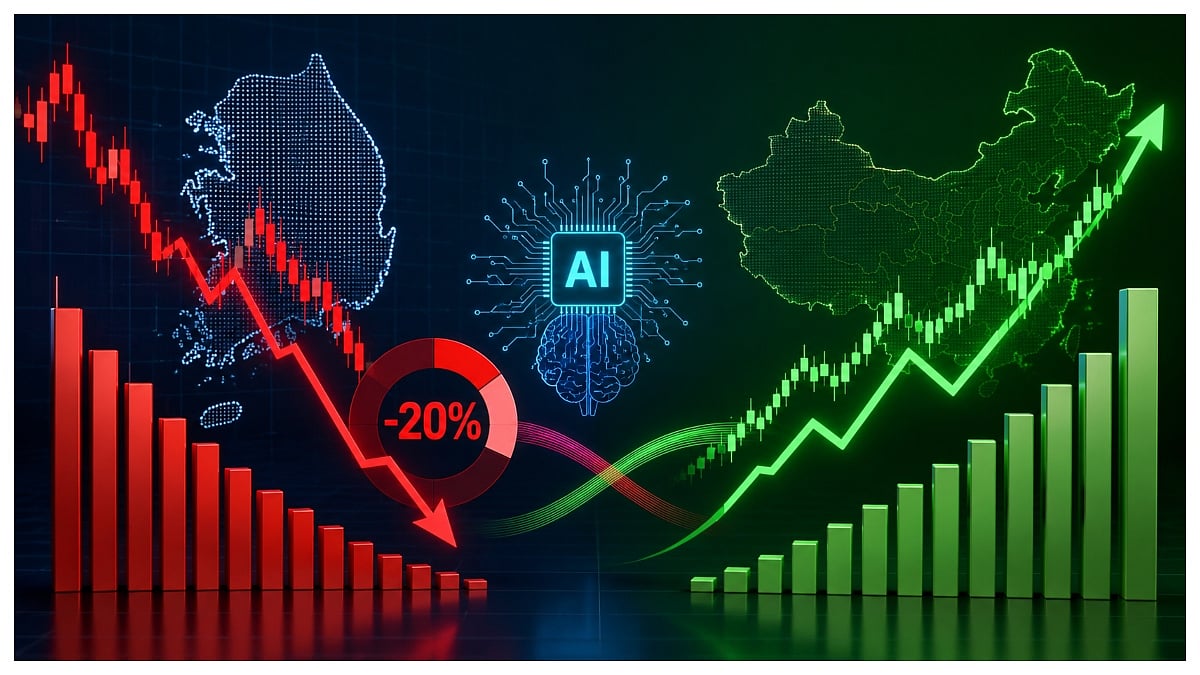
The rally in Asian markets was driven by major chipmakers such as Samsung Electronics and SK Hynix, with South Korea's Kospi surging as much as 17%. Taiwanese stocks also advanced more than 7% amid renewed optimism over artificial intelligence demand. The Philadelphia Semiconductor Index recorded its biggest gain in more than a year, further boosting expectations for continued growth in the sector.
Analysts believe that foreign institutional investors are seeking stability amid extreme volatility in global technology markets. India's IT sector is considered relatively less exposed to global AI-driven movements due to the limited presence of pure-play artificial intelligence companies in the domestic market. However, the sector's performance is still closely tied to global trends and investor sentiment.
The decline in IT stocks was offset by gains in financial stocks, which helped the Sensex and Nifty trade marginally higher. The Indian stock market's performance is closely watched by investors, and the IT sector's volatility is a key factor in determining the market's overall direction.
In conclusion, the decline in IT stocks on July 31 was a result of volatility in the global artificial intelligence trade, but the sector remains on track for its biggest monthly gain in six years. The performance of the IT sector will continue to be closely watched by investors, and its volatility will have a significant impact on the overall direction of the Indian stock market.
The Indian stock market's ability to weather the volatility in global technology markets will be crucial in determining its future performance. The IT sector's limited exposure to global AI-driven movements is a positive factor, but the sector's performance is still closely tied to global trends and investor sentiment. As the global technology market continues to evolve, the Indian IT sector will need to adapt to changing trends and investor expectations.
The significance of the IT sector's performance cannot be overstated, as it has a major impact on the overall direction of the Indian stock market. The sector's volatility will continue to be closely watched by investors, and its performance will be a key factor in determining the market's future direction.
Frequently asked questions
Why did IT stocks decline on July 31?
IT stocks declined due to volatility in the global artificial intelligence trade.
How did the Sensex and Nifty perform on July 31?
The Sensex and Nifty traded marginally higher, offset by gains in financial stocks.