ICC's New ODI World Cup Format Sparks Debate
ICC's revamped ODI World Cup format faces criticism from Associate nations and players.
'%3E%3Crect%20width%3D'96'%20height%3D'96'%20fill%3D'%231B5E20'%2F%3E%3Ccircle%20cx%3D'30'%20cy%3D'24'%20r%3D'44'%20fill%3D'%23fff'%20opacity%3D'.12'%2F%3E%3Ccircle%20cx%3D'60'%20cy%3D'74'%20r%3D'40'%20fill%3D'%23000'%20opacity%3D'.10'%2F%3E%3C%2Fg%3E%3Cg%3E%3Ccircle%20cx%3D'48'%20cy%3D'48'%20r%3D'15'%20fill%3D'%23fff'%2F%3E%3Cpath%20d%3D'M43%2034%20Q50%2048%2043%2062'%20fill%3D'none'%20stroke%3D'%238a94a6'%20stroke-width%3D'2.4'%2F%3E%3Cpath%20d%3D'M47%2033%20Q54%2048%2047%2063'%20fill%3D'none'%20stroke%3D'%238a94a6'%20stroke-width%3D'1.8'%20stroke-dasharray%3D'1.5%203'%2F%3E%3C%2Fg%3E%3C%2Fsvg%3E)
The International Cricket Council (ICC) has introduced a new format for the 2027 Men's ODI World Cup, which has sparked a global debate in the cricket community. The tournament will feature 14 teams, but the revised structure has been criticized by Associate nations and players.
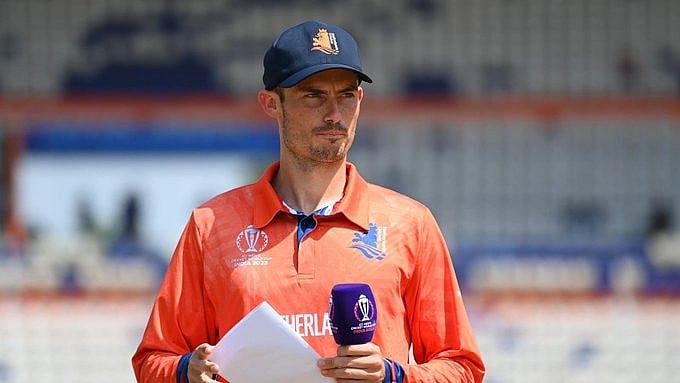
The new format will begin with a three-team round-robin 'Super Series' involving the lowest-ranked qualifiers. However, two teams will be eliminated after playing only two matches each, which has frustrated Associate nations seeking more opportunities to compete against Full Member teams. The decision has been termed a setback for developing cricket nations by Netherlands captain Scott Edwards.
Edwards stated that qualifying for the ODI World Cup is a major achievement for any country, and changes to the format after years of planning were disappointing. He added that fewer matches against top teams could affect the growth of cricket in emerging nations. The ICC's decision has also been questioned by Namibia captain Gerhard Erasmus, who wondered about the value of qualification if teams are given only two matches at the World Cup.
The World Cricketers' Association (WCA) has also criticized the ICC's decision-making process, claiming that players were not adequately consulted despite the impact of the changes on qualification pathways and careers. WCA chief executive Tom Moffat said that the ICC had the authority to decide the structure of global events, but stressed the importance of consulting stakeholders before introducing major changes.
The debate surrounding the new format has gained momentum on social media, with several international captains and players expressing their disappointment and frustration. The ICC's decision has been engineered to benefit broadcasters, but it has been criticized for reducing opportunities for emerging teams and failing to consult stakeholders.
The 2027 ODI World Cup is scheduled to take place in 2027, and the new format will be implemented for the first time. The tournament will feature 14 teams, including the 10 Full Member teams and 4 Associate nations. The ICC has stated that the new format is designed to improve the competitiveness of the tournament, but it has been criticized for reducing the number of matches played by Associate nations.
The growth of cricket in emerging nations is a key priority for the ICC, and the new format has been criticized for failing to provide adequate opportunities for these teams to compete against top teams. The ICC has been accused of prioritizing the interests of broadcasters over the development of the game in emerging nations.
In conclusion, the ICC's new ODI World Cup format has sparked a global debate in the cricket community, with Associate nations and players criticizing the decision for reducing opportunities for emerging teams and failing to consult stakeholders. The debate highlights the challenges faced by the ICC in balancing the interests of different stakeholders, including broadcasters, players, and emerging nations.
The significance of this debate extends beyond the cricket community, as it highlights the importance of consultation and inclusivity in decision-making processes. The ICC's decision has been criticized for prioritizing the interests of broadcasters over the development of the game in emerging nations, which could have long-term consequences for the growth of cricket globally.
As the cricket community continues to debate the merits of the new format, it is clear that the ICC faces a significant challenge in balancing the interests of different stakeholders. The outcome of this debate will have a significant impact on the future of cricket, particularly in emerging nations, and it remains to be seen how the ICC will respond to the criticism and concerns raised by the cricket community.