Navi Mumbai Citizens Form Human Chain To Save Green Spaces
Citizens to form human chain on Sept 12 to protect Navi Mumbai's green spaces. Initiative highlights link between ozone protection and urban climate resilience.
'%3E%3Crect%20width%3D'96'%20height%3D'96'%20fill%3D'%23B3261E'%2F%3E%3Ccircle%20cx%3D'30'%20cy%3D'24'%20r%3D'44'%20fill%3D'%23fff'%20opacity%3D'.12'%2F%3E%3Ccircle%20cx%3D'60'%20cy%3D'74'%20r%3D'40'%20fill%3D'%23000'%20opacity%3D'.10'%2F%3E%3C%2Fg%3E%3Cg%20fill%3D'%23fff'%3E%3Crect%20x%3D'29'%20y%3D'49'%20width%3D'8'%20height%3D'19'%20rx%3D'1'%2F%3E%3Crect%20x%3D'39'%20y%3D'40'%20width%3D'9'%20height%3D'28'%20rx%3D'1'%2F%3E%3Crect%20x%3D'50'%20y%3D'45'%20width%3D'8'%20height%3D'23'%20rx%3D'1'%2F%3E%3Crect%20x%3D'60'%20y%3D'53'%20width%3D'7'%20height%3D'15'%20rx%3D'1'%2F%3E%3Crect%20x%3D'41'%20y%3D'34'%20width%3D'5'%20height%3D'6'%2F%3E%3C%2Fg%3E%3C%2Fsvg%3E)
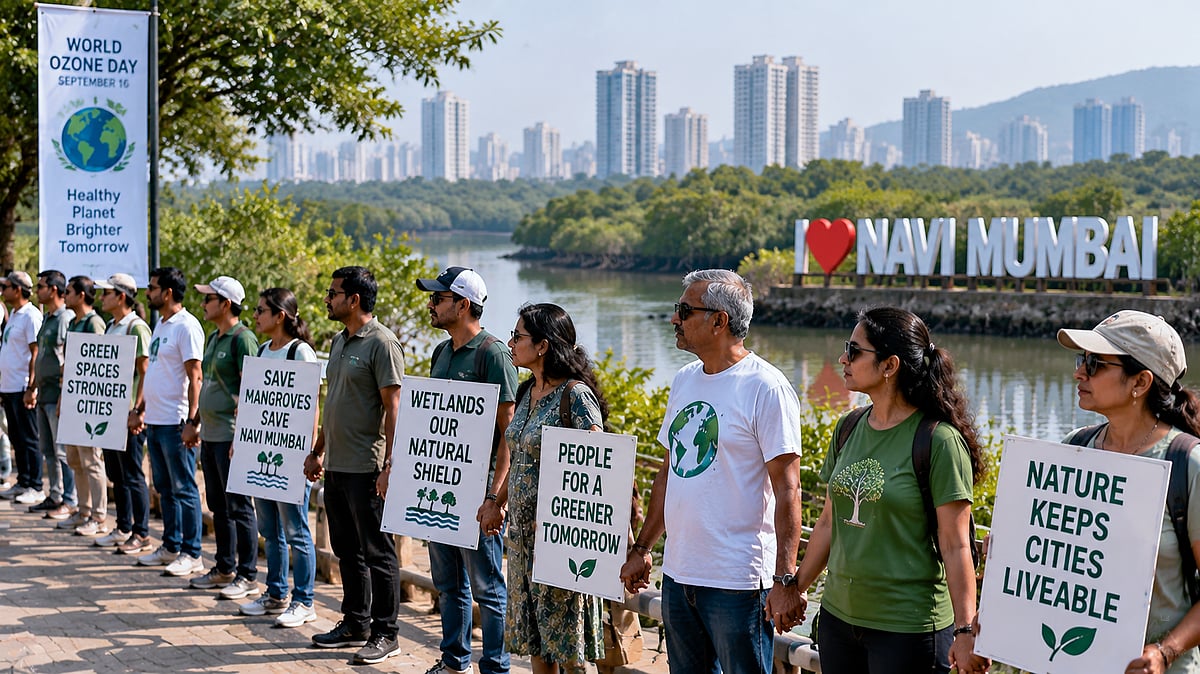
On September 12, environmentalists and citizen groups in Navi Mumbai will form a silent human chain in Sanpada to raise awareness about the need to protect the city's shrinking open spaces, mangroves, wetlands, and green cover.
This initiative is being held ahead of World Ozone Day on September 16 and aims to draw attention to the connection between environmental protection and urban resilience.
The recovery of the ozone layer is considered a significant global environmental success, but activists argue that cities must also safeguard their natural systems to mitigate the effects of climate change.
In Navi Mumbai and the wider Mumbai Metropolitan Region (MMR), mangroves, wetlands, trees, and open spaces are facing increasing pressure from construction, infrastructure projects, reclamation, and redevelopment.
Citizens have expressed concerns over the rapid redevelopment of established neighborhoods, where low-rise structures are being replaced by taller buildings, putting pressure on roads, drainage, water supply, parking, and open spaces.
The environmental cost of demolition and construction is also a concern, with significant consumption of cement, steel, energy, and water, and the generation of large quantities of construction and demolition waste.
The growing data-centre sector in the region has also raised concerns about resource consumption, with large data centres requiring substantial quantities of electricity and water.
Activists are particularly worried about the loss of mangroves and wetlands, which act as natural buffers against flooding, store carbon, moderate temperatures, and help cities cope with climate-related stresses.
According to B N Kumar, director of NatConnect Foundation, mangroves, wetlands, trees, and open spaces are essential infrastructure that protects citizens from heat, flooding, and an ever-growing carbon footprint.
The September 12 human chain will focus on preserving open spaces and green cover as essential components of urban planning, rather than treating them as vacant land available for construction.
This initiative highlights the importance of protecting Navi Mumbai's natural climate shield and promoting sustainable urban development.
The event is expected to raise awareness about the need to balance economic growth with environmental protection and to promote a more sustainable approach to urban planning.
In conclusion, the human chain initiative in Navi Mumbai is a crucial step towards protecting the city's green spaces and promoting urban climate resilience.
It is essential for citizens, policymakers, and stakeholders to work together to safeguard the city's natural systems and ensure a sustainable future for Navi Mumbai.
Frequently asked questions
What is the purpose of the human chain in Navi Mumbai?
The human chain is being formed to raise awareness about the need to protect Navi Mumbai's shrinking open spaces, mangroves, wetlands, and green cover.
When is the human chain taking place?
The human chain is taking place on September 12, ahead of World Ozone Day on September 16.