India Bans Forced Labour Imports
India bans imports made with forced labour. New rules take effect soon.
'%3E%3Crect%20width%3D'96'%20height%3D'96'%20fill%3D'%234A235A'%2F%3E%3Ccircle%20cx%3D'30'%20cy%3D'24'%20r%3D'44'%20fill%3D'%23fff'%20opacity%3D'.12'%2F%3E%3Ccircle%20cx%3D'60'%20cy%3D'74'%20r%3D'40'%20fill%3D'%23000'%20opacity%3D'.10'%2F%3E%3C%2Fg%3E%3Cg%20fill%3D'none'%20stroke%3D'%23fff'%20stroke-width%3D'3'%3E%3Ccircle%20cx%3D'48'%20cy%3D'48'%20r%3D'16'%2F%3E%3Cellipse%20cx%3D'48'%20cy%3D'48'%20rx%3D'6.5'%20ry%3D'16'%2F%3E%3Cline%20x1%3D'32'%20y1%3D'42'%20x2%3D'64'%20y2%3D'42'%2F%3E%3Cline%20x1%3D'32'%20y1%3D'54'%20x2%3D'64'%20y2%3D'54'%2F%3E%3C%2Fg%3E%3C%2Fsvg%3E)
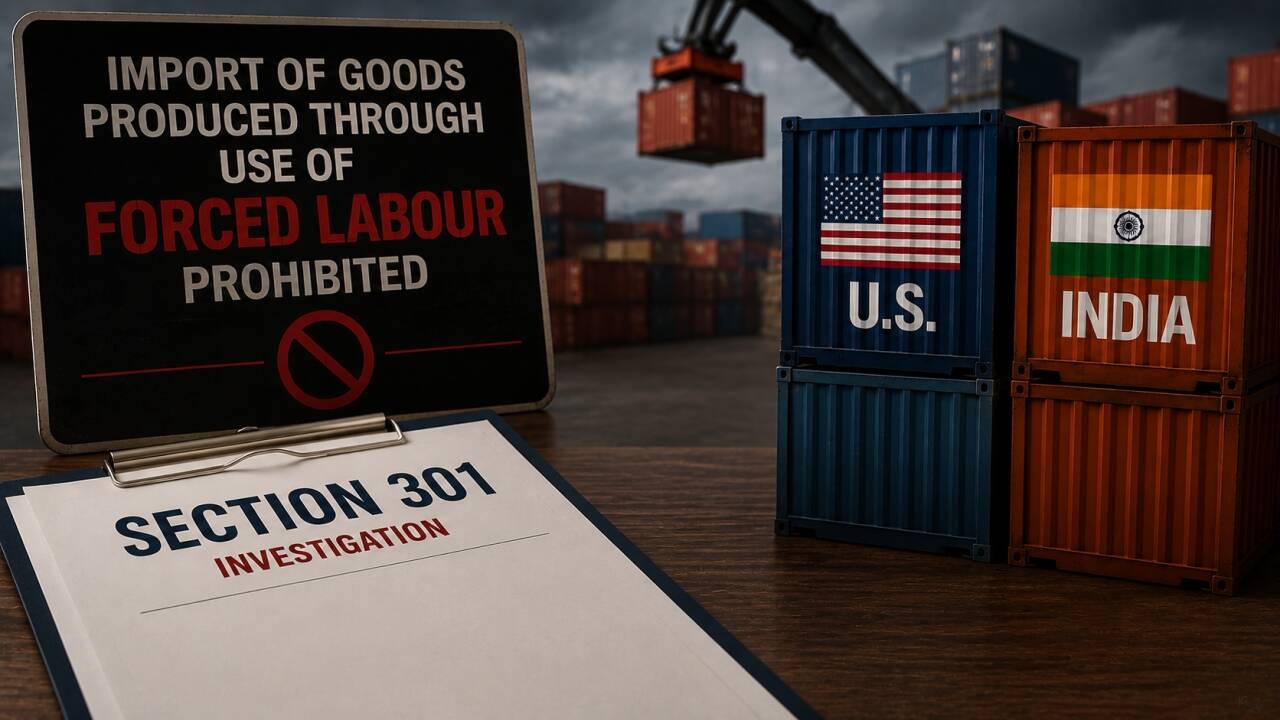
India has announced a ban on imports made with forced labour, a move that comes as the US investigates forced labour practices across 60 economies, including India. The new provisions will take effect 30 days after publication in the Official Gazette.
The US investigation, under Section 301, aims to identify and address forced labour practices worldwide. India is one of the countries under scrutiny, and the ban on forced labour imports is seen as a step towards complying with international labour standards.
The Indian government has not specified which products or countries will be affected by the ban. However, the move is expected to have significant implications for India's trade relationships, particularly with countries that have been accused of using forced labour in their supply chains.
India's decision to ban forced labour imports is part of a broader effort to improve its labour practices and comply with international standards. The country has faced criticism in the past for its handling of labour issues, including forced labour and child labour.
The US investigation into forced labour practices is a significant development, as it has the potential to impact trade relationships between the US and countries found to be using forced labour. The investigation is being conducted under Section 301 of the US Trade Act, which allows the US to impose trade sanctions on countries that engage in unfair trade practices.
The ban on forced labour imports is also seen as a positive step towards protecting the rights of workers worldwide. Forced labour is a serious issue that affects millions of people globally, and efforts to address it are crucial for promoting fair labour practices and protecting human rights.
In the context of India's trade relationships, the ban on forced labour imports is significant. India is a major trading nation, and its trade relationships with other countries are critical to its economic growth. The ban is expected to have implications for India's trade with countries that have been accused of using forced labour, and it may also impact India's relationships with other countries that are working to address forced labour practices.
The Indian government's decision to ban forced labour imports is a step in the right direction, as it demonstrates a commitment to improving labour practices and complying with international standards. However, more needs to be done to address the issue of forced labour in India and worldwide.
In terms of significance for India, the ban on forced labour imports is a positive development that has the potential to promote fair labour practices and protect human rights. It is also expected to have implications for India's trade relationships and its economic growth. As the US investigation into forced labour practices continues, India's ban on forced labour imports is seen as a crucial step towards complying with international labour standards and promoting fair trade practices.
The move is part of a global effort to address forced labour practices and promote fair labour standards. It is expected to have significant implications for trade relationships and labour practices worldwide, and it demonstrates India's commitment to improving its labour practices and complying with international standards.