India Expands Indo-Pacific Strategy Beyond China Rivalry
India's recent diplomatic efforts focus on securing resources and supply chains.
'%3E%3Crect%20width%3D'96'%20height%3D'96'%20fill%3D'%234A235A'%2F%3E%3Ccircle%20cx%3D'30'%20cy%3D'24'%20r%3D'44'%20fill%3D'%23fff'%20opacity%3D'.12'%2F%3E%3Ccircle%20cx%3D'60'%20cy%3D'74'%20r%3D'40'%20fill%3D'%23000'%20opacity%3D'.10'%2F%3E%3C%2Fg%3E%3Cg%20fill%3D'none'%20stroke%3D'%23fff'%20stroke-width%3D'3'%3E%3Ccircle%20cx%3D'48'%20cy%3D'48'%20r%3D'16'%2F%3E%3Cellipse%20cx%3D'48'%20cy%3D'48'%20rx%3D'6.5'%20ry%3D'16'%2F%3E%3Cline%20x1%3D'32'%20y1%3D'42'%20x2%3D'64'%20y2%3D'42'%2F%3E%3Cline%20x1%3D'32'%20y1%3D'54'%20x2%3D'64'%20y2%3D'54'%2F%3E%3C%2Fg%3E%3C%2Fsvg%3E)
India's Prime Minister Narendra Modi recently concluded a three-nation tour, which has been largely viewed as a strategic move to counter China's growing influence in the Indo-Pacific region. However, this interpretation only scratches the surface of India's broader objectives.
The tour, which included visits to Indonesia and Australia, highlights India's efforts to strengthen its relationships with other nations in the region and secure its economic and strategic interests. In an increasingly uncertain world, where US power is declining, India recognizes the need to forge closer ties with like-minded countries to ensure the security of its resources and supply chains.
The Indo-Pacific region has become a critical arena for the distribution of economic and military power, and India is keen to play a significant role in shaping its future. With ambitions to become a leading manufacturing hub and artificial intelligence economy, India requires access to secure supply chains and trusted strategic partners. The country's strategic location, particularly its control of the Andaman and Nicobar Islands, provides a unique advantage in securing the narrow Strait of Malacca, through which a significant portion of Asia's energy supplies and global trade flow.
India's naval capabilities, combined with those of Indonesia and Australia, make them key players in maintaining regional stability. The growing presence of China in the Indian Ocean and its investments in strategically located ports have altered regional calculations, making many Indo-Pacific nations uncomfortable with Beijing's increasing assertiveness. However, these nations are also uncertain about Washington's commitment to the region, given the domestic political uncertainty in the US.
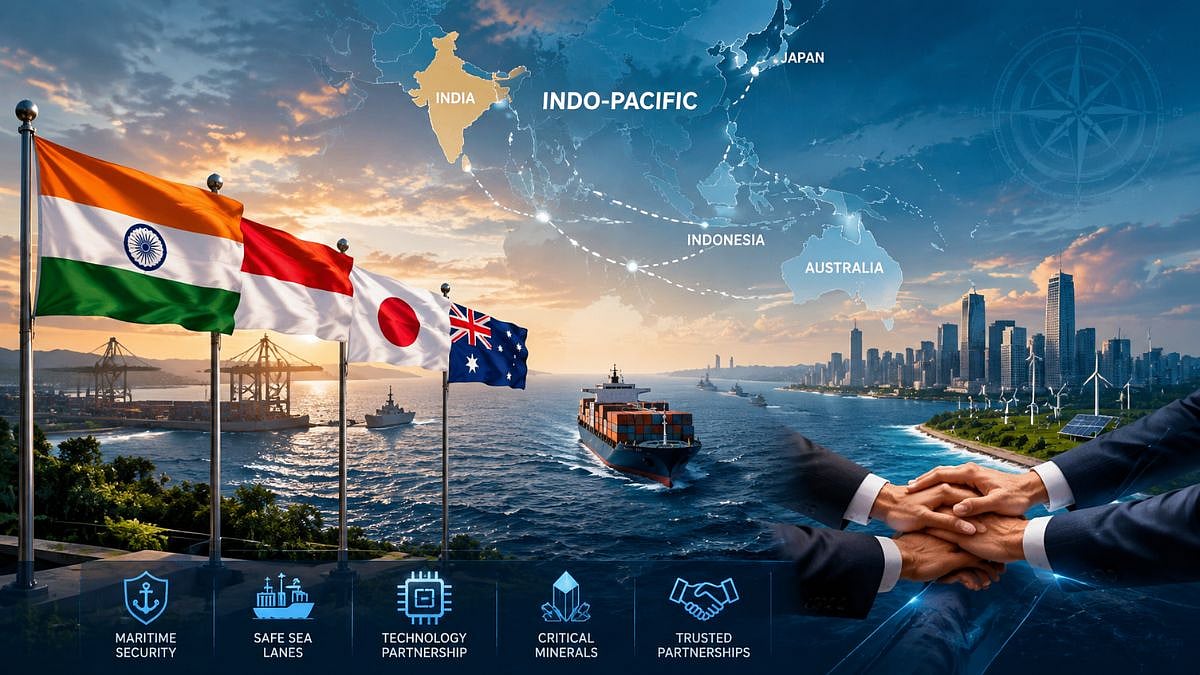
As a result, countries like India, Japan, Indonesia, and Australia are constructing denser networks among themselves, strengthening regional stability without creating rigid military blocs. This approach allows each country greater flexibility in responding to emerging challenges and opportunities. The recent talks between India and Japan, just ahead of Modi's three-nation tour, reflect this trend, as both countries seek to cooperate on regional security issues without relying solely on US leadership.
In this context, India's Indo-Pacific strategy is not solely focused on countering China, but rather on creating a more resilient and secure regional architecture. By engaging with other nations in the region, India aims to promote its economic and strategic interests, while also contributing to the maintenance of regional stability. As the global balance of power continues to shift, India's efforts to strengthen its relationships with other Indo-Pacific nations will be critical in shaping the region's future.
The implications of India's Indo-Pacific strategy extend beyond the region, with potential consequences for global trade, economic security, and military power. As the world's largest democracies, India, Japan, Indonesia, and Australia are well-positioned to promote a rules-based order in the Indo-Pacific, one that prioritizes cooperation, stability, and security. By working together, these nations can help shape a more secure and prosperous future for the region, and for the world at large.
In conclusion, India's Indo-Pacific strategy is a nuanced and multifaceted approach, driven by a desire to secure its economic and strategic interests in a rapidly changing world. While China remains a critical factor in regional calculations, India's efforts to strengthen its relationships with other nations in the region reflect a broader commitment to promoting regional stability and security. As the Indo-Pacific region continues to evolve, India's strategy will play a significant role in shaping its future, and that of the world.
The visit of Japanese Prime Minister Sanae Takaichi to India, just days before Modi's three-nation tour, underscores the growing cooperation between the two nations. This cooperation is not limited to bilateral ties, but also extends to regional security issues, where both countries are working together to promote stability and security. The talks between India and Japan reflect a wider trend across the Indo-Pacific, where nations are recognizing the need to work together to address common challenges and promote shared interests.
As India continues to expand its Indo-Pacific strategy, it is likely to face numerous challenges and opportunities. The country's ability to navigate these complexities will depend on its ability to forge strong relationships with other nations in the region, while also promoting its economic and strategic interests. With its unique location, growing naval capabilities, and commitment to regional stability, India is well-positioned to play a significant role in shaping the future of the Indo-Pacific region.
In the end, India's Indo-Pacific strategy is not just about countering China or promoting regional stability; it is about creating a more secure and prosperous future for the nation and the world at large. By working together with other nations in the region, India can help promote a rules-based order, one that prioritizes cooperation, stability, and security. This is a critical moment in the evolution of the Indo-Pacific region, and India's strategy will play a significant role in shaping its future.
The region's future will be shaped by the interactions and relationships between nations like India, Japan, Indonesia, and Australia. These nations are not just responding to the growing influence of China; they are also promoting their own economic and strategic interests. The Indo-Pacific region is a critical arena for the distribution of economic and military power, and the relationships between these nations will play a significant role in shaping its future.
India's Indo-Pacific strategy is a critical component of its foreign policy, and its success will depend on the country's ability to navigate the complexities of the region. With its growing naval capabilities, unique location, and commitment to regional stability, India is well-positioned to play a significant role in shaping the future of the Indo-Pacific region. The nation's ability to promote its economic and strategic interests, while also working with other nations to address common challenges, will be critical in determining the success of its Indo-Pacific strategy.
The future of the Indo-Pacific region will be shaped by the interactions and relationships between nations like India, Japan, Indonesia, and Australia. These nations are promoting their own economic and strategic interests, while also responding to the growing influence of China. The region's future will depend on the ability of these nations to work together, promoting a rules-based order that prioritizes cooperation, stability, and security. India's Indo-Pacific strategy is a critical component of this effort, and its success will have significant implications for the region and the world at large.
In the context of India's Indo-Pacific strategy, the nation's relationships with other countries in the region will play a critical role in shaping its future. The interactions between India, Japan, Indonesia, and Australia will be particularly important, as these nations work together to promote regional stability and security. The success of India's Indo-Pacific strategy will depend on its ability to navigate the complexities of the region, promoting its economic and strategic interests while also working with other nations to address common challenges.
The Indo-Pacific region is a critical arena for the distribution of economic and military power, and India's strategy will play a significant role in shaping its future. The nation's unique location, growing naval capabilities, and commitment to regional stability make it an important player in the region. As India continues to expand its Indo-Pacific strategy, it will face numerous challenges and opportunities. The nation's ability to navigate these complexities will depend on its ability to forge strong relationships with other nations in the region, while also promoting its economic and strategic interests.
The implications of India's Indo-Pacific strategy extend beyond the region, with potential consequences for global trade, economic security, and military power. As the world's largest democracies, India, Japan, Indonesia, and Australia are well-positioned to promote a rules-based order in the Indo-Pacific, one that prioritizes cooperation, stability, and security. By working together, these nations can help shape a more secure and prosperous future for the region, and for the world at large.
In conclusion, India's Indo-Pacific strategy is a nuanced and multifaceted approach, driven by a desire to secure its economic and strategic interests in a rapidly changing world. While China remains a critical factor in regional calculations, India's efforts to strengthen its relationships with other nations in the region reflect a broader commitment to promoting regional stability and security. As the Indo-Pacific region continues to evolve, India's strategy will play a significant role in shaping its future, and that of the world.
What it means for India and the world is that the nation's Indo-Pacific strategy will have significant implications for regional stability and security. The success of this strategy will depend on India's ability to navigate the complexities of the region, promoting its economic and strategic interests while also working with other nations to address common challenges. The future of the Indo-Pacific region will be shaped by the interactions and relationships between nations like India, Japan, Indonesia, and Australia, and India's strategy will play a critical role in determining the outcome.
The region's future will depend on the ability of these nations to work together, promoting a rules-based order that prioritizes cooperation, stability, and security. India's Indo-Pacific strategy is a critical component of this effort, and its success will have significant implications for the region and the world at large. As the world's largest democracies, India, Japan, Indonesia, and Australia are well-positioned to promote a rules-based order in the Indo-Pacific, one that prioritizes cooperation, stability, and security. By working together, these nations can help shape a more secure and prosperous future for the region, and for the world at large.
The implications of India's Indo-Pacific strategy are far-reaching, with potential consequences for global trade, economic security, and military power. The nation's unique location, growing naval capabilities, and commitment to regional stability make it an important player in the region. As India continues to expand its Indo-Pacific strategy, it will face numerous challenges and opportunities. The nation's ability to navigate these complexities will depend on its ability to forge strong relationships with other nations in the region, while also promoting its economic and strategic interests.
In the end, India's Indo-Pacific strategy is not just about countering China or promoting regional stability; it is about creating a more secure and prosperous future for the nation and the world at large. By working together with other nations in the region, India can help promote a rules-based order, one that prioritizes cooperation, stability, and security. This is a critical moment in the evolution of the Indo-Pacific region, and India's strategy will play a significant role in shaping its future.
The future of the Indo-Pacific region will be shaped by the interactions and relationships between nations like India, Japan, Indonesia, and Australia. These nations are promoting their own economic and strategic interests, while also responding to the growing influence of China. The region's future will depend on the ability of these nations to work together, promoting a rules-based order that prioritizes cooperation, stability, and security. India's Indo-Pacific strategy is a critical component of this effort, and its success will have significant implications for the region and the world at large.