Tata Group Leaders Meet Govt Officials Amid Crisis
Tata Sons chairman N Chandrasekaran and Tata Trusts chairman Noel Tata meet government officials separately. Leadership crisis deepens with Chandrasekaran's exit planned.
'%3E%3Crect%20width%3D'96'%20height%3D'96'%20fill%3D'%230B6E4F'%2F%3E%3Ccircle%20cx%3D'30'%20cy%3D'24'%20r%3D'44'%20fill%3D'%23fff'%20opacity%3D'.12'%2F%3E%3Ccircle%20cx%3D'60'%20cy%3D'74'%20r%3D'40'%20fill%3D'%23000'%20opacity%3D'.10'%2F%3E%3C%2Fg%3E%3Cg%20fill%3D'none'%20stroke%3D'%23fff'%20stroke-width%3D'3.2'%20stroke-linecap%3D'round'%20stroke-linejoin%3D'round'%3E%3Cpolyline%20points%3D'31%2C59%2041%2C49%2049%2C54%2063%2C37'%2F%3E%3Cpolyline%20points%3D'55%2C37%2063%2C37%2063%2C45'%2F%3E%3C%2Fg%3E%3C%2Fsvg%3E)
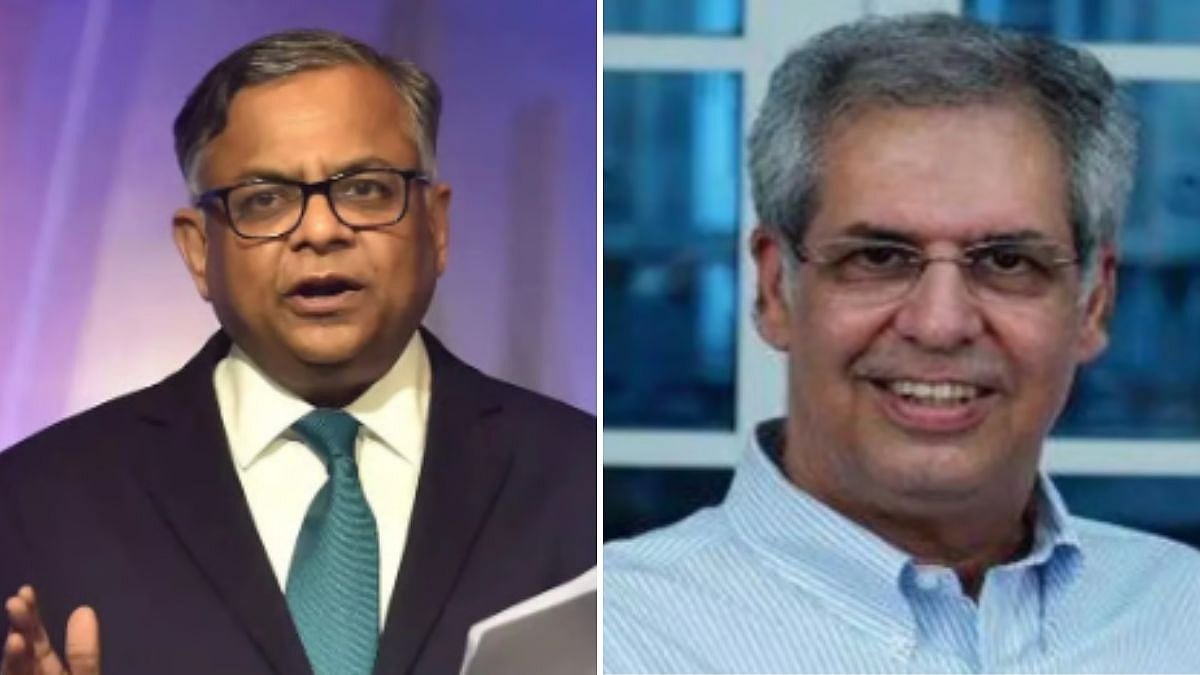
Tata Group is facing a leadership crisis, with tensions at the top reaching government circles.
N Chandrasekaran, the chairman of Tata Sons, and Noel Tata, the chairman of Tata Trusts, have separately met senior government officials to share their concerns. The discussions centered on differences over strategy, governance, new businesses, and the future leadership of Tata Sons.
The government, however, has chosen not to intervene and only listened to the concerns raised by the two sides. This development comes at a critical time for the conglomerate, which has made significant investments in businesses such as Air India, semiconductors, electronics, and digital platforms.
The Tata Group's investments in these new businesses have raised questions about capital allocation, performance, and future returns. For instance, Air India has required substantial investment since the Tata Group regained control of the airline in 2022. Additionally, the group is developing a semiconductor fabrication plant in Gujarat and building a wider electronics manufacturing ecosystem.
The group's digital ambitions, including Tata Neu, have also involved significant spending, making the performance of these newer businesses an important part of the strategic debate. Chandrasekaran's decision to step down as Tata Sons chairman in February 2027 has brought the group's governance structure back into focus.
Tata Trusts collectively hold around 66% of Tata Sons, giving the charitable trusts substantial influence over the holding company. The current tensions recall the earlier conflict between Cyrus Mistry and the Tata leadership, which eventually resulted in his removal as Tata Sons chairman in 2016 and a prolonged legal battle.
Noel Tata became chairman of Tata Trusts after Ratan Tata's death in October 2024. Another potential flashpoint is the proposed Tata Sons IPO, which could alter the holding company's ownership structure and dilute the influence of Tata Trusts.
With Chandrasekaran's tenure nearing its end, the Tata Group now faces the twin challenge of managing leadership succession while navigating disagreements over governance, investment strategy, and the future structure of its flagship holding company.
The Tata Group's leadership crisis has significant implications for the company's future direction and growth. As the group navigates these challenges, it will be important to find a balance between the interests of different stakeholders and ensure that the company remains competitive and successful in the long term.
The outcome of this crisis will be closely watched by investors, employees, and other stakeholders, and will likely have a significant impact on the Indian business landscape.
The Tata Group's ability to manage this transition and find a new leader who can navigate the complex web of relationships and interests within the company will be crucial to its future success.
In conclusion, the Tata Group's leadership crisis is a complex and multifaceted issue that will require careful management and navigation to resolve. The company's future direction and growth will depend on its ability to find a balance between the interests of different stakeholders and ensure that the company remains competitive and successful in the long term.
Frequently asked questions
Who is the current chairman of Tata Sons?
N Chandrasekaran is the current chairman of Tata Sons, but he has announced his decision to step down in February 2027.
What is the proposed Tata Sons IPO?
The proposed Tata Sons IPO could alter the holding company's ownership structure and dilute the influence of Tata Trusts.