Coriander Prices Rise Above Rs 200/kg
Coriander prices surge due to heavy rainfall. Neighbourhood vendors can't give it away free anymore.
'%3E%3Crect%20width%3D'96'%20height%3D'96'%20fill%3D'%230B6E4F'%2F%3E%3Ccircle%20cx%3D'30'%20cy%3D'24'%20r%3D'44'%20fill%3D'%23fff'%20opacity%3D'.12'%2F%3E%3Ccircle%20cx%3D'60'%20cy%3D'74'%20r%3D'40'%20fill%3D'%23000'%20opacity%3D'.10'%2F%3E%3C%2Fg%3E%3Cg%20fill%3D'none'%20stroke%3D'%23fff'%20stroke-width%3D'3.2'%20stroke-linecap%3D'round'%20stroke-linejoin%3D'round'%3E%3Cpolyline%20points%3D'31%2C59%2041%2C49%2049%2C54%2063%2C37'%2F%3E%3Cpolyline%20points%3D'55%2C37%2063%2C37%2063%2C45'%2F%3E%3C%2Fg%3E%3C%2Fsvg%3E)
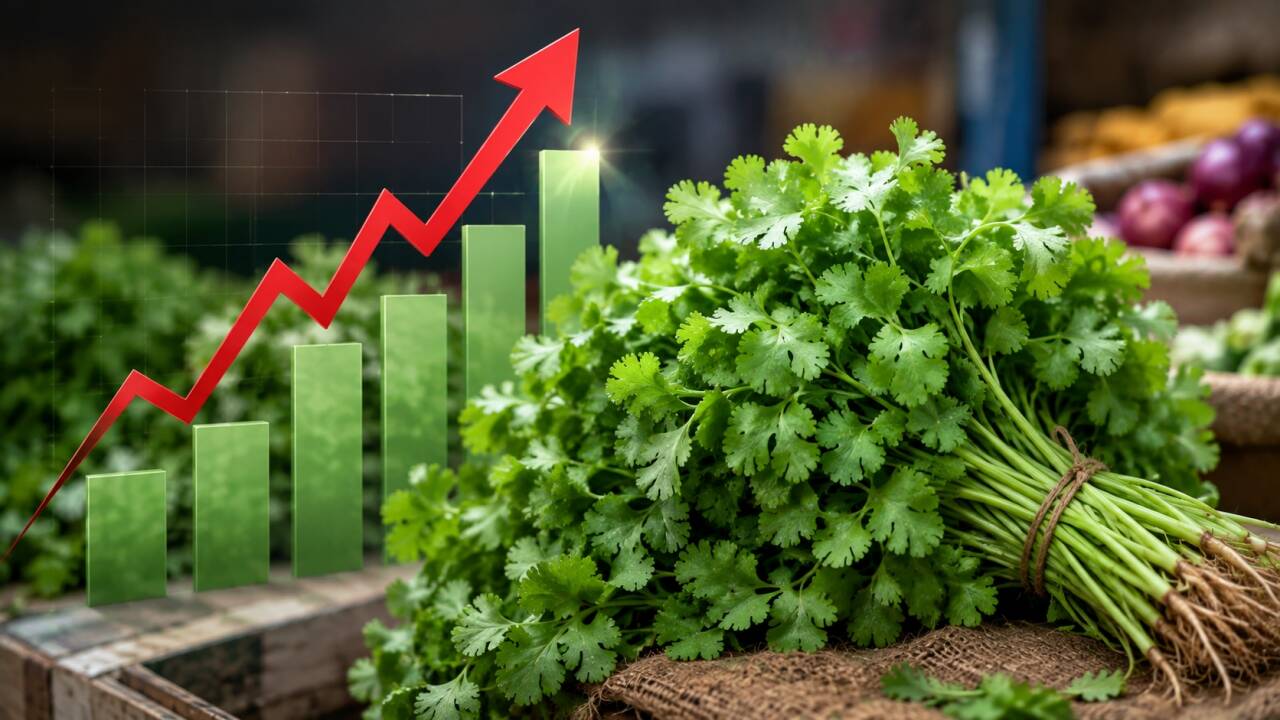
Fresh coriander, a staple herb in Indian cuisine, has seen a significant price hike due to heavy rainfall disrupting supplies from major growing regions. The price of coriander has risen above Rs 200 per kilogram, making it a costly addition to meals.
Neighbourhood vegetable vendors, who would often give away fresh coriander for free with other purchases, are now forced to charge for it due to the increased cost. This change may come as a surprise to many consumers who have grown accustomed to receiving coriander at no extra cost.
The heavy rainfall in recent weeks has affected coriander crops in major growing regions, leading to a shortage in supply. As a result, prices have skyrocketed, making it difficult for vendors to absorb the cost. The price hike is expected to impact not only individual consumers but also restaurants and food establishments that rely heavily on coriander for various dishes.
Coriander is a widely used herb in Indian cooking, and its price increase may lead to a rise in food costs. The herb is used in a variety of dishes, from curries and chutneys to salads and soups. Its unique flavor and aroma make it a essential ingredient in many recipes.
The shortage of coriander is not only affecting the food industry but also the farmers who grow it. The heavy rainfall has damaged crops, leading to a significant loss for farmers who rely on coriander as a source of income. The government may need to step in to provide support to farmers and help stabilize the price of coriander.
In the meantime, consumers will have to adjust to the new prices of coriander. While it may seem like a small increase, it can add up quickly, especially for those who use the herb regularly. The price hike serves as a reminder of the importance of agriculture and the impact of weather conditions on food prices.
The rise in coriander prices is a significant development, and its impact will be felt across the food industry. As the situation continues to unfold, it remains to be seen how the government and farmers will respond to the shortage and price hike. For now, consumers will have to pay a premium for their coriander, a herb that was once given away for free.
The increase in coriander prices is a reminder of the complexities of the food supply chain and the factors that can affect prices. It highlights the need for sustainable agriculture practices and effective supply chain management to mitigate the impact of weather conditions and other disruptions.
In conclusion, the price hike of coriander is a significant development that will impact consumers, restaurants, and farmers. The government and farmers will need to work together to address the shortage and stabilize prices. Until then, consumers will have to adjust to the new reality of paying for coriander, a herb that was once a free addition to their meals.
Frequently asked questions
Why have coriander prices increased?
Coriander prices have increased due to heavy rainfall disrupting supplies from major growing regions.
How much do coriander prices cost now?
Coriander prices have risen above Rs 200 per kilogram.