Maharashtra Bans Loose Milk Sales Statewide
Loose milk sales banned, sealed packs mandatory. Thousands of doodhwala jobs at risk.

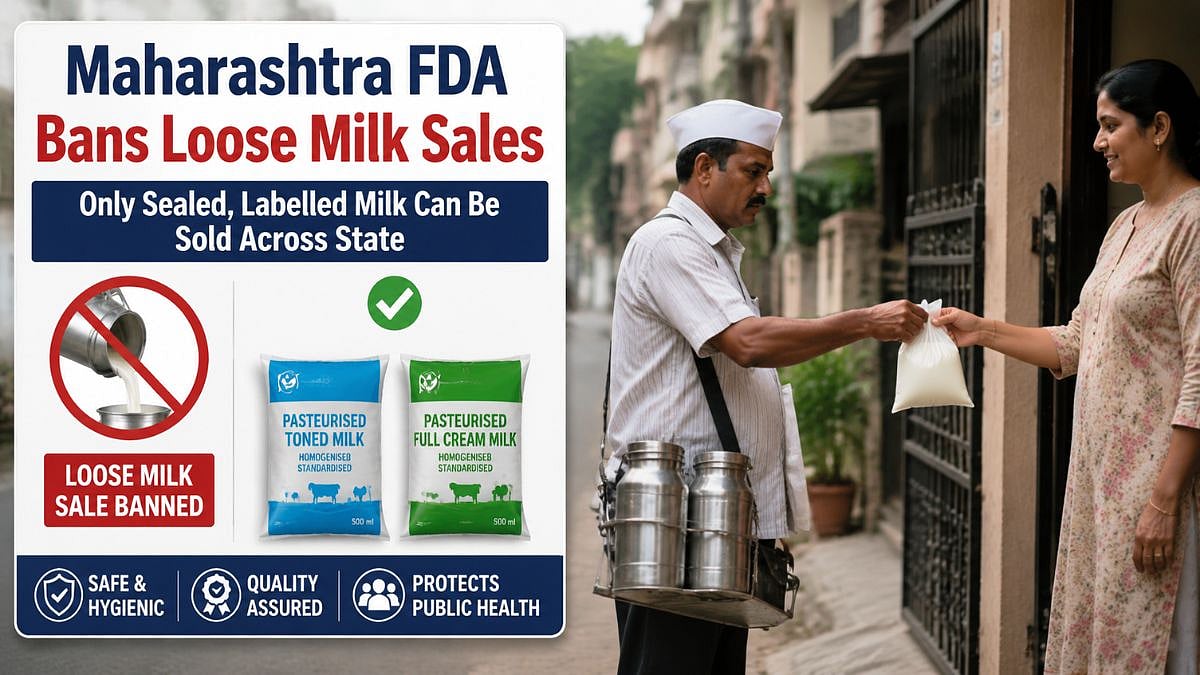
In a significant move, the Maharashtra Food and Drug Administration (FDA) has banned the sale of loose milk across the state with immediate effect. This decision, announced by FDA Commissioner Tukaram Mundhe, aims to address safety concerns related to milk contamination.
The ban, which came into effect on July 10, has already started impacting thousands of doodhwala businesses that have been home-delivering milk to households for generations. Many retailers have been forced to shut down their shops, leaving their staff without jobs. According to Rajmani Pal, a milk retailer from Chembur, the penalty for selling loose milk is a hefty Rs 3 lakh, making it impossible for small businesses to continue operating.
The FDA's decision is based on inspections that revealed a widespread lack of compliance across the dairy supply chain. The National Milk Safety and Quality Survey conducted by the Food Safety and Standards Authority of India found that milk contamination, particularly due to Aflatoxin M1 and antibiotic residues, is a grave public concern. To address this issue, the FDA has mandated that all milk, including pasteurised and standardised varieties, must be sold in sealed, tamper-evident, and labelled packages.
However, many retailers are voicing concerns about the feasibility of setting up milk packaging plants, which would require a significant investment of upwards of Rs 12 crore. A retailer from Andheri, who wished to remain anonymous, stated that his family has been in the milk vending business for decades without receiving a single complaint from customers.
The ban is also expected to affect bulk consumers such as sweet shops and ice-cream parlours, which relied on loose milk supplies due to their ease of processing and lower cost. According to Babu Chodankar, secretary of the Thane Sahar Doodh Vyavasi Cooperative Society, households may manage by buying packaged milk, but sweet shops and ice-cream parlours will struggle to adapt.
Mumbai requires around 50 lakh litres of milk every day, while the Mumbai Metropolitan Region's daily demand is estimated at nearly 60 lakh litres. At least 35% of the region's milk supply comes through loose wholesalers and retailers, according to Ram Patil, a milk trader and consultant.
The FDA's move is intended to ensure the safety and quality of milk consumed by the public. However, it remains to be seen how the industry will adapt to this change and what impact it will have on the livelihoods of thousands of doodhwala workers.
The decision to ban loose milk sales is a significant step towards addressing the issue of milk contamination in Maharashtra. As the state's dairy industry adjusts to this new reality, it is essential to consider the potential consequences for small businesses and consumers alike.
In the coming days, the FDA is expected to continue monitoring the situation and ensuring compliance with the new regulations. As the industry navigates this change, it is crucial to prioritize the safety and well-being of consumers while also supporting the livelihoods of those affected by the ban.
The ban on loose milk sales in Maharashtra is a significant development that highlights the importance of ensuring the safety and quality of food products. As the state moves forward with this new policy, it is essential to consider the potential implications for the dairy industry, consumers, and the economy as a whole.
In conclusion, the Maharashtra FDA's decision to ban loose milk sales is a crucial step towards addressing the issue of milk contamination. While it may pose challenges for small businesses and consumers, it is essential to prioritize the safety and well-being of the public. As the industry adapts to this change, it is crucial to support those affected and ensure that the new regulations are implemented effectively.
The impact of this decision will be felt across the state, and it is essential to monitor the situation closely. The FDA's move is a significant step towards ensuring the safety and quality of milk consumed by the public, and it is crucial to support this effort to protect the health and well-being of Maharashtra's citizens.
The future of the dairy industry in Maharashtra will depend on its ability to adapt to this new reality. As the state moves forward with this policy, it is essential to consider the potential consequences and work towards finding solutions that balance the needs of consumers, businesses, and the economy as a whole.
In the end, the ban on loose milk sales in Maharashtra is a significant development that highlights the importance of ensuring the safety and quality of food products. It is crucial to prioritize the safety and well-being of consumers while also supporting the livelihoods of those affected by the ban. As the industry navigates this change, it is essential to work towards finding solutions that benefit all stakeholders involved.