66-Million-Year-Old Feather Found in Dinosaur Feces
Ancient feather in dinosaur poop may explain bird survival. Researchers discover clues in 66-million-year-old fossil.
'%3E%3Crect%20width%3D'96'%20height%3D'96'%20fill%3D'%23B3261E'%2F%3E%3Ccircle%20cx%3D'30'%20cy%3D'24'%20r%3D'44'%20fill%3D'%23fff'%20opacity%3D'.12'%2F%3E%3Ccircle%20cx%3D'60'%20cy%3D'74'%20r%3D'40'%20fill%3D'%23000'%20opacity%3D'.10'%2F%3E%3C%2Fg%3E%3Cg%20fill%3D'%23fff'%3E%3Crect%20x%3D'29'%20y%3D'49'%20width%3D'8'%20height%3D'19'%20rx%3D'1'%2F%3E%3Crect%20x%3D'39'%20y%3D'40'%20width%3D'9'%20height%3D'28'%20rx%3D'1'%2F%3E%3Crect%20x%3D'50'%20y%3D'45'%20width%3D'8'%20height%3D'23'%20rx%3D'1'%2F%3E%3Crect%20x%3D'60'%20y%3D'53'%20width%3D'7'%20height%3D'15'%20rx%3D'1'%2F%3E%3Crect%20x%3D'41'%20y%3D'34'%20width%3D'5'%20height%3D'6'%2F%3E%3C%2Fg%3E%3C%2Fsvg%3E)
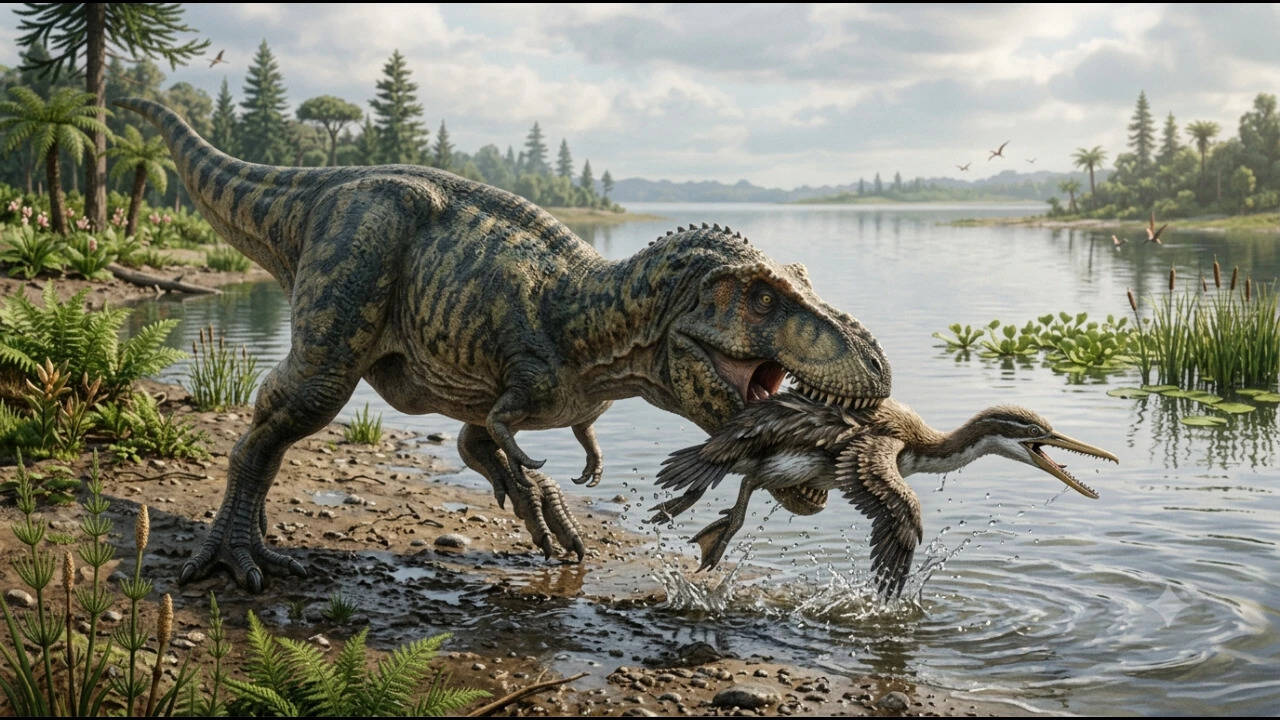
A 66-million-year-old feather discovered inside fossilised dinosaur feces may hold the key to understanding why some birds survived the devastating asteroid impact that led to the demise of most dinosaurs. The remarkable find was made by researchers who were examining a coprolite, a fossilised piece of dinosaur poop.
Upon closer inspection, the team found not only the ancient feather but also fish scales and bird bones within the coprolite. The presence of these fossils suggests that the dinosaur that produced the feces had a diverse diet that included both fish and birds.
The feather itself is of particular interest to scientists due to its primitive structure. Unlike modern feathers, which are highly evolved and complex, the 66-million-year-old feather has a simpler design. This primitive structure suggests that the feather may have provided insulation to the bird, helping it to regulate its body temperature.
Researchers believe that the ability to moult, or shed and replace feathers, may have also played a crucial role in determining which birds survived the asteroid impact. Birds that were able to moult and replace their feathers may have been better equipped to adapt to the changing environment and survive the disaster.
The discovery of the ancient feather in dinosaur feces provides a unique glimpse into the lives of birds and dinosaurs during the Late Cretaceous period. It also highlights the importance of coprolites as a source of fossilised remains, offering scientists a window into the past and helping to shed light on the mysteries of evolution.
The asteroid impact that occurred 66 million years ago is widely believed to have caused the mass extinction of the dinosaurs. However, some birds were able to survive and thrive in the aftermath of the disaster. The discovery of the ancient feather in dinosaur feces may help to explain why some birds were able to survive while others perished.
In the years following the asteroid impact, the Earth's climate underwent significant changes, leading to a period of cooling and darkness. The ability to adapt to these changes may have been crucial to the survival of some bird species. The discovery of the ancient feather in dinosaur feces suggests that insulation and moulting may have been key factors in determining which birds were able to survive and evolve into the diverse range of species we see today.
The study of the ancient feather and other fossils found in the coprolite is ongoing, with researchers hoping to learn more about the lives of birds and dinosaurs during the Late Cretaceous period. As scientists continue to examine the fossil record, they may uncover even more clues about the survival of birds and the demise of the dinosaurs.
In conclusion, the discovery of the 66-million-year-old feather in dinosaur feces is a significant find that may help to explain why some birds survived the asteroid impact that killed most dinosaurs. The primitive structure of the feather and the presence of other fossils in the coprolite suggest that insulation and moulting may have played a role in determining which birds survived. As researchers continue to study the fossil record, they may uncover even more secrets about the evolution of birds and the demise of the dinosaurs.
The significance of this discovery extends beyond the field of paleontology, as it provides insights into the evolution of life on Earth. The ability of some birds to survive and thrive in the aftermath of the asteroid impact is a testament to the resilience of life and the importance of adaptability in the face of adversity. As we continue to learn more about the history of our planet, we may uncover even more secrets about the evolution of life and the mysteries of the natural world.
Frequently asked questions
What was found in the 66-million-year-old dinosaur feces?
A feather, fish scales, and bird bones were found in the coprolite.
Why is the discovery of the ancient feather significant?
The discovery may help explain why some birds survived the asteroid impact that killed most dinosaurs.