Supreme Court Refers Plea To E-Committee For V-Courts Update
Supreme Court considers changes to V-Courts portal, citizens may compound traffic offences without pleading guilty.
'%3E%3Crect%20width%3D'96'%20height%3D'96'%20fill%3D'%23B3261E'%2F%3E%3Ccircle%20cx%3D'30'%20cy%3D'24'%20r%3D'44'%20fill%3D'%23fff'%20opacity%3D'.12'%2F%3E%3Ccircle%20cx%3D'60'%20cy%3D'74'%20r%3D'40'%20fill%3D'%23000'%20opacity%3D'.10'%2F%3E%3C%2Fg%3E%3Cg%20fill%3D'%23fff'%3E%3Crect%20x%3D'29'%20y%3D'49'%20width%3D'8'%20height%3D'19'%20rx%3D'1'%2F%3E%3Crect%20x%3D'39'%20y%3D'40'%20width%3D'9'%20height%3D'28'%20rx%3D'1'%2F%3E%3Crect%20x%3D'50'%20y%3D'45'%20width%3D'8'%20height%3D'23'%20rx%3D'1'%2F%3E%3Crect%20x%3D'60'%20y%3D'53'%20width%3D'7'%20height%3D'15'%20rx%3D'1'%2F%3E%3Crect%20x%3D'41'%20y%3D'34'%20width%3D'5'%20height%3D'6'%2F%3E%3C%2Fg%3E%3C%2Fsvg%3E)
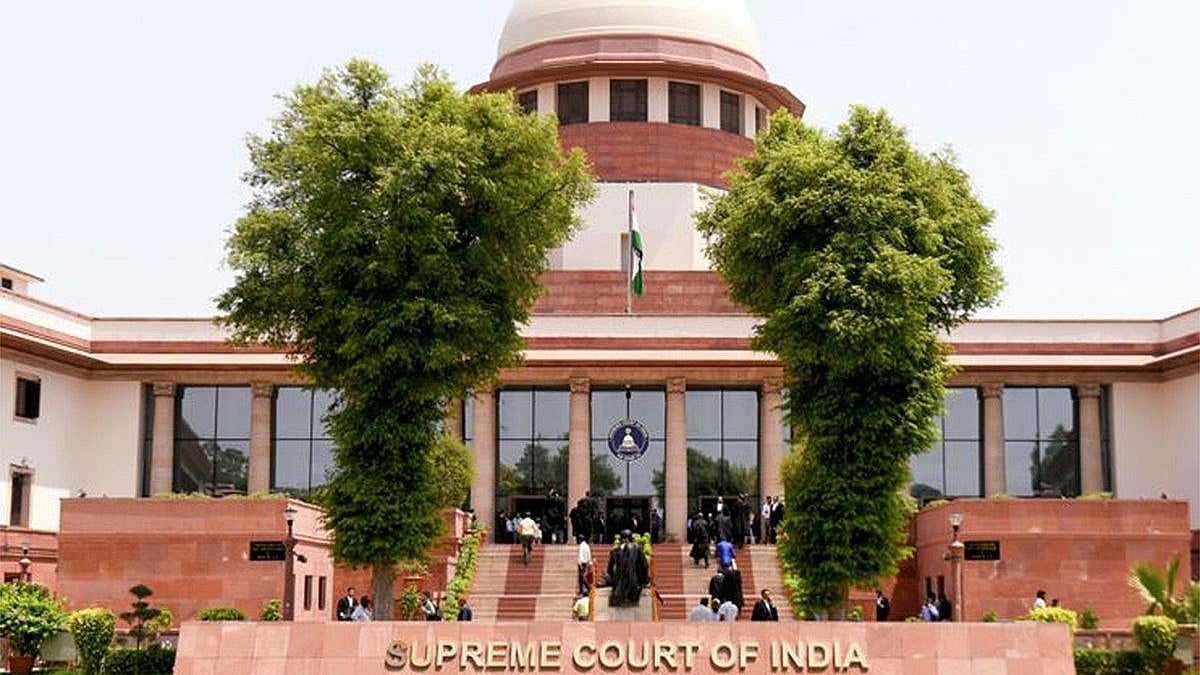
The Supreme Court has referred a petition to its E-Committee, seeking changes to the V-Courts portal to allow citizens to compound traffic offences without having to enter a plea of guilt.
A bench comprising Chief Justice of India Surya Kant and Justices Joymalya Bagchi and V Mohana passed the order after hearing Senior Advocate Maninder Singh, who appeared for petitioner Prabhjot Singh Dhillon. The court acknowledged the importance of the issue raised in the petition for the better functioning of the V-Courts portal.
The petitioner, Prabhjot Singh Dhillon, sought a direction to the Supreme Court E-Committee to update the V-Courts portal by providing a clear and independent option for compounding offences without requiring users to plead guilty. The petition alleged that the portal contained 'dark patterns' and had a confusing interface that incorrectly equated payment of a fine with a plea of guilt, resulting in convictions for compoundable offences.
According to the petitioner, the way the portal currently operates defeats its objective of providing a speedy and citizen-friendly mechanism for disposing of traffic challans. He argued that citizens' fundamental rights were being violated because they could be compelled to enter a plea of 'guilty' while compounding traffic offences without their knowledge, understanding or informed consent.
The concern raised by the petition goes beyond the convenience of paying traffic fines online. If a person seeking only to compound an offence can inadvertently enter a guilty plea, clarity in the digital process becomes crucial, particularly when the action may result in a conviction.
The petitioner also referred to the Delhi High Court's decision in Benetton India Pvt Ltd v State of NCT of Delhi, where the Supreme Court E-Committee was requested to make certain changes to the V-Courts portal. These included enabling an option to compound offences by paying a fine, eliminating the need to wait for a Lok Adalat, and ensuring that such payments did not result in a record of conviction.
Citing the order, Dhillon sought a direction to the E-Committee to act on the High Court's recommendations in the Benetton case. The petitioner's argument highlights the distinction between settling a compoundable traffic offence and admitting guilt. A digital platform intended to simplify the process should make that distinction clear to users, particularly when a choice on the portal can have legal consequences.
The petition did not restrict its prayers to changes in the V-Courts portal. It also sought a mandate requiring an Assistant Commissioner of Police or another authorised officer to remain physically present at police stations on specified days and times to address traffic grievances.
The Supreme Court's decision to refer the petition to its E-Committee is a significant step towards addressing the concerns raised by the petitioner. The E-Committee will now consider the plea and make recommendations for updating the V-Courts portal to provide a clear and independent option for compounding offences without requiring users to plead guilty.
This development is likely to have a significant impact on the functioning of the V-Courts portal and the way traffic offences are handled in the country. It is expected to provide relief to citizens who have been inadvertently pleading guilty while compounding traffic offences, and will help to ensure that the digital platform is used in a fair and transparent manner.
In conclusion, the Supreme Court's decision to refer the petition to its E-Committee is a welcome move towards improving the functioning of the V-Courts portal and protecting the rights of citizens. It is hoped that the E-Committee will make recommendations that will address the concerns raised by the petitioner and provide a more citizen-friendly mechanism for disposing of traffic challans.
Frequently asked questions
What is the issue with the V-Courts portal?
The portal contains 'dark patterns' and has a confusing interface that incorrectly equates payment of a fine with a plea of guilt, resulting in convictions for compoundable offences.
What is the petitioner seeking?
The petitioner is seeking a direction to the Supreme Court E-Committee to update the V-Courts portal to provide a clear and independent option for compounding offences without requiring users to plead guilty.