Uttarakhand Media Delegation Visits ICMR-NIN in Hyderabad
A 15-member media team from Uttarakhand visited ICMR-NIN. They learned about nutrition research and public health education.
'%3E%3Crect%20width%3D'96'%20height%3D'96'%20fill%3D'%23B3261E'%2F%3E%3Ccircle%20cx%3D'30'%20cy%3D'24'%20r%3D'44'%20fill%3D'%23fff'%20opacity%3D'.12'%2F%3E%3Ccircle%20cx%3D'60'%20cy%3D'74'%20r%3D'40'%20fill%3D'%23000'%20opacity%3D'.10'%2F%3E%3C%2Fg%3E%3Cg%20fill%3D'%23fff'%3E%3Crect%20x%3D'29'%20y%3D'49'%20width%3D'8'%20height%3D'19'%20rx%3D'1'%2F%3E%3Crect%20x%3D'39'%20y%3D'40'%20width%3D'9'%20height%3D'28'%20rx%3D'1'%2F%3E%3Crect%20x%3D'50'%20y%3D'45'%20width%3D'8'%20height%3D'23'%20rx%3D'1'%2F%3E%3Crect%20x%3D'60'%20y%3D'53'%20width%3D'7'%20height%3D'15'%20rx%3D'1'%2F%3E%3Crect%20x%3D'41'%20y%3D'34'%20width%3D'5'%20height%3D'6'%2F%3E%3C%2Fg%3E%3C%2Fsvg%3E)
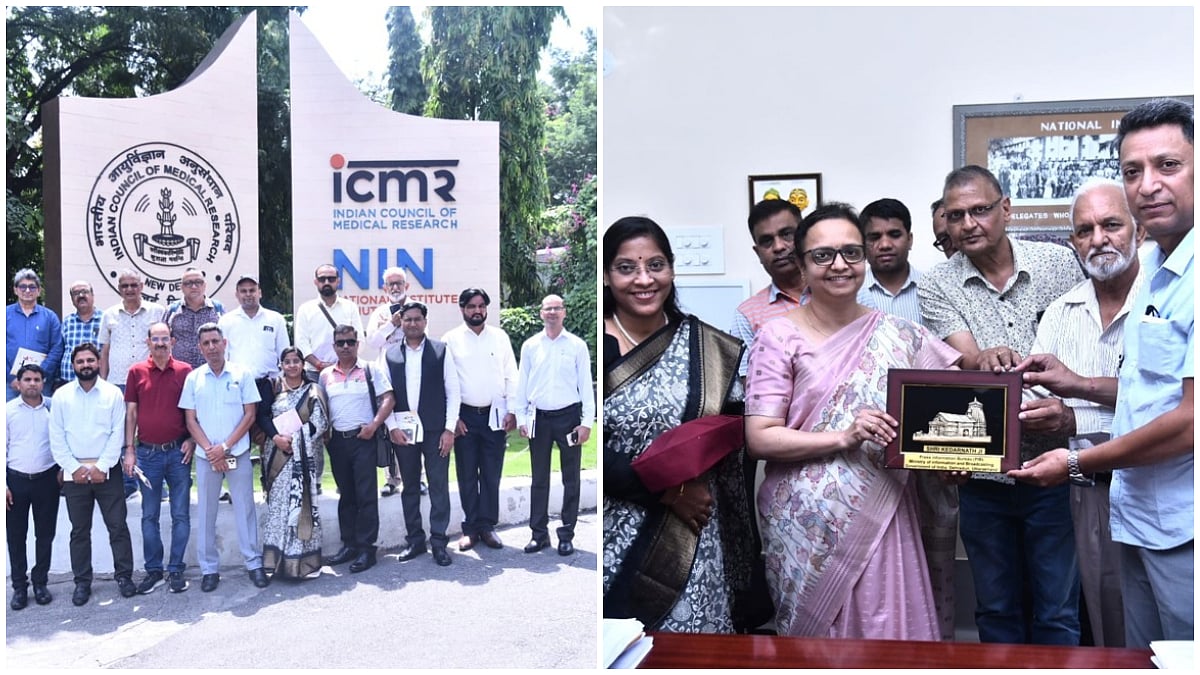
A 15-member media delegation from Uttarakhand visited the Indian Council of Medical Research–National Institute of Nutrition (ICMR-NIN) in Hyderabad today. The visit was part of a Hyderabad Press Tour organised by the Press Information Bureau (PIB).
The journalists were briefed by Director of ICMR-NIN, Dr. Bharati Kulkarni, about the institute's role in generating scientific evidence on food composition, nutrient requirements, and dietary guidelines. Dr. Kulkarni explained that the Indian Food Composition Tables (IFCT) provide detailed information on energy, protein, micronutrients, and minerals available in various food items consumed in the country.
The media delegation was also informed about the significance of Nutrient Requirements for Indians and Recommended Dietary Allowances (RDAs). Dr. Kulkarni explained that these establish the basis for nutritional requirements across different age groups and physiological conditions.
During the interaction on the Dietary Guidelines for Indians (DGIs), the media delegation was informed about the importance of developing healthy eating habits from the early stages of childhood. Dr. Kulkarni highlighted the guideline on avoiding the consumption of added sugar in the diet of children below two years of age.
The journalists were also briefed on the double burden of malnutrition, including the growing problem of overweight and obesity among children. Dr. Kulkarni said that sedentary lifestyles and excessive consumption of foods high in fat, sugar, and salt (HFSS) are among the major contributing factors.
The delegation was further informed about research being undertaken on the specific nutritional properties of local agricultural products and millets of Uttarakhand. Dr. Kulkarni shared information about ongoing clinical and analytical studies assessing the impact of ragi (finger millet) consumption in reducing anaemia.
The media delegation also participated in technical sessions conducted by Dr. Subba Rao M. Gavaravarapu, Head and Scientist-G, Nutrition Information, Communication and Health Education (NICHE) Division, ICMR-NIN. During the session, the journalists were briefed about current nutrition-related challenges.
The visit provided the journalists an opportunity to gain first-hand information about nutrition research, public health education, and the institute's contribution to national policies and welfare programmes.
The media delegation's visit to ICMR-NIN is significant as it highlights the importance of nutrition research and public health education in the country. The visit also underscores the need for awareness about healthy eating habits and the importance of dietary diversity.
In conclusion, the visit of the Uttarakhand media delegation to ICMR-NIN in Hyderabad was an informative and enriching experience. It provided the journalists with a deeper understanding of nutrition research and public health education, and the importance of promoting healthy eating habits in the country.
The visit is also a testament to the efforts of the Press Information Bureau (PIB) in promoting awareness about important issues such as nutrition and public health. The PIB's initiative to organise the Hyderabad Press Tour has provided a platform for journalists to engage with experts and gain a deeper understanding of critical issues affecting the country.
Overall, the visit of the Uttarakhand media delegation to ICMR-NIN in Hyderabad was a successful and informative event. It highlights the importance of collaboration between the media, research institutions, and government agencies in promoting awareness about critical issues such as nutrition and public health.
Frequently asked questions
What was the purpose of the Uttarakhand media delegation's visit to ICMR-NIN?
The purpose of the visit was to provide the journalists with an opportunity to gain first-hand information about nutrition research, public health education, and the institute's contribution to national policies and welfare programmes.
What are the Indian Food Composition Tables (IFCT)?
The Indian Food Composition Tables (IFCT) provide detailed information on energy, protein, micronutrients, and minerals available in various food items consumed in the country.