Fertiliser Vessels Stranded at Indian Ports
Congestion hits major ports, affects kharif sowing season. Geopolitical tensions worsen situation.
'%3E%3Crect%20width%3D'96'%20height%3D'96'%20fill%3D'%230B6E4F'%2F%3E%3Ccircle%20cx%3D'30'%20cy%3D'24'%20r%3D'44'%20fill%3D'%23fff'%20opacity%3D'.12'%2F%3E%3Ccircle%20cx%3D'60'%20cy%3D'74'%20r%3D'40'%20fill%3D'%23000'%20opacity%3D'.10'%2F%3E%3C%2Fg%3E%3Cg%20fill%3D'none'%20stroke%3D'%23fff'%20stroke-width%3D'3.2'%20stroke-linecap%3D'round'%20stroke-linejoin%3D'round'%3E%3Cpolyline%20points%3D'31%2C59%2041%2C49%2049%2C54%2063%2C37'%2F%3E%3Cpolyline%20points%3D'55%2C37%2063%2C37%2063%2C45'%2F%3E%3C%2Fg%3E%3C%2Fsvg%3E)
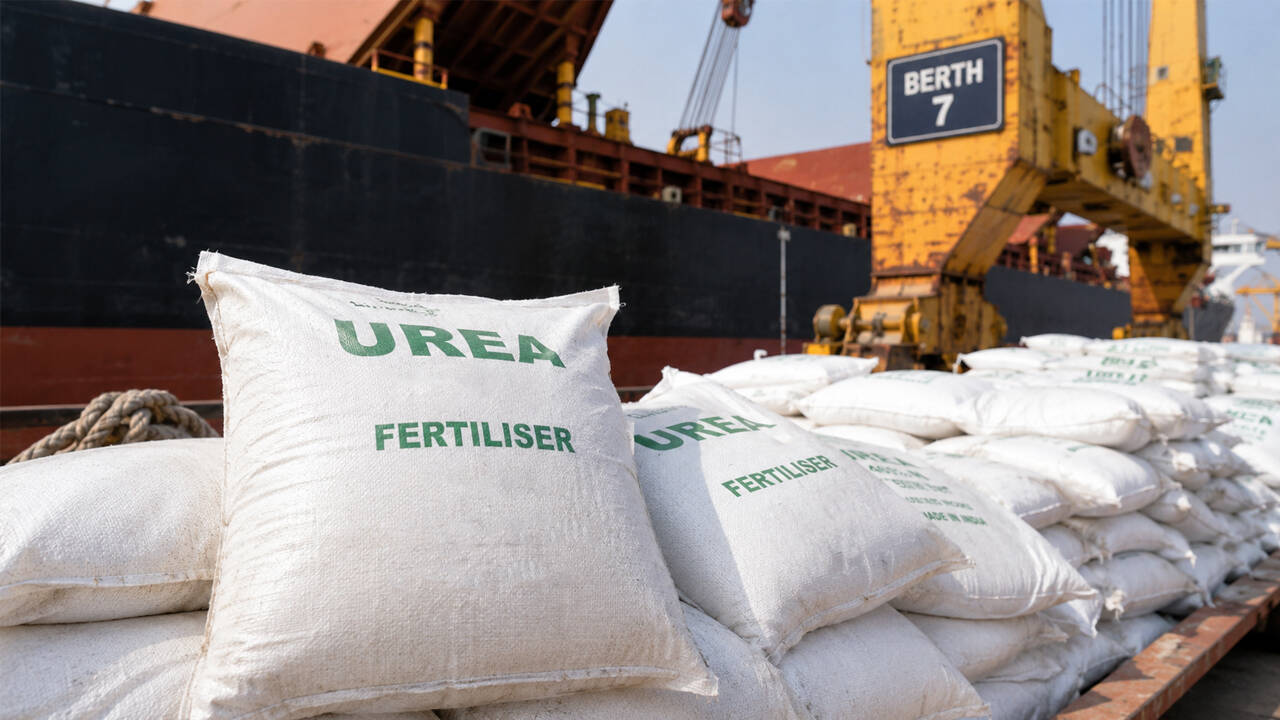
A significant number of fertiliser vessels are currently stranded at major Indian ports, including Kandla, Mundra, Jawaharlal Nehru Port (Nhava Sheva), and Chennai. This congestion has occurred at a critical time, coinciding with the kharif sowing season, when fertilisers are in high demand.
According to industry officials, the situation has been exacerbated by the rerouting of vessels due to ongoing geopolitical tensions. This has resulted in a substantial delay in the delivery of fertilisers, which could have far-reaching consequences for the agricultural sector.
The kharif sowing season, which typically takes place between June and September, is a crucial period for Indian farmers. During this time, they rely heavily on fertilisers to ensure a bountiful harvest. However, with many fertiliser vessels stranded at ports, there are concerns that the supply of these essential nutrients may be disrupted.
The congestion at Indian ports is not a new phenomenon, but the current situation has been worsened by the geopolitical tensions. The rerouting of vessels has led to a significant increase in transit times, resulting in delays and additional costs for importers.
The Jawaharlal Nehru Port (Nhava Sheva), one of the busiest ports in India, has been particularly affected by the congestion. The port, which handles a significant portion of the country's fertiliser imports, has seen a substantial increase in waiting times for vessels.
The situation at other major ports, including Kandla and Mundra, is also critical. These ports, which are located on the western coast of India, play a vital role in the country's fertiliser supply chain. The congestion at these ports has resulted in a shortage of fertilisers in several states, including Gujarat and Maharashtra.
The Indian government has been working to address the issue, but a solution has yet to be found. In the meantime, farmers and fertiliser importers are bearing the brunt of the congestion. The situation highlights the need for improved infrastructure and more efficient logistics at Indian ports.
The impact of the congestion on the agricultural sector could be significant. A shortage of fertilisers could lead to reduced crop yields, which could have far-reaching consequences for the Indian economy. The government and industry stakeholders must work together to find a solution to the congestion at Indian ports and ensure that fertilisers are delivered to farmers in a timely manner.
In conclusion, the congestion at Indian ports has resulted in a significant number of fertiliser vessels being stranded, which could have serious consequences for the agricultural sector. The situation highlights the need for improved infrastructure and more efficient logistics at Indian ports, and the government and industry stakeholders must work together to find a solution.
Frequently asked questions
Which Indian ports are affected by congestion?
Major ports including Kandla, Mundra, Jawaharlal Nehru Port (Nhava Sheva), and Chennai are affected.
What is the impact of congestion on the agricultural sector?
The congestion could lead to a shortage of fertilisers, resulting in reduced crop yields and far-reaching consequences for the Indian economy.