Bhopal Artisans Create Eco-Friendly Rakhis From Bamboo, Cow Dung
Bhopal artisans make eco-friendly rakhis from natural elements. Sales surge as festival approaches.
'%3E%3Crect%20width%3D'96'%20height%3D'96'%20fill%3D'%23B3261E'%2F%3E%3Ccircle%20cx%3D'30'%20cy%3D'24'%20r%3D'44'%20fill%3D'%23fff'%20opacity%3D'.12'%2F%3E%3Ccircle%20cx%3D'60'%20cy%3D'74'%20r%3D'40'%20fill%3D'%23000'%20opacity%3D'.10'%2F%3E%3C%2Fg%3E%3Cg%20fill%3D'%23fff'%3E%3Crect%20x%3D'29'%20y%3D'49'%20width%3D'8'%20height%3D'19'%20rx%3D'1'%2F%3E%3Crect%20x%3D'39'%20y%3D'40'%20width%3D'9'%20height%3D'28'%20rx%3D'1'%2F%3E%3Crect%20x%3D'50'%20y%3D'45'%20width%3D'8'%20height%3D'23'%20rx%3D'1'%2F%3E%3Crect%20x%3D'60'%20y%3D'53'%20width%3D'7'%20height%3D'15'%20rx%3D'1'%2F%3E%3Crect%20x%3D'41'%20y%3D'34'%20width%3D'5'%20height%3D'6'%2F%3E%3C%2Fg%3E%3C%2Fsvg%3E)
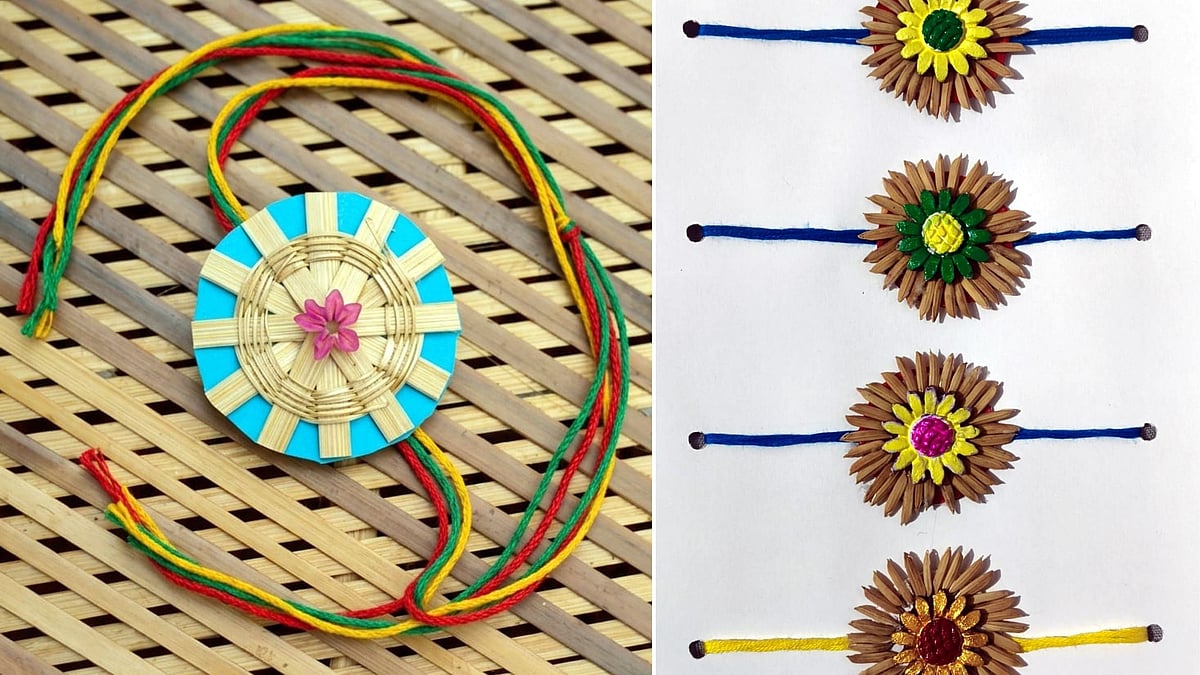
In Bhopal, Madhya Pradesh, artisans are taking a unique approach to traditional rakhi-making by using natural elements like bamboo, cow dung, paddy, fabric, sandalwood, and fabric scraps.
These eco-friendly rakhis are not only skin-safe but also biodegradable, making them an environmentally friendly alternative to traditional plastic rakhis.
Dharmendra Rohar, a state award-winning bamboo artisan, has been crafting bamboo rakhis for five years. He incorporates paddy, thread, and fabric scraps into his designs, which are made entirely from natural elements.
Rohar started production 15 days ago and has already sold 75 pieces from his house workshop. He expects sales to surge as the festival approaches.
According to Rohar, the rakhis made from bamboo, paddy, and thread are eco-friendly and safe for the skin. If buried in soil, they decompose into natural compost, unlike plastic options that harm the environment.
Rohar also conducts rakhi-making workshops in schools and colleges to promote the use of eco-friendly materials.
Another artisan, Jitendra Kumar Rathore, and his wife, Pushpa Rathore, have crafted a 100% pure Gomaye Vedic Rakshasutra using cow dung and paddy.
The significance of this rakhi lies in the fact that when brothers tie it, they resolve to protect cows alongside protecting their sisters.
These disposable, skin-safe rakhis are priced between Rs 20 and Rs 90 and are currently being sold at the ongoing Sawan Mela at Gauhar Mahal.
The initiative by Bhopal artisans is a step towards promoting eco-friendly traditions and reducing plastic waste.
As the festival of Raksha Bandhan approaches, the demand for eco-friendly rakhis is expected to increase, providing a unique opportunity for artisans to showcase their skills and contribute to a sustainable environment.
The use of natural elements in rakhi-making is a significant shift from traditional materials and highlights the importance of adopting eco-friendly practices in daily life.
In conclusion, the efforts of Bhopal artisans to create eco-friendly rakhis from bamboo, cow dung, and other natural elements are a commendable step towards promoting sustainability and reducing plastic waste.
Frequently asked questions
What materials are used to make eco-friendly rakhis?
Eco-friendly rakhis are made from natural elements like bamboo, cow dung, paddy, fabric, sandalwood, and fabric scraps.
Are eco-friendly rakhis biodegradable?
Yes, eco-friendly rakhis are biodegradable and decompose into natural compost when buried in soil.