Antarctica Had Rainforest Near South Pole
Ancient rainforest found, Climate change implications
'%3E%3Crect%20width%3D'96'%20height%3D'96'%20fill%3D'%23B3261E'%2F%3E%3Ccircle%20cx%3D'30'%20cy%3D'24'%20r%3D'44'%20fill%3D'%23fff'%20opacity%3D'.12'%2F%3E%3Ccircle%20cx%3D'60'%20cy%3D'74'%20r%3D'40'%20fill%3D'%23000'%20opacity%3D'.10'%2F%3E%3C%2Fg%3E%3Cg%20fill%3D'%23fff'%3E%3Crect%20x%3D'29'%20y%3D'49'%20width%3D'8'%20height%3D'19'%20rx%3D'1'%2F%3E%3Crect%20x%3D'39'%20y%3D'40'%20width%3D'9'%20height%3D'28'%20rx%3D'1'%2F%3E%3Crect%20x%3D'50'%20y%3D'45'%20width%3D'8'%20height%3D'23'%20rx%3D'1'%2F%3E%3Crect%20x%3D'60'%20y%3D'53'%20width%3D'7'%20height%3D'15'%20rx%3D'1'%2F%3E%3Crect%20x%3D'41'%20y%3D'34'%20width%3D'5'%20height%3D'6'%2F%3E%3C%2Fg%3E%3C%2Fsvg%3E)
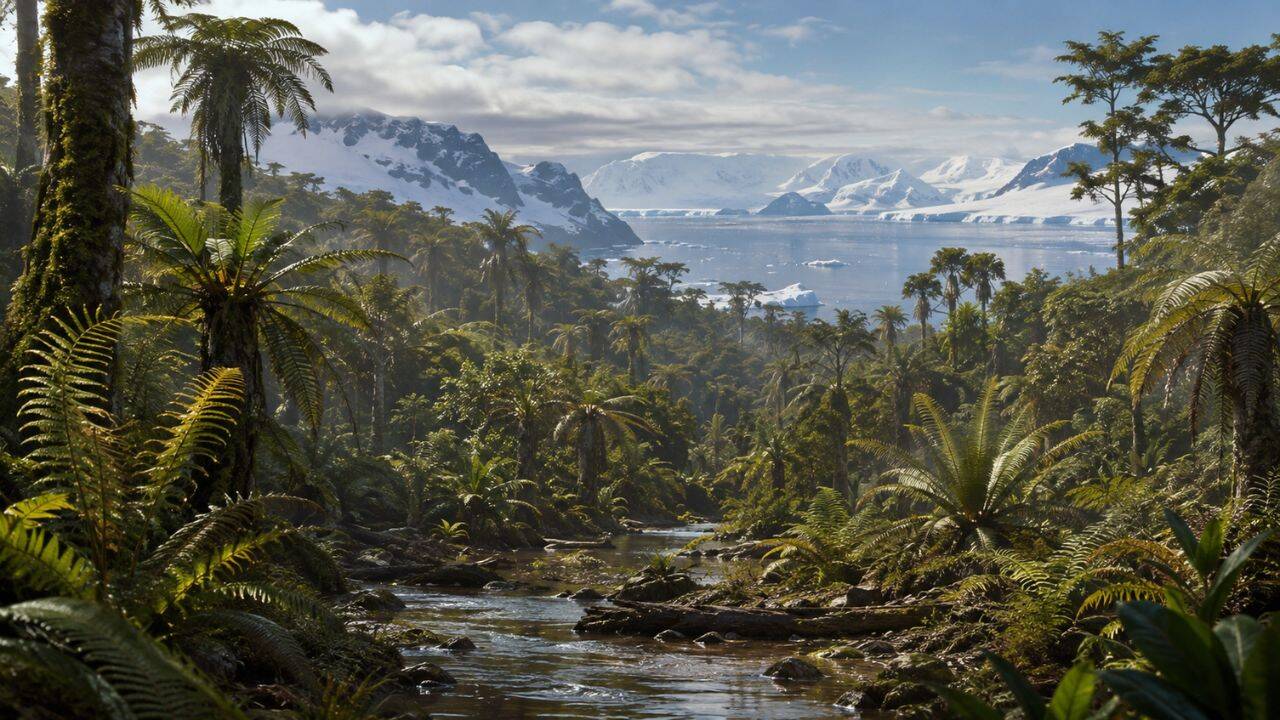
A remarkable discovery has been made in Antarctica, revealing that the continent once had a rainforest located just 900 km from the South Pole. This finding has significant implications for our understanding of the Earth's climate history.
The discovery was made through the analysis of fossilized plants and other geological evidence. The rainforest is believed to have existed during a period of significant warming on the planet, which allowed for the growth of lush vegetation in what is now one of the coldest and driest places on Earth.
The presence of a rainforest in Antarctica suggests that the continent's climate was much warmer and more humid in the past. This is consistent with other evidence of ancient warming periods, which have been linked to changes in the Earth's orbit and variations in the amount of solar energy the planet receives.
The discovery of the Antarctic rainforest has important implications for our understanding of climate change. It suggests that the Earth's climate is capable of undergoing significant and rapid changes, and that these changes can have a profound impact on the environment.
The Antarctic rainforest is believed to have existed during the Cretaceous period, which spanned from around 145 to 65 million years ago. During this time, the supercontinent of Gondwana, which included Antarctica, began to break apart, leading to significant changes in the global climate.
The discovery of the Antarctic rainforest is a significant finding that sheds new light on the Earth's climate history. It highlights the importance of continued research into the Earth's climate and the need for a better understanding of the complex and dynamic processes that shape our planet.
The implications of this discovery are far-reaching and have significant relevance to the current debate on climate change. It emphasizes the need for continued monitoring and research into the Earth's climate, as well as the importance of taking action to mitigate the effects of climate change.
In conclusion, the discovery of the Antarctic rainforest is a remarkable finding that has significant implications for our understanding of the Earth's climate history. It highlights the importance of continued research and the need for a better understanding of the complex and dynamic processes that shape our planet.
Frequently asked questions
When did the Antarctic rainforest exist?
The Antarctic rainforest is believed to have existed during the Cretaceous period, which spanned from around 145 to 65 million years ago.
What are the implications of the Antarctic rainforest discovery?
The discovery has significant implications for our understanding of climate change and highlights the importance of continued research into the Earth's climate.