MIT Robot Flies, Dives, Takes Off Again
A 300-gram robot can fly and dive underwater. It takes off again using its wings.
'%3E%3Crect%20width%3D'96'%20height%3D'96'%20fill%3D'%23B3261E'%2F%3E%3Ccircle%20cx%3D'30'%20cy%3D'24'%20r%3D'44'%20fill%3D'%23fff'%20opacity%3D'.12'%2F%3E%3Ccircle%20cx%3D'60'%20cy%3D'74'%20r%3D'40'%20fill%3D'%23000'%20opacity%3D'.10'%2F%3E%3C%2Fg%3E%3Cg%20fill%3D'%23fff'%3E%3Crect%20x%3D'29'%20y%3D'49'%20width%3D'8'%20height%3D'19'%20rx%3D'1'%2F%3E%3Crect%20x%3D'39'%20y%3D'40'%20width%3D'9'%20height%3D'28'%20rx%3D'1'%2F%3E%3Crect%20x%3D'50'%20y%3D'45'%20width%3D'8'%20height%3D'23'%20rx%3D'1'%2F%3E%3Crect%20x%3D'60'%20y%3D'53'%20width%3D'7'%20height%3D'15'%20rx%3D'1'%2F%3E%3Crect%20x%3D'41'%20y%3D'34'%20width%3D'5'%20height%3D'6'%2F%3E%3C%2Fg%3E%3C%2Fsvg%3E)
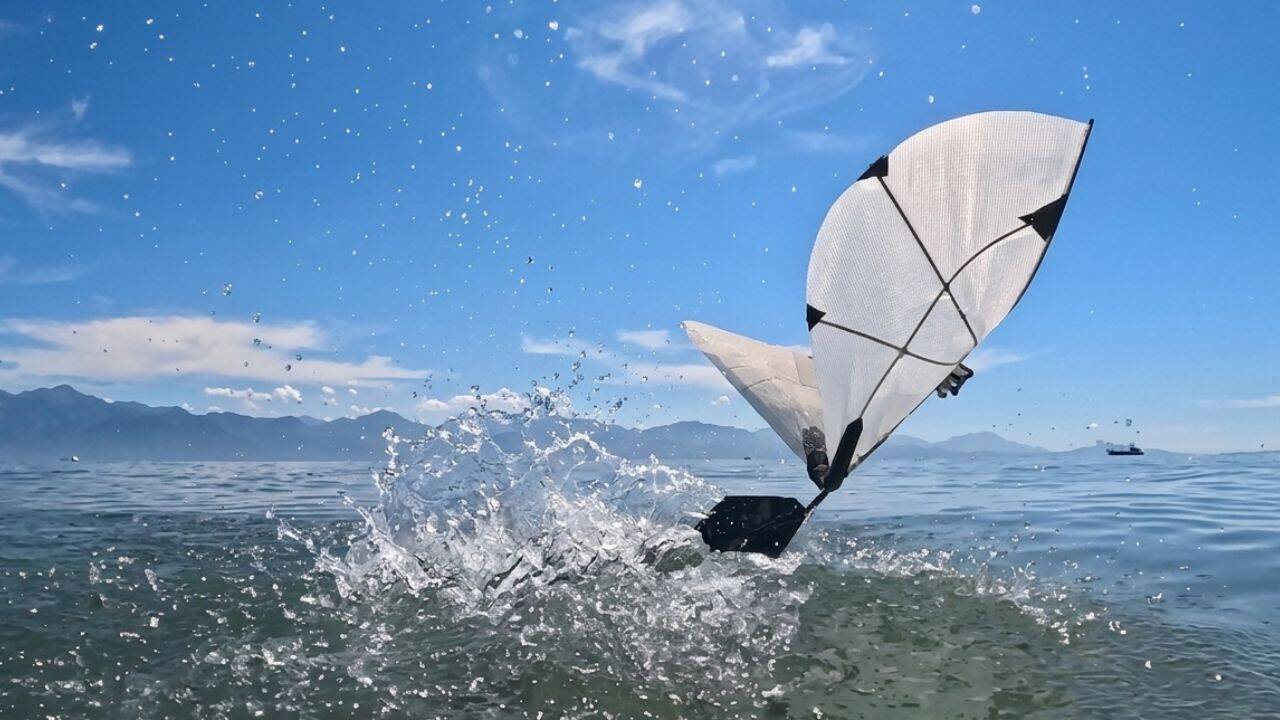
A team of engineers at MIT and EPFL has developed a revolutionary robot called the Flapping-wing Aerial-aquatic Vehicle (FAAV). This 300-gram robot is designed to mimic the movements of diving birds, such as the Atlantic puffin.
The FAAV is the first machine capable of completing a full cycle of swimming, diving, and launching back into the sky using its wings. This is a significant achievement, as previous machines have required separate propellers or legs to transition between water and air.
The FAAV's ability to fly and dive is made possible by its unique wing design. The wings are capable of flapping at high speeds, allowing the robot to generate the lift and thrust needed to take off from the water's surface.
The development of the FAAV has significant implications for the field of robotics. It could potentially be used for a variety of applications, such as environmental monitoring, search and rescue missions, and underwater exploration.
The FAAV's design was inspired by the movements of diving birds, which are able to transition seamlessly between water and air. The team of engineers studied the movements of these birds and used this knowledge to design the FAAV's wing system.
The FAAV is a significant breakthrough in the field of robotics, and it has the potential to revolutionize the way we explore and interact with our environment. Its ability to fly and dive makes it an ideal candidate for a variety of applications, and its small size and lightweight design make it easy to transport and deploy.
The development of the FAAV is a testament to the power of biomimicry, which is the practice of using nature as a source of inspiration for engineering and design. By studying the movements of diving birds, the team of engineers was able to create a machine that is capable of performing a complex and difficult task.
The FAAV's capabilities make it an exciting and promising technology, and it will be interesting to see how it is used in the future. Its potential applications are vast, and it could potentially be used to make a significant impact in a variety of fields.
In conclusion, the FAAV is a remarkable machine that is capable of flying, diving, and taking off again. Its unique design and capabilities make it an ideal candidate for a variety of applications, and its development is a significant breakthrough in the field of robotics.