California Road Rebuilt with 330,000 Waste Tyres
California saves $300,000, rebuilds road with waste tyres. Innovative approach reduces waste.
'%3E%3Crect%20width%3D'96'%20height%3D'96'%20fill%3D'%23B3261E'%2F%3E%3Ccircle%20cx%3D'30'%20cy%3D'24'%20r%3D'44'%20fill%3D'%23fff'%20opacity%3D'.12'%2F%3E%3Ccircle%20cx%3D'60'%20cy%3D'74'%20r%3D'40'%20fill%3D'%23000'%20opacity%3D'.10'%2F%3E%3C%2Fg%3E%3Cg%20fill%3D'%23fff'%3E%3Crect%20x%3D'29'%20y%3D'49'%20width%3D'8'%20height%3D'19'%20rx%3D'1'%2F%3E%3Crect%20x%3D'39'%20y%3D'40'%20width%3D'9'%20height%3D'28'%20rx%3D'1'%2F%3E%3Crect%20x%3D'50'%20y%3D'45'%20width%3D'8'%20height%3D'23'%20rx%3D'1'%2F%3E%3Crect%20x%3D'60'%20y%3D'53'%20width%3D'7'%20height%3D'15'%20rx%3D'1'%2F%3E%3Crect%20x%3D'41'%20y%3D'34'%20width%3D'5'%20height%3D'6'%2F%3E%3C%2Fg%3E%3C%2Fsvg%3E)
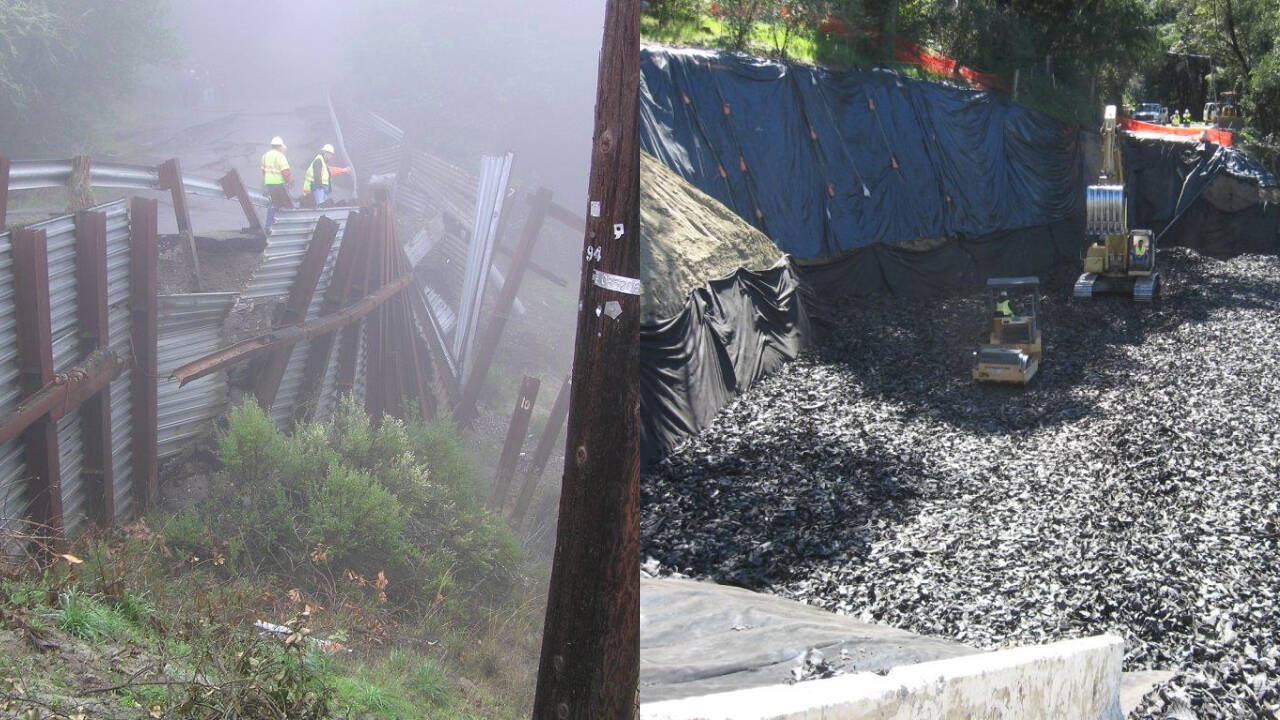
California has successfully rebuilt a failed road using 330,000 waste tyres, resulting in a significant cost savings of $300,000. This innovative approach not only reduced waste but also provided a unique solution to the state's infrastructure challenges.
The project involved recycling the waste tyres and using them as a material in the road's construction. This method has been shown to be effective in reducing the environmental impact of waste tyres, which can take hundreds of years to decompose.
The use of waste tyres in road construction is not a new concept, but it has gained popularity in recent years due to its potential to reduce waste and save costs. The process involves shredding the tyres into small pieces and then mixing them with other materials to create a durable and long-lasting road surface.
California's decision to rebuild the road with waste tyres was likely driven by the state's commitment to reducing waste and promoting sustainability. The state has set ambitious targets to reduce its greenhouse gas emissions and has implemented various initiatives to promote recycling and reduce waste.
The success of this project could have significant implications for other states and countries looking to adopt similar approaches to road construction. It highlights the potential for innovative thinking and creative problem-solving to address complex infrastructure challenges while also reducing waste and promoting sustainability.
The use of waste tyres in road construction also has the potential to create new job opportunities and stimulate local economies. As the demand for this type of construction material increases, it could lead to the development of new industries and businesses focused on tyre recycling and processing.
In conclusion, California's decision to rebuild a failed road with 330,000 waste tyres has resulted in significant cost savings and reduced waste. This innovative approach has the potential to be replicated in other states and countries, promoting sustainability and reducing the environmental impact of waste tyres.
The success of this project is a testament to the power of innovative thinking and creative problem-solving in addressing complex infrastructure challenges. As the world continues to urbanize and infrastructure demands increase, it is likely that we will see more examples of innovative approaches like this being adopted.
The project's outcome is a win-win for both the environment and the state's economy. It reduces waste, saves costs, and promotes sustainability, making it an attractive model for other states and countries to follow.
The road's reconstruction with waste tyres has also improved the safety and durability of the road, making it a better option for drivers and commuters. The use of recycled materials in road construction is a growing trend, and California's project is a notable example of its potential benefits.
Overall, the rebuilding of the road with waste tyres is a significant achievement for California, and its success could have far-reaching implications for the future of road construction and waste management.
Frequently asked questions
How many waste tyres were used to rebuild the road in California?
330,000 waste tyres were used to rebuild the road in California.
How much money did California save by rebuilding the road with waste tyres?
California saved $300,000 by rebuilding the road with waste tyres.