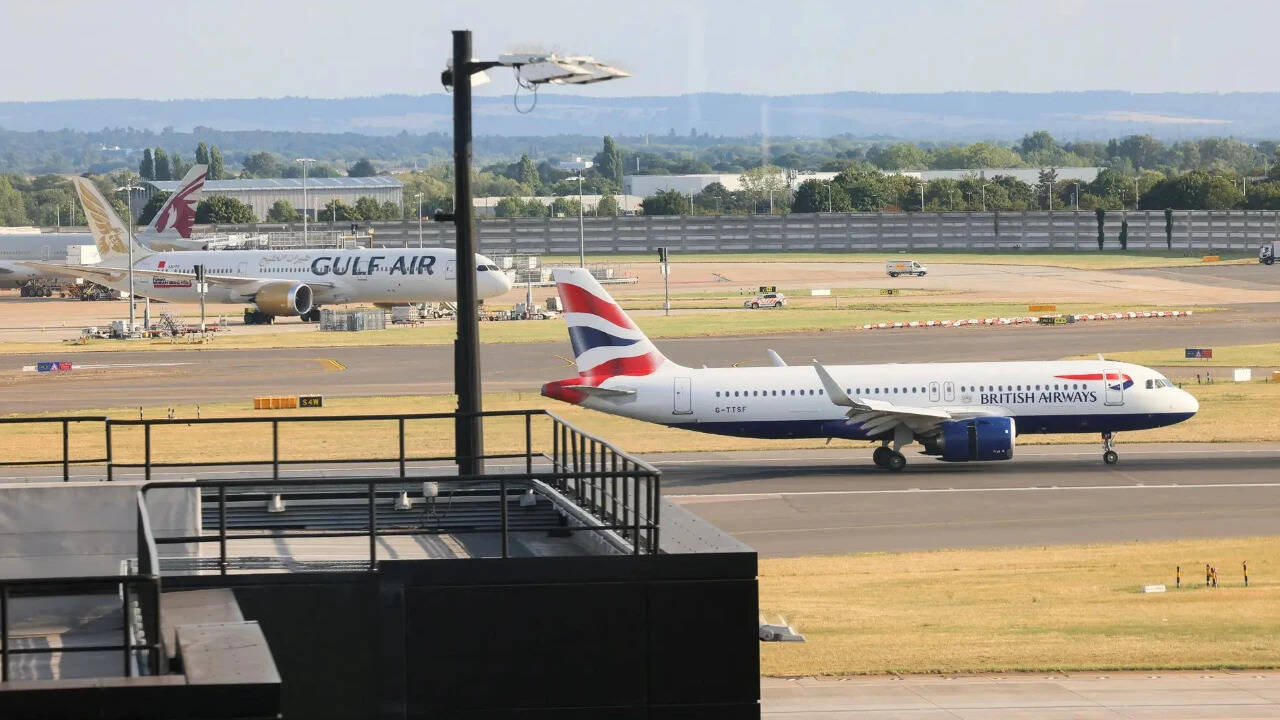
UK Air Traffic Control Glitch Cancels 300 Flights
Technical issue affects UK airports, multiple airlines disrupted.
'%3E%3Crect%20width%3D'96'%20height%3D'96'%20fill%3D'%23B3261E'%2F%3E%3Ccircle%20cx%3D'30'%20cy%3D'24'%20r%3D'44'%20fill%3D'%23fff'%20opacity%3D'.12'%2F%3E%3Ccircle%20cx%3D'60'%20cy%3D'74'%20r%3D'40'%20fill%3D'%23000'%20opacity%3D'.10'%2F%3E%3C%2Fg%3E%3Cg%20fill%3D'%23fff'%3E%3Crect%20x%3D'29'%20y%3D'49'%20width%3D'8'%20height%3D'19'%20rx%3D'1'%2F%3E%3Crect%20x%3D'39'%20y%3D'40'%20width%3D'9'%20height%3D'28'%20rx%3D'1'%2F%3E%3Crect%20x%3D'50'%20y%3D'45'%20width%3D'8'%20height%3D'23'%20rx%3D'1'%2F%3E%3Crect%20x%3D'60'%20y%3D'53'%20width%3D'7'%20height%3D'15'%20rx%3D'1'%2F%3E%3Crect%20x%3D'41'%20y%3D'34'%20width%3D'5'%20height%3D'6'%2F%3E%3C%2Fg%3E%3C%2Fsvg%3E)
A major technical glitch in the UK's air traffic control system caused nearly 300 flights to be cancelled on Tuesday. The issue, which was reported by flight monitoring website Flightradar24, affected departing flights across various UK airports, including Heathrow, Stansted, and City airports in London, as well as airports in Manchester, Birmingham, Scotland, and elsewhere in the UK.
The National Air Traffic Services (NATS) confirmed the issue, stating that engineers were working urgently to resolve the problem. In an update, NATS announced that a fix had been implemented and the flight system was starting to recover. The air traffic control service apologized for the disruptions caused by the technical issue.
Heathrow Airport also acknowledged the issue, stating that it was supporting the local NATS team in their efforts to resolve the problem as quickly as possible. The airport apologized to those affected by the disruptions and advised passengers to check the status of their flight with their airline.
Multiple airlines, including British Airways, EasyJet, KLM, and Lufthansa, were affected by the technical issue. EasyJet reported that some of its flights were unable to operate due to the system failure, which caused delays to flights across Europe. Heathrow Airport's website showed that many short-haul flights departing for European destinations on Tuesday were canceled or delayed.
The cause of the technical problem was not immediately clear. However, the air traffic control service and affected airports were working to resolve the issue and minimize disruptions to passengers. The technical glitch highlighted the importance of a reliable air traffic control system in ensuring the smooth operation of flights.
The UK's air traffic control system is responsible for managing the flow of air traffic across the country. The system is designed to ensure the safe and efficient movement of aircraft, and any technical issues can have significant impacts on flight operations. In this case, the glitch caused widespread disruptions, affecting hundreds of flights and thousands of passengers.
The incident also underscored the need for robust backup systems and contingency plans to mitigate the effects of technical failures. Airports and airlines were forced to scramble to respond to the issue, with many passengers facing delays or cancellations.
As the situation continues to unfold, passengers are advised to check with their airlines for the latest information on flight schedules and disruptions. The UK's air traffic control service and affected airports are working to restore normal operations as quickly as possible.
The cancellation of nearly 300 flights due to a technical glitch in the UK's air traffic control system is a significant disruption to air travel in the region. The incident highlights the importance of reliable air traffic control systems and the need for robust contingency plans to minimize the impact of technical failures on passengers.
In conclusion, the technical glitch in the UK's air traffic control system caused significant disruptions to air travel, affecting hundreds of flights and thousands of passengers. The incident underscores the importance of reliable air traffic control systems and the need for robust contingency plans to mitigate the effects of technical failures.
Frequently asked questions
What caused the UK air traffic control glitch?
The cause of the technical problem was not immediately clear.
Which airlines were affected by the glitch?
Multiple airlines, including British Airways, EasyJet, KLM, and Lufthansa, were affected by the technical issue.