Mangrove Decline Reversed by Natural Regrowth
Decades of mangrove decline reversed, study reveals. Natural regrowth leads to recovery.
'%3E%3Crect%20width%3D'96'%20height%3D'96'%20fill%3D'%23B3261E'%2F%3E%3Ccircle%20cx%3D'30'%20cy%3D'24'%20r%3D'44'%20fill%3D'%23fff'%20opacity%3D'.12'%2F%3E%3Ccircle%20cx%3D'60'%20cy%3D'74'%20r%3D'40'%20fill%3D'%23000'%20opacity%3D'.10'%2F%3E%3C%2Fg%3E%3Cg%20fill%3D'%23fff'%3E%3Crect%20x%3D'29'%20y%3D'49'%20width%3D'8'%20height%3D'19'%20rx%3D'1'%2F%3E%3Crect%20x%3D'39'%20y%3D'40'%20width%3D'9'%20height%3D'28'%20rx%3D'1'%2F%3E%3Crect%20x%3D'50'%20y%3D'45'%20width%3D'8'%20height%3D'23'%20rx%3D'1'%2F%3E%3Crect%20x%3D'60'%20y%3D'53'%20width%3D'7'%20height%3D'15'%20rx%3D'1'%2F%3E%3Crect%20x%3D'41'%20y%3D'34'%20width%3D'5'%20height%3D'6'%2F%3E%3C%2Fg%3E%3C%2Fsvg%3E)
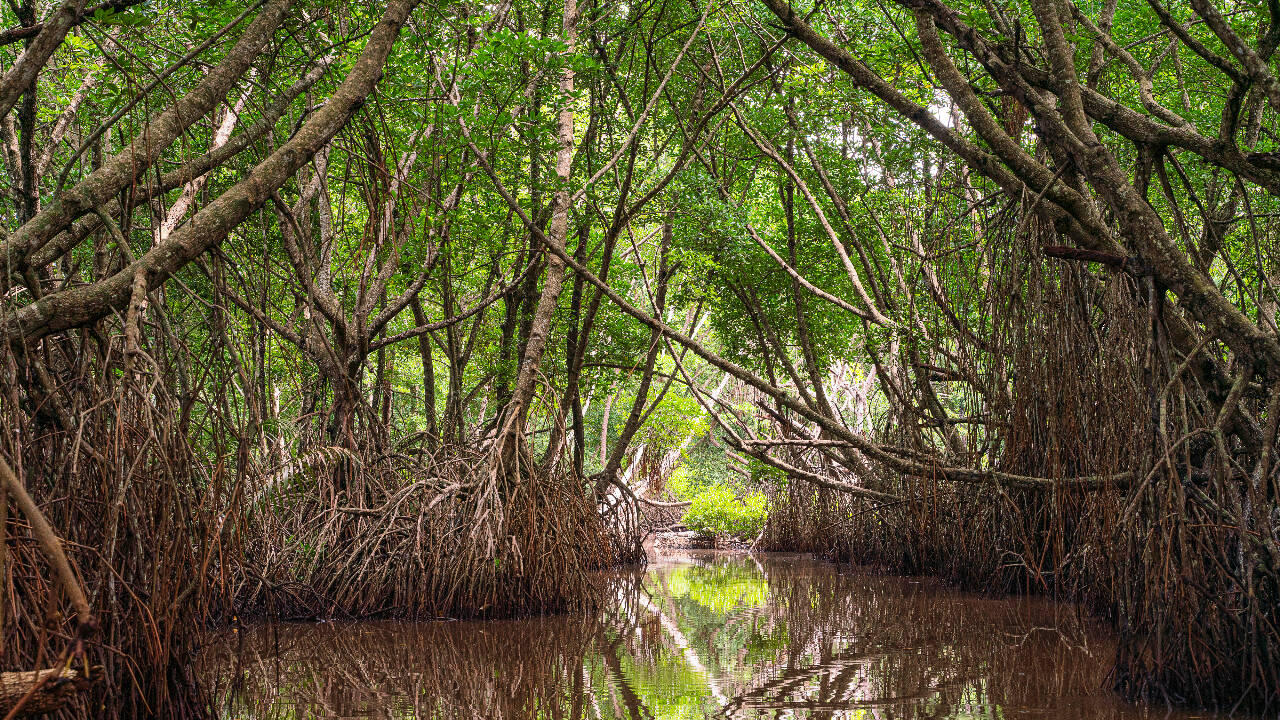
Mangrove forests, crucial for coastal ecosystems, have seen a significant decline over the decades due to human activities and natural disasters. However, a recent study has found that natural regrowth has reversed this decline, offering a hopeful sign for the future of these vital ecosystems.
The study, which analyzed the health and extent of mangrove forests, discovered that in many areas, mangroves are regrowing and expanding, indicating a positive trend. This regrowth is attributed to a combination of natural processes and conservation efforts.
Mangroves play a critical role in protecting coastlines from erosion and storm damage, as well as providing habitat for a diverse range of marine life. They also help to maintain water quality and support commercial fisheries. The decline of mangrove forests had raised concerns about the long-term health of these ecosystems and the potential consequences for coastal communities.
The reversal of mangrove decline is a significant development, as it suggests that with the right conditions, these ecosystems can recover. The study's findings highlight the importance of continued conservation efforts and the need to protect mangrove habitats from human impacts.
In recent years, there has been an increasing recognition of the importance of mangroves, leading to efforts to restore and protect these ecosystems. The study's results demonstrate that these efforts can be effective, and that natural regrowth can be a powerful tool in the recovery of mangrove forests.
The recovery of mangrove forests is not only beneficial for the environment, but also for local communities that depend on these ecosystems for their livelihood. Mangroves provide a range of ecosystem services, including shoreline protection, water filtration, and habitat for fisheries.
The study's findings have significant implications for conservation efforts and highlight the need for continued protection and restoration of mangrove habitats. As the world continues to face the challenges of climate change and environmental degradation, the recovery of mangrove forests offers a positive example of the potential for ecosystem recovery.
In conclusion, the reversal of mangrove decline is a significant and hopeful development, highlighting the potential for ecosystem recovery and the importance of continued conservation efforts. The study's findings demonstrate that with the right conditions, mangrove forests can regrow and expand, providing a range of benefits for both the environment and local communities.
Frequently asked questions
What is the current state of mangrove forests?
Mangrove forests have seen a decline over the decades, but recent studies have found that natural regrowth has reversed this decline.
Why are mangroves important?
Mangroves play a critical role in protecting coastlines, maintaining water quality, and supporting commercial fisheries, making them a vital ecosystem.