Navi Mumbai Activist Loses ₹1.5 Lakh In Fake Gas Bill Scam
Environment activist duped of ₹1.5 lakh, police issue advisory
'%3E%3Crect%20width%3D'96'%20height%3D'96'%20fill%3D'%23B3261E'%2F%3E%3Ccircle%20cx%3D'30'%20cy%3D'24'%20r%3D'44'%20fill%3D'%23fff'%20opacity%3D'.12'%2F%3E%3Ccircle%20cx%3D'60'%20cy%3D'74'%20r%3D'40'%20fill%3D'%23000'%20opacity%3D'.10'%2F%3E%3C%2Fg%3E%3Cg%20fill%3D'%23fff'%3E%3Crect%20x%3D'29'%20y%3D'49'%20width%3D'8'%20height%3D'19'%20rx%3D'1'%2F%3E%3Crect%20x%3D'39'%20y%3D'40'%20width%3D'9'%20height%3D'28'%20rx%3D'1'%2F%3E%3Crect%20x%3D'50'%20y%3D'45'%20width%3D'8'%20height%3D'23'%20rx%3D'1'%2F%3E%3Crect%20x%3D'60'%20y%3D'53'%20width%3D'7'%20height%3D'15'%20rx%3D'1'%2F%3E%3Crect%20x%3D'41'%20y%3D'34'%20width%3D'5'%20height%3D'6'%2F%3E%3C%2Fg%3E%3C%2Fsvg%3E)
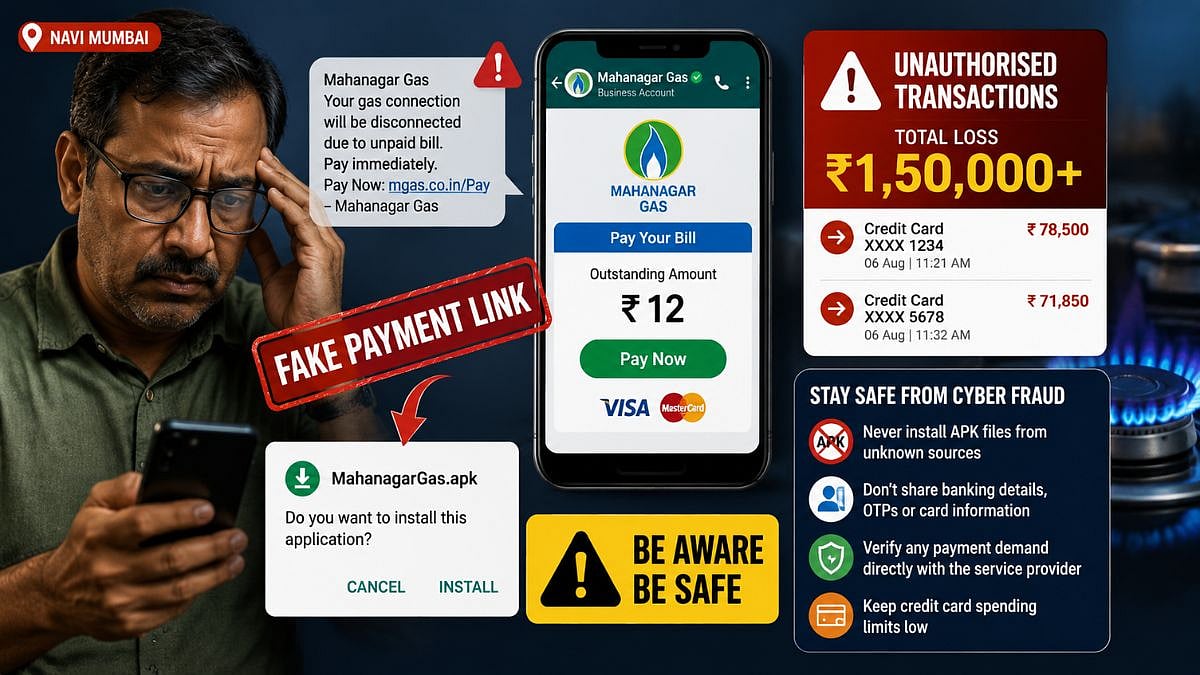
A Navi Mumbai-based environment activist, B. N. Kumar, was allegedly duped of more than ₹1.5 lakh in a cyber fraud after fraudsters posing as Mahanagar Gas representatives tricked him into paying an alleged pending bill of just ₹12 through a fake payment link.
The victim received a message threatening disconnection of his domestic gas connection over an unpaid bill. Shortly afterwards, he received calls from a man claiming to be from Mahanagar Gas, who said the earlier payment had not been reflected in the system. The caller then sent a WhatsApp link that opened what appeared to be an official Mahanagar Gas payment page displaying outstanding dues of ₹12.
Under the pretext of clearing the nominal amount, the fraudster persuaded Kumar to install an application with the '.APK' extension and asked him to enter his credit card details, claiming that debit card and UPI payment options were unavailable. Within minutes, unauthorised transactions worth more than ₹1.5 lakh were carried out using two of Kumar's credit cards before he realised he had fallen victim to a cyber scam.
Kumar immediately blocked both credit cards after receiving multiple OTP alerts and lodged complaints with the National Cyber Crime Reporting Portal (NCRP). The complaint has since been transferred to the Kopar Khairane Police Station for investigation.
The police have issued an advisory, warning citizens to be cautious of such scams. They have been receiving several complaints involving fraudsters impersonating utility service providers and using small pending dues as bait to convince victims to download malicious applications or disclose banking details.
Kumar has also warned people to be extremely cautious and never install applications received through unsolicited links, especially files ending with the '.APK' extension, and never share banking credentials with unknown callers. He also criticised the delay in reaching bank customer care during emergencies.
The police have urged citizens to verify any payment demand directly with the service provider, avoid installing APK files from unknown sources, keep credit card spending limits low, and never share OTPs or banking credentials with anyone.
This incident highlights the importance of being vigilant and cautious when receiving messages or calls from unknown numbers, especially those claiming to be from utility service providers. It also underscores the need for banks and financial institutions to have efficient customer care systems in place to help victims of cyber fraud.
The use of malicious APK files is a common tactic used by cybercriminals to steal banking credentials, intercept OTPs, or gain remote access to a victim's mobile phone. Citizens are advised to be aware of such tactics and take necessary precautions to protect themselves from cyber fraud.
In recent times, there have been several cases of cyber fraud reported in Navi Mumbai, with victims losing large amounts of money to fraudsters. The police have been working to crack down on such scams and have urged citizens to be cautious and report any suspicious activity.
The incident has also raised concerns about the safety and security of online transactions and the need for individuals to be aware of the risks involved. It is essential for people to be vigilant and take necessary precautions to protect themselves from cyber fraud.
In conclusion, the incident of the Navi Mumbai activist being duped of ₹1.5 lakh in a fake gas bill scam is a stark reminder of the need for citizens to be cautious and vigilant when receiving messages or calls from unknown numbers. It is essential for individuals to be aware of the tactics used by cybercriminals and take necessary precautions to protect themselves from cyber fraud.
Frequently asked questions
What is the common tactic used by cybercriminals to steal banking credentials?
The use of malicious APK files is a common tactic used by cybercriminals to steal banking credentials, intercept OTPs, or gain remote access to a victim's mobile phone.
What should citizens do to protect themselves from cyber fraud?
Citizens should verify any payment demand directly with the service provider, avoid installing APK files from unknown sources, keep credit card spending limits low, and never share OTPs or banking credentials with anyone.