SC To Define 'Industry' On Aug 20
SC verdict on 'industry' definition, Impact on labour relations
'%3E%3Crect%20width%3D'96'%20height%3D'96'%20fill%3D'%23B3261E'%2F%3E%3Ccircle%20cx%3D'30'%20cy%3D'24'%20r%3D'44'%20fill%3D'%23fff'%20opacity%3D'.12'%2F%3E%3Ccircle%20cx%3D'60'%20cy%3D'74'%20r%3D'40'%20fill%3D'%23000'%20opacity%3D'.10'%2F%3E%3C%2Fg%3E%3Cg%20fill%3D'%23fff'%3E%3Crect%20x%3D'29'%20y%3D'49'%20width%3D'8'%20height%3D'19'%20rx%3D'1'%2F%3E%3Crect%20x%3D'39'%20y%3D'40'%20width%3D'9'%20height%3D'28'%20rx%3D'1'%2F%3E%3Crect%20x%3D'50'%20y%3D'45'%20width%3D'8'%20height%3D'23'%20rx%3D'1'%2F%3E%3Crect%20x%3D'60'%20y%3D'53'%20width%3D'7'%20height%3D'15'%20rx%3D'1'%2F%3E%3Crect%20x%3D'41'%20y%3D'34'%20width%3D'5'%20height%3D'6'%2F%3E%3C%2Fg%3E%3C%2Fsvg%3E)
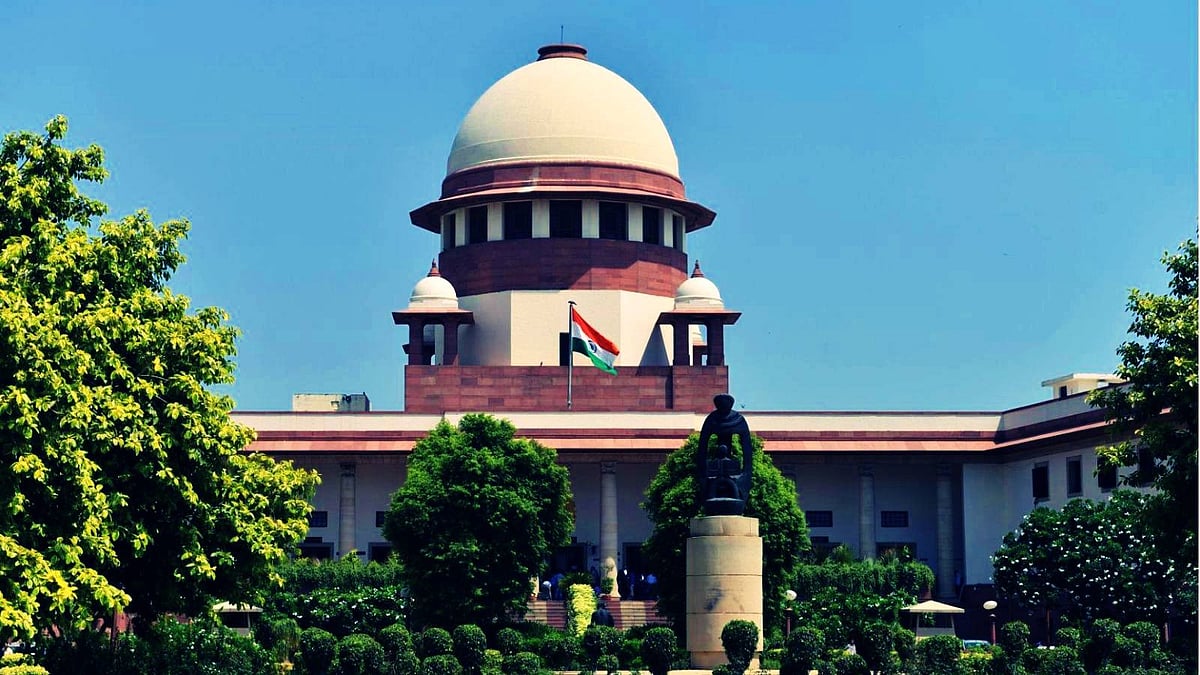
The Supreme Court's nine-judge Constitution bench is set to deliver its verdict on the definition of 'industry' under the Industrial Disputes Act, 1947, on August 20.
The bench, comprising Chief Justice Surya Kant and eight other judges, had reserved its judgment on March 19. The court will examine the legal correctness of a 1978 judgment that gave an expansive interpretation of the term 'industry' to govern labour relations.
In 1978, a seven-judge bench delivered a verdict that expanded the definition of 'industry' to include millions of employees in hospitals, educational institutions, clubs, and government welfare departments. This verdict brought these employees under the protection of the Industrial Disputes Act, 1947.
The nine-judge bench has clarified that its ruling will govern pending and existing disputes under the old regime. The top court had formulated broad issues to be adjudicated by the nine-judge bench, including whether the test laid down in the 1978 judgment is correct and whether subsequent amendments and codes have any impact on the interpretation of the term 'industry'.
One of the key issues to be adjudicated is whether social welfare activities and schemes undertaken by government departments or their instrumentalities can be considered 'industrial activities' for the purpose of the Industrial Disputes Act, 1947.
The Supreme Court's verdict is expected to have significant implications for labour relations in the country. The definition of 'industry' has been a contentious issue, with various stakeholders having different interpretations.
The Industrial Disputes Act, 1947, is a key legislation that governs labour relations in India. The act provides for the resolution of industrial disputes and the protection of workers' rights.
The Supreme Court's verdict will provide clarity on the definition of 'industry' and its implications for labour relations. The ruling will also have an impact on pending and existing disputes under the old regime.
In recent years, there have been significant changes in the labour laws in India. The government has introduced new codes and amendments to existing laws, aiming to improve labour relations and protect workers' rights.
The Supreme Court's verdict on the definition of 'industry' is a significant development in this context. The ruling will provide guidance on the interpretation of the term 'industry' and its implications for labour relations in the country.
The verdict is expected to have far-reaching implications for various stakeholders, including employers, employees, and government agencies. The ruling will provide clarity on the definition of 'industry' and its implications for labour relations, and will have an impact on the overall labour landscape in India.
The Supreme Court's decision to deliver its verdict on August 20 is a significant development in the context of labour relations in India. The ruling will provide guidance on the interpretation of the term 'industry' and its implications for labour relations, and will have an impact on the overall labour landscape in the country.
In conclusion, the Supreme Court's verdict on the definition of 'industry' is a significant development in the context of labour relations in India. The ruling will provide clarity on the definition of 'industry' and its implications for labour relations, and will have an impact on the overall labour landscape in the country.
Frequently asked questions
What is the Supreme Court's verdict on the definition of 'industry' about?
The Supreme Court's verdict is about the definition of 'industry' under the Industrial Disputes Act, 1947, and its implications for labour relations.
When will the Supreme Court deliver its verdict on the definition of 'industry'?
The Supreme Court will deliver its verdict on August 20.