IIT Bombay Study Reveals Brain Cancer Return Cause
IIT Bombay scientists find brain tissue softness affects tumour recurrence. Study identifies potential drug targets.
'%3E%3Crect%20width%3D'96'%20height%3D'96'%20fill%3D'%23B3261E'%2F%3E%3Ccircle%20cx%3D'30'%20cy%3D'24'%20r%3D'44'%20fill%3D'%23fff'%20opacity%3D'.12'%2F%3E%3Ccircle%20cx%3D'60'%20cy%3D'74'%20r%3D'40'%20fill%3D'%23000'%20opacity%3D'.10'%2F%3E%3C%2Fg%3E%3Cg%20fill%3D'%23fff'%3E%3Crect%20x%3D'29'%20y%3D'49'%20width%3D'8'%20height%3D'19'%20rx%3D'1'%2F%3E%3Crect%20x%3D'39'%20y%3D'40'%20width%3D'9'%20height%3D'28'%20rx%3D'1'%2F%3E%3Crect%20x%3D'50'%20y%3D'45'%20width%3D'8'%20height%3D'23'%20rx%3D'1'%2F%3E%3Crect%20x%3D'60'%20y%3D'53'%20width%3D'7'%20height%3D'15'%20rx%3D'1'%2F%3E%3Crect%20x%3D'41'%20y%3D'34'%20width%3D'5'%20height%3D'6'%2F%3E%3C%2Fg%3E%3C%2Fsvg%3E)
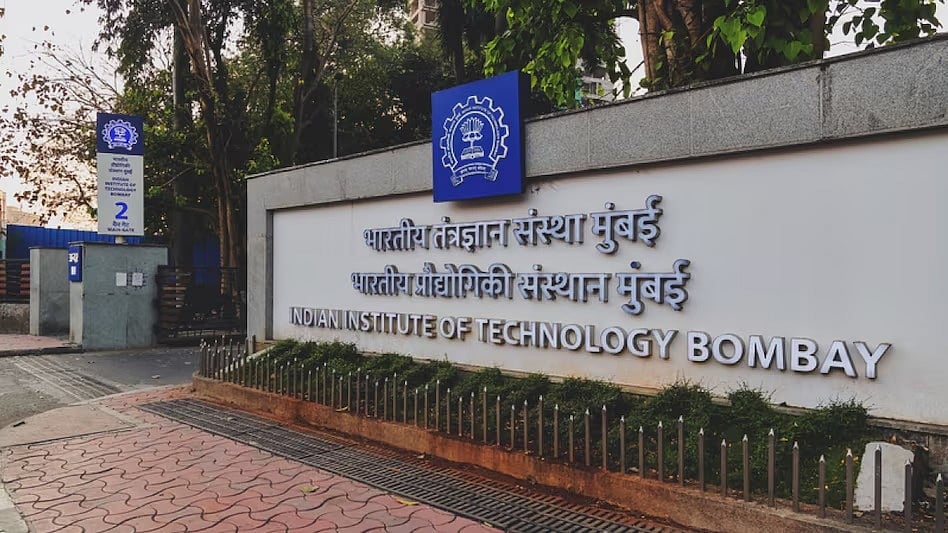
Scientists at the Indian Institute of Technology (IIT) Bombay have made a significant breakthrough in understanding why glioblastoma, a deadly form of brain cancer, often returns after treatment. The study, led by Prof. Abhijit Majumder, found that the softness of brain tissue plays a crucial role in making recurring tumours more aggressive.
Glioblastoma is a fast-growing brain tumour that is difficult to treat and often recurs even after surgery, radiation, and chemotherapy. Patients usually survive only six months to a year after diagnosis, while recurrent tumours are typically more invasive and resistant to treatment.
The research team recreated tumour relapse by exposing glioblastoma cells to radiation, leaving only the treatment-resistant cells alive. When these surviving cells were implanted into the brains of mice, they formed more aggressive tumours than the original cancer cells. However, when the same cells were grown on standard plastic laboratory dishes, they appeared no different from the original tumour cells.
To mimic the real brain environment, the team grew the cells on specially engineered soft hydrogels—gel-like materials that match the softness of brain tissue. On these surfaces, recurrent tumour cells became more invasive and mobile, closely resembling relapsed tumours seen in patients.
The researchers also identified a protein called PLEKHA7, which appeared only when cancer cells were grown on brain-like soft gels and was found at higher levels in recurrent patient tumours. Blocking PLEKHA7 significantly reduced tumour growth and spread.
In follow-up studies, the team found that a gene-regulating RNA molecule called NEAT1 became highly active in the brain's soft environment. Reducing NEAT1 levels slowed tumour growth and made three-dimensional tumoroids—miniature laboratory-grown tumours that closely resemble real cancers—less invasive.
The study challenges the long-standing practice of studying cancer cells on rigid plastic laboratory dishes and suggests that the physical environment influences cancer behaviour across different types of cancer. The findings have significant implications for the development of new treatments for glioblastoma and other types of cancer.
The research was conducted in collaboration with researchers from the Advanced Centre for Treatment, Research and Education in Cancer (ACTREC), Tata Memorial Centre, and was published in the journal Matrix Biology.
The study's results are a significant step forward in understanding the complex mechanisms of glioblastoma recurrence and have the potential to lead to the development of more effective treatments for this devastating disease.
In the context of cancer research, this study highlights the importance of considering the physical environment in which cancer cells grow and develop. The findings suggest that the softness of brain tissue plays a critical role in the recurrence of glioblastoma and that targeting specific proteins and genes may be an effective way to reduce tumour growth and spread.
For Mumbai residents, this study is particularly relevant as it was conducted by scientists at IIT Bombay, a leading research institution in the city. The study's findings have the potential to improve our understanding of cancer and lead to the development of more effective treatments, which could have a significant impact on public health in Mumbai and beyond.
In conclusion, the study by IIT Bombay scientists has made a significant breakthrough in understanding why glioblastoma returns after treatment. The findings have significant implications for the development of new treatments and highlight the importance of considering the physical environment in which cancer cells grow and develop.
Frequently asked questions
What is glioblastoma and how is it treated?
Glioblastoma is a fast-growing brain tumour that is difficult to treat and often recurs even after surgery, radiation, and chemotherapy.
What did the IIT Bombay study find?
The study found that the softness of brain tissue plays a crucial role in making recurring tumours more aggressive and identified potential drug targets.