Madras HC Allows Temporary Jobs For Karur Stampede Victims' Kin
Madras HC permits TN govt to give temporary jobs, court to review appointments later.

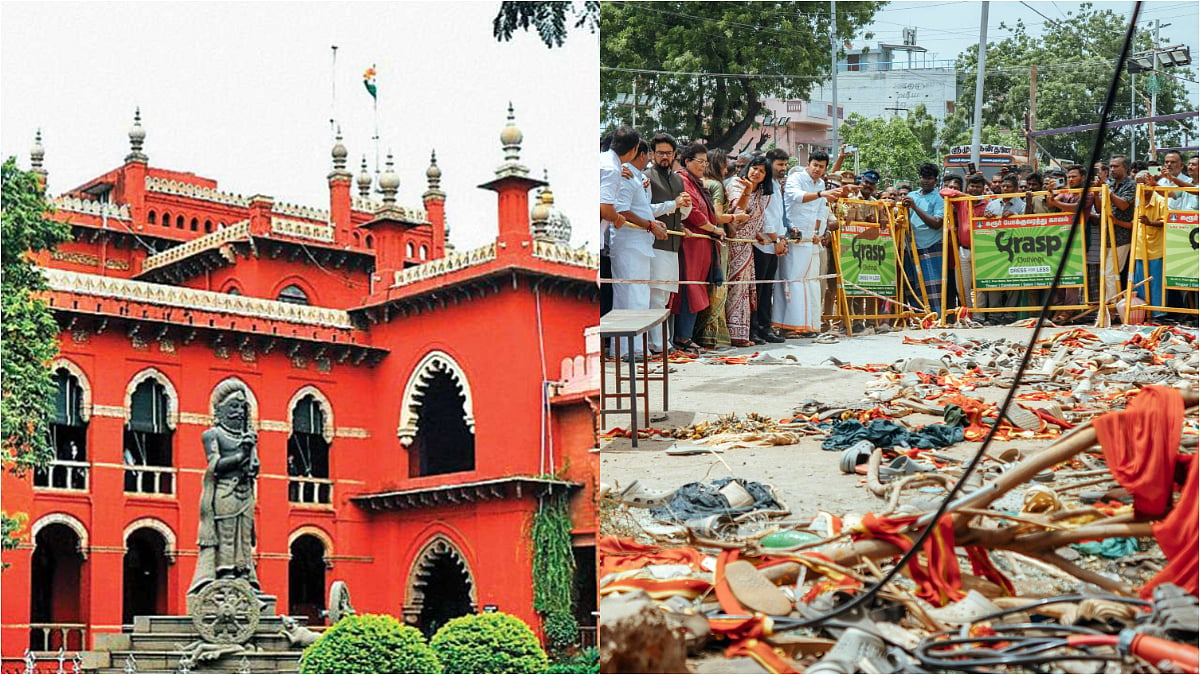
The Madras High Court has allowed the Tamil Nadu government to issue temporary appointment letters for government jobs to the families of those who died in the Karur stampede. The court's decision came on Friday, with the bench comprising Justices CV Karthikeyan and R Sakthivel permitting the state government to proceed with a function to hand over appointment letters to the families of the deceased.
The Karur stampede, which occurred in September 2025, resulted in the loss of 41 lives. The state government had decided to provide jobs to the families of the victims, which was challenged by a lawyer from Madurai, Theeran Thirumurugan. The petitioner argued that there was no uniform policy for providing permanent government employment in cases of public tragedies and that offering jobs in this incident could raise questions about equality and equal opportunity under Articles 14 and 16 of the Constitution.
The court observed that interfering with a policy decision of the government at this stage would be extremely narrow, but added that the employment offered would be temporary and subject to further orders. The bench said that the state shall proceed with the function on the condition that employment would be on a temporary basis, subject to judicial review. The court intends to hear the matter again on July 21, before the prospective persons to whom employment is offered would receive their first salary.
The High Court also directed the state to submit a report explaining the guidelines followed for compassionate appointments and whether those conditions were met in the present case. The state counsel informed the court that a similar application had been filed before the Supreme Court but was later withdrawn. The state also cited the example of government jobs being given to families of those killed in the Thoothukudi police firing.
However, the court said a distinction had to be made as the circumstances of the two incidents were different. The petitioner contended that the appointments violated existing rules governing compassionate appointments, which are meant to be strictly followed. The court's decision to keep the appointments under review suggests that the government's policy is under scrutiny.
The legal question before the court is whether the government's decision to provide jobs to the families of the victims violates the principles of equality and equal opportunity. The petitioner argued that every eligible individual has a constitutional right to compete for public employment and that appointments without clear guidelines would be arbitrary and unreasonable.
The court's decision to allow temporary appointments while keeping them under review is a cautious approach, considering the complexities of the issue. The matter will be heard again on July 21, and the court's final decision will have implications for the families of the victims and the government's policy on compassionate appointments.
In the context of the Karur stampede, the court's decision highlights the need for a uniform policy for providing government employment in cases of public tragedies. The incident has raised questions about the government's response to such tragedies and the need for a clear and consistent approach to providing relief to the affected families.
The significance of the court's decision lies in its implications for the government's policy on compassionate appointments and the principles of equality and equal opportunity. The court's approach suggests that while the government has the discretion to make policy decisions, such decisions must be made in a manner that is fair, reasonable, and consistent with the principles of the Constitution.
In conclusion, the Madras High Court's decision to allow temporary appointments for the families of the Karur stampede victims while keeping them under review is a significant development in the case. The court's approach highlights the need for a cautious and considered approach to such decisions, taking into account the complexities of the issue and the principles of equality and equal opportunity. The final decision of the court will have implications for the families of the victims, the government's policy on compassionate appointments, and the principles of equality and equal opportunity in India.