RBI To Release Draft Guidelines For Urban Cooperative Bank Licenses
RBI to issue draft guidelines for on-tap licensing of urban cooperative banks, paving way for fresh licenses. Governor Sanjay Malhotra announces the move amidst monetary policy review.
'%3E%3Crect%20width%3D'96'%20height%3D'96'%20fill%3D'%230B6E4F'%2F%3E%3Ccircle%20cx%3D'30'%20cy%3D'24'%20r%3D'44'%20fill%3D'%23fff'%20opacity%3D'.12'%2F%3E%3Ccircle%20cx%3D'60'%20cy%3D'74'%20r%3D'40'%20fill%3D'%23000'%20opacity%3D'.10'%2F%3E%3C%2Fg%3E%3Cg%20fill%3D'none'%20stroke%3D'%23fff'%20stroke-width%3D'3.2'%20stroke-linecap%3D'round'%20stroke-linejoin%3D'round'%3E%3Cpolyline%20points%3D'31%2C59%2041%2C49%2049%2C54%2063%2C37'%2F%3E%3Cpolyline%20points%3D'55%2C37%2063%2C37%2063%2C45'%2F%3E%3C%2Fg%3E%3C%2Fsvg%3E)
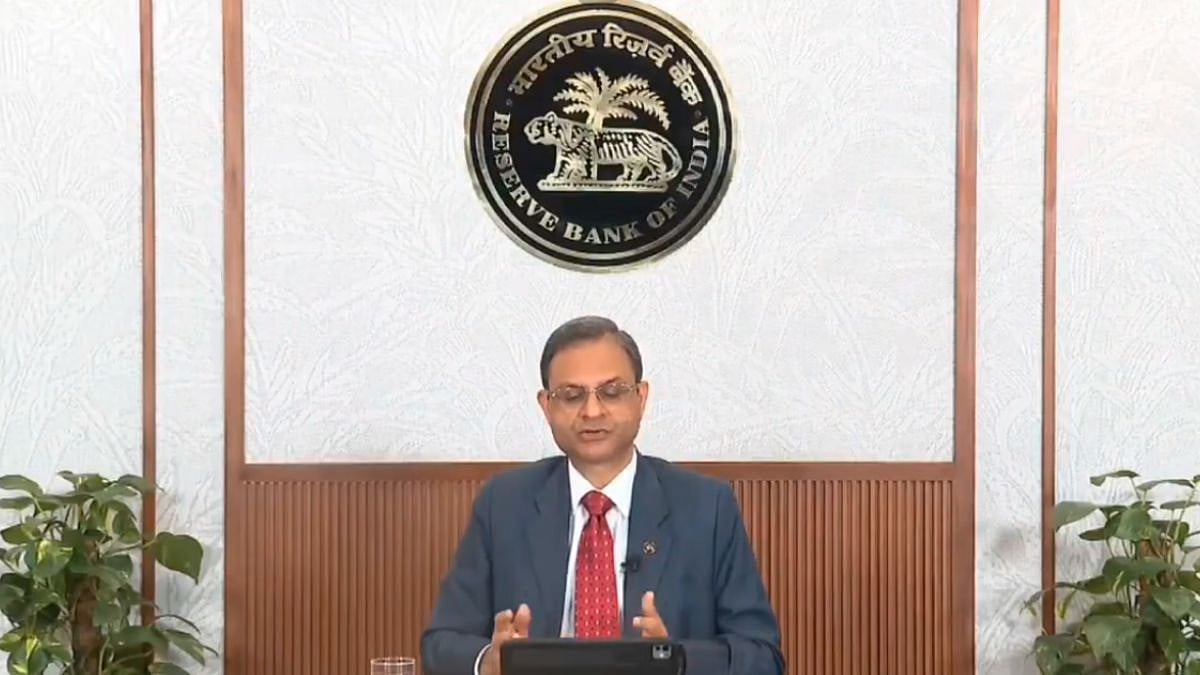
The Reserve Bank of India (RBI) will soon release draft guidelines for 'on-tap' licensing of urban cooperative banks, according to Governor Sanjay Malhotra. This move is expected to pave the way for fresh licenses for these banks.
The decision to lift the over two-decade-old pause on fresh licenses to urban cooperative banks was made earlier, and the central bank had launched a discussion paper on the move in January this year. The draft guidelines will be issued shortly for stakeholder consultation, Malhotra said in a statement on development and regulatory policies.
The RBI had paused the issuance of fresh licenses to urban cooperative banks due to risks around governance, particularly in banks controlled or dominated by political leaders. These risks had led to episodic stress at such lenders. However, with the new guidelines, the RBI aims to resume the 'on-tap' basis licensing for these banks, similar to universal banks.
In addition to the draft guidelines for urban cooperative banks, Malhotra also announced a review of guidelines on concentration risk management for Rural Co-operative Banks. The Credit Monitoring Arrangement (CMA) instructions issued in 2008 will be reviewed, taking into account the significant expansion and changes in the banking sector since then.
The review of guidelines on concentration risk management aims to address prudential concerns arising from concentrated lending. The draft amendment directions will be issued for wider stakeholder consultations, Malhotra assured.
The move to release draft guidelines for urban cooperative banks is part of the RBI's efforts to develop a vibrant co-operative sector. The central bank has been working to strengthen the regulatory framework for these banks, and the new guidelines are expected to play a crucial role in this process.
The RBI's decision to resume 'on-tap' licensing for urban cooperative banks is also expected to boost the growth of these banks. With the new guidelines, more banks are likely to be licensed, leading to increased competition and better services for customers.
In the context of the Indian banking sector, the move to release draft guidelines for urban cooperative banks is significant. The sector has undergone significant changes in recent years, with the RBI working to strengthen the regulatory framework and improve governance.
The RBI's efforts to develop a vibrant co-operative sector are also in line with the government's vision for the banking sector. The government has been working to promote financial inclusion and increase access to banking services, particularly in rural areas.
Overall, the RBI's decision to release draft guidelines for urban cooperative banks is a positive step towards developing a vibrant co-operative sector. The new guidelines are expected to pave the way for fresh licenses, boost growth, and improve governance in these banks.
The move is also expected to have a positive impact on the Indian economy, particularly in terms of financial inclusion and access to banking services. With more banks likely to be licensed, customers can expect better services and increased competition in the banking sector.
In conclusion, the RBI's decision to release draft guidelines for urban cooperative banks is a significant development in the Indian banking sector. The new guidelines are expected to play a crucial role in developing a vibrant co-operative sector, boosting growth, and improving governance in these banks.
Frequently asked questions
What is the significance of RBI's decision to release draft guidelines for urban cooperative banks?
The decision is expected to pave the way for fresh licenses, boost growth, and improve governance in these banks.
Why did the RBI pause the issuance of fresh licenses to urban cooperative banks?
The RBI had paused the issuance of fresh licenses due to risks around governance, particularly in banks controlled or dominated by political leaders.