Indore High Court Acquits Ex-Public Servant of Corruption Charges
Former CEO Sabeena Ninama cleared of corruption charges, High Court rules tenure doesn't imply guilt.
'%3E%3Crect%20width%3D'96'%20height%3D'96'%20fill%3D'%231A5276'%2F%3E%3Ccircle%20cx%3D'30'%20cy%3D'24'%20r%3D'44'%20fill%3D'%23fff'%20opacity%3D'.12'%2F%3E%3Ccircle%20cx%3D'60'%20cy%3D'74'%20r%3D'40'%20fill%3D'%23000'%20opacity%3D'.10'%2F%3E%3C%2Fg%3E%3Cg%20fill%3D'%23fff'%3E%3Cpath%20d%3D'M31%2041%20L48%2031%20L65%2041%20Z'%2F%3E%3Crect%20x%3D'33'%20y%3D'43'%20width%3D'4'%20height%3D'17'%2F%3E%3Crect%20x%3D'41'%20y%3D'43'%20width%3D'4'%20height%3D'17'%2F%3E%3Crect%20x%3D'51'%20y%3D'43'%20width%3D'4'%20height%3D'17'%2F%3E%3Crect%20x%3D'59'%20y%3D'43'%20width%3D'4'%20height%3D'17'%2F%3E%3Crect%20x%3D'30'%20y%3D'62'%20width%3D'36'%20height%3D'4'%20rx%3D'1'%2F%3E%3C%2Fg%3E%3C%2Fsvg%3E)
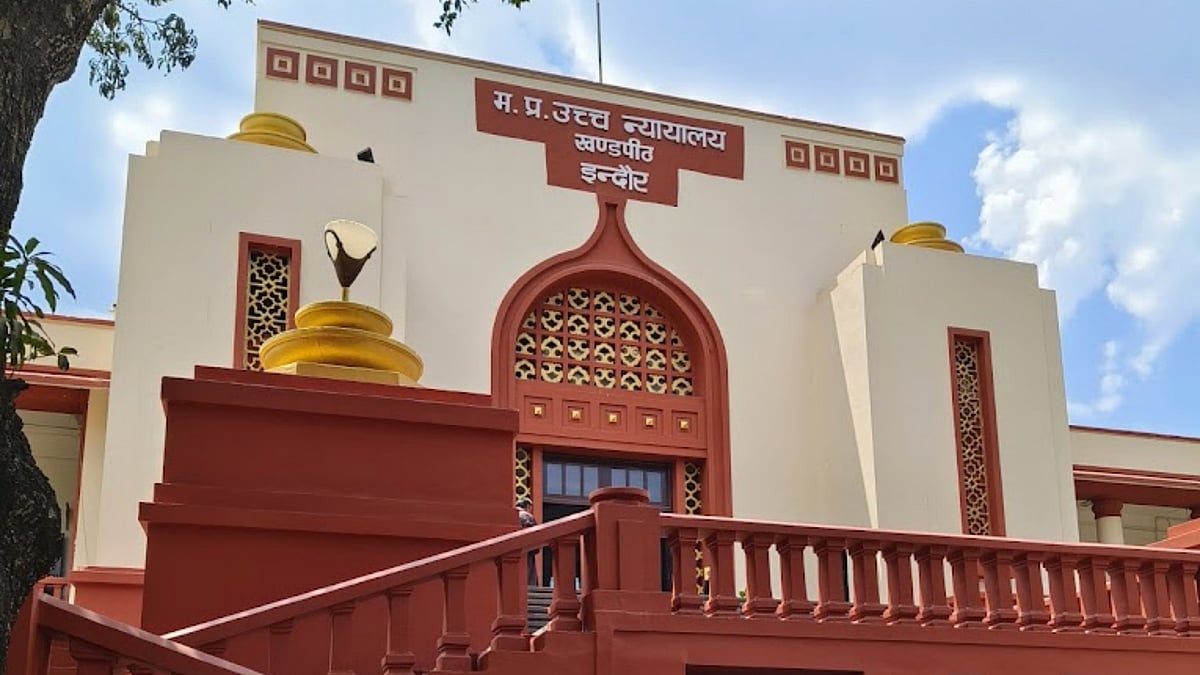
The Indore bench of the Madhya Pradesh High Court has acquitted former Janpad Panchayat CEO Sabeena Ninama of charges under the Prevention of Corruption Act, 1988, and Section 120-B of the IPC.
The single-judge bench of Justice Jai Kumar Pillai allowed the criminal appeal against a 2018 special court judgment, which had convicted Ninama of corruption charges. The case stemmed from alleged financial and administrative irregularities during Ninama's tenure as CEO in Ujjain from September 2002 to October 2003.
The prosecution had alleged Ninama's involvement in the missing of 110 transit passbooks, non-execution of auction agreements for 26 mines, and excess payments for recruitment advertisements. However, the defence argued that Ninama was neither the custodian of the transit passbooks nor responsible for maintaining the financial registers.
During the hearing, the senior counsel representing the appellant highlighted that Ninama had been exonerated in a parallel departmental inquiry. The defence also demonstrated that the mandatory deposits for mine auctions were made during her tenure, and legal notices were issued.
Reversing the trial court's decision, Justice Jai Kumar Pillai observed that a criminal court cannot convict a person merely because they held office during the period when irregularities came to light. The Court noted that the prosecution had not been able to prove that Ninama obtained any pecuniary advantage for herself or for any other person, or that she intentionally caused wrongful loss to the State Exchequer.
The High Court concluded that the prosecution failed to prove either criminal conspiracy or intentional abuse of official position beyond reasonable doubt. The Court set aside the 2018 conviction, ordered the refund of any fine paid, and fully discharged the appellant's bail bonds.
This judgment highlights the importance of proving mens rea, or dishonest intent, in corruption cases. The Court's decision emphasizes that supervisory oversight or administrative oversight cannot automatically be equated to criminal misconduct without concrete proof of dishonest intent.
The case has significant implications for public servants, as it reinforces the principle that tenure does not imply guilt. The judgment also underscores the need for the prosecution to prove corruption charges beyond reasonable doubt, rather than relying on circumstantial evidence.
In the context of Madhya Pradesh, this judgment is likely to have a positive impact on the state's bureaucracy, as it provides clarity on the standards of proof required in corruption cases. The decision is also expected to boost the morale of public servants, who may have been unfairly targeted in the past.
Overall, the Indore High Court's judgment in the Sabeena Ninama case is a significant development in the fight against corruption in India. It reinforces the importance of upholding the principles of justice and ensuring that public servants are not unfairly targeted or convicted without sufficient evidence.
The judgment is a reminder that the burden of proof lies with the prosecution, and that the accused is not required to prove their innocence. This is an important principle in the Indian justice system, and one that is essential for ensuring that justice is served.
In conclusion, the Indore High Court's decision to acquit Sabeena Ninama of corruption charges is a significant development in the fight against corruption in India. The judgment highlights the importance of proving mens rea, or dishonest intent, in corruption cases, and reinforces the principle that tenure does not imply guilt.
Frequently asked questions
What were the charges against Sabeena Ninama?
Sabeena Ninama was charged under the Prevention of Corruption Act, 1988, and Section 120-B of the IPC.
What was the outcome of the case?
The Indore High Court acquitted Sabeena Ninama of all charges, setting aside the 2018 conviction and ordering the refund of any fine paid.