Delhi-Meerut Corridor Gets 110 MW Solar Plant
India's fastest train corridor to run on solar power. 60% of power needs met.
'%3E%3Crect%20width%3D'96'%20height%3D'96'%20fill%3D'%230B6E4F'%2F%3E%3Ccircle%20cx%3D'30'%20cy%3D'24'%20r%3D'44'%20fill%3D'%23fff'%20opacity%3D'.12'%2F%3E%3Ccircle%20cx%3D'60'%20cy%3D'74'%20r%3D'40'%20fill%3D'%23000'%20opacity%3D'.10'%2F%3E%3C%2Fg%3E%3Cg%20fill%3D'none'%20stroke%3D'%23fff'%20stroke-width%3D'3.2'%20stroke-linecap%3D'round'%20stroke-linejoin%3D'round'%3E%3Cpolyline%20points%3D'31%2C59%2041%2C49%2049%2C54%2063%2C37'%2F%3E%3Cpolyline%20points%3D'55%2C37%2063%2C37%2063%2C45'%2F%3E%3C%2Fg%3E%3C%2Fsvg%3E)
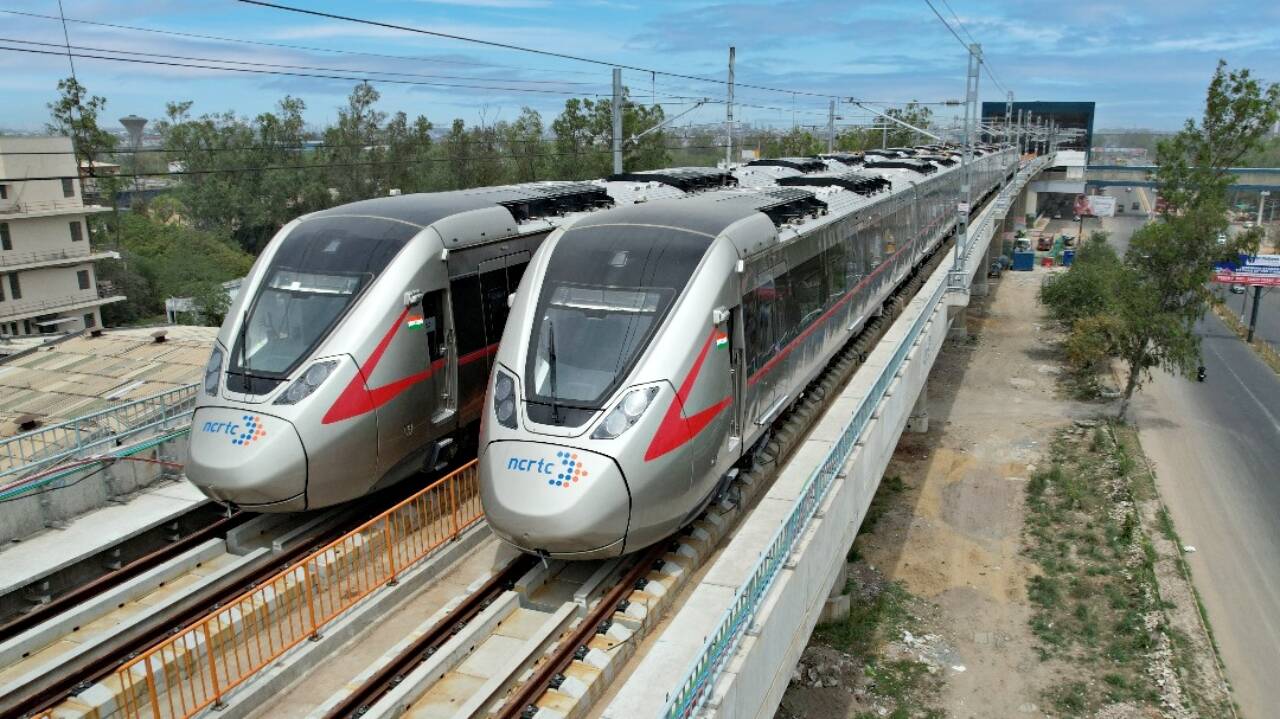
The Delhi-Meerut Namo Bharat corridor, India's fastest train corridor, is set to receive a significant portion of its power from a 110 MW captive solar plant. This solar plant is expected to fulfill nearly 60% of the corridor's electricity needs, marking a major step towards sustainable energy.
The National Capital Region Transport Corporation (NCRTC) has signed a power purchase agreement with NIRL NCRTC Renewables Limited (NNRL) for the project. This agreement paves the way for the implementation of the solar plant, which will provide a substantial amount of the corridor's power requirements.
The Delhi-Meerut Namo Bharat corridor is a significant infrastructure project in India, aiming to reduce travel time between Delhi and Meerut. The introduction of solar power to meet a major portion of its energy needs underscores the government's commitment to renewable energy and reducing carbon emissions.
The use of solar power in the Delhi-Meerut corridor will not only reduce the reliance on non-renewable energy sources but also decrease the corridor's carbon footprint. This initiative is in line with India's goals to increase the share of renewable energy in its energy mix and reduce greenhouse gas emissions.
The NCRTC's decision to opt for solar power is a testament to the growing importance of renewable energy in India's infrastructure development. As the country continues to urbanize and develop its infrastructure, the incorporation of sustainable energy sources will play a vital role in reducing the environmental impact of these projects.
The implementation of the solar plant is expected to have a positive impact on the environment, and it will also help to reduce the operating costs of the corridor. With the increasing focus on sustainable development, such initiatives are likely to become more common in India's infrastructure sector.
In the context of India's energy landscape, the Delhi-Meerut corridor's shift towards solar power is a significant development. The country has set ambitious targets to increase its renewable energy capacity, and such projects will contribute to achieving these goals. As India continues to grow and develop, the importance of sustainable energy sources will only continue to increase.
The introduction of solar power in the Delhi-Meerut corridor is a step towards a more sustainable future for India's infrastructure development. It highlights the potential for renewable energy to play a major role in the country's growth and development, while also reducing the environmental impact of infrastructure projects.
In conclusion, the Delhi-Meerut Namo Bharat corridor's adoption of solar power to meet 60% of its energy needs is a significant development in India's infrastructure sector. It underscores the government's commitment to renewable energy and sustainable development, and it is likely to have a positive impact on the environment and the operating costs of the corridor.
Frequently asked questions
What percentage of the Delhi-Meerut corridor's power needs will be met by solar energy?
Nearly 60% of the corridor's electricity needs will be fulfilled by the 110 MW captive solar plant.
Which company has signed a power purchase agreement for the Delhi-Meerut corridor's solar plant?
The National Capital Region Transport Corporation (NCRTC) has signed a power purchase agreement with NIRL NCRTC Renewables Limited (NNRL) for the project.