Gold Price Surge May Boost India's Economy by $400 Billion
India's economy could get a $400 billion boost from rising gold prices. Household wealth may increase, and gold-backed borrowing could rise.
'%3E%3Crect%20width%3D'96'%20height%3D'96'%20fill%3D'%230B6E4F'%2F%3E%3Ccircle%20cx%3D'30'%20cy%3D'24'%20r%3D'44'%20fill%3D'%23fff'%20opacity%3D'.12'%2F%3E%3Ccircle%20cx%3D'60'%20cy%3D'74'%20r%3D'40'%20fill%3D'%23000'%20opacity%3D'.10'%2F%3E%3C%2Fg%3E%3Cg%20fill%3D'none'%20stroke%3D'%23fff'%20stroke-width%3D'3.2'%20stroke-linecap%3D'round'%20stroke-linejoin%3D'round'%3E%3Cpolyline%20points%3D'31%2C59%2041%2C49%2049%2C54%2063%2C37'%2F%3E%3Cpolyline%20points%3D'55%2C37%2063%2C37%2063%2C45'%2F%3E%3C%2Fg%3E%3C%2Fsvg%3E)
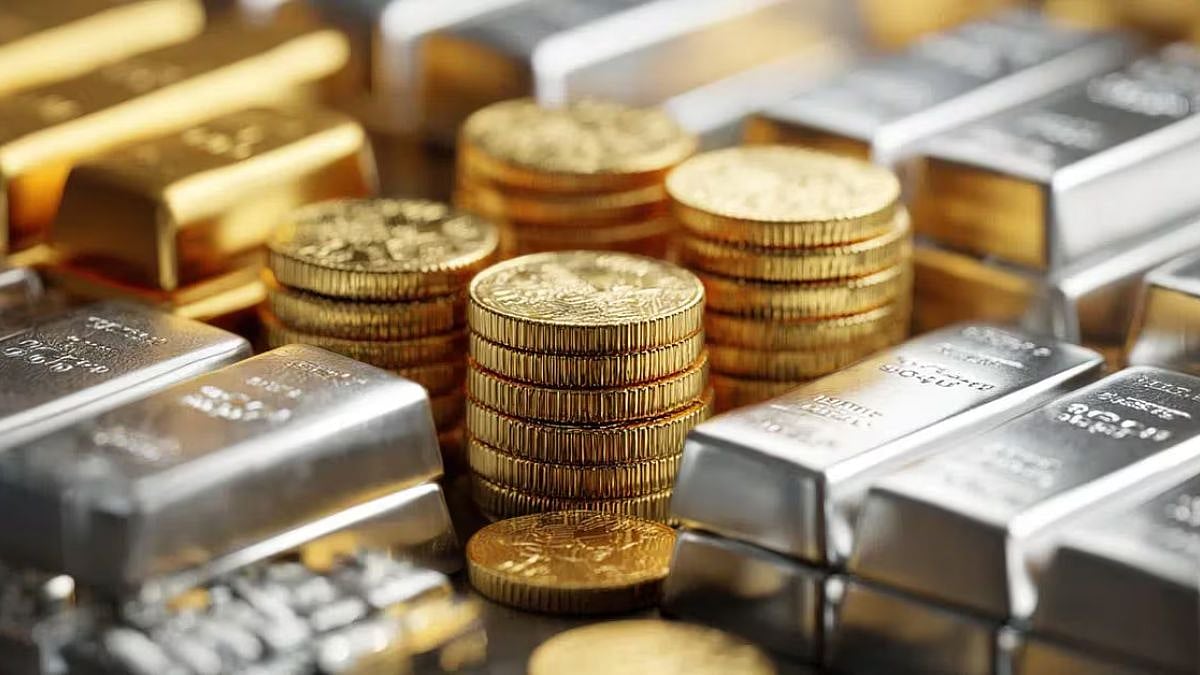
A significant surge in gold prices over the past two years could have a substantial impact on India's economy. According to a report by brokerage Jefferies, the increase in gold prices could lead to an underappreciated boost to the economy by increasing household wealth and creating greater scope for gold-backed borrowing.
As of March 2026, Indian households collectively own around 25,000 tonnes of gold, valued at approximately $3.9 trillion. This represents an increase of about $1.9 trillion in two years and is nearly four times the value of household equity holdings. The value of gold as a percentage of Indian household assets has also increased, from 15.4% in March 2023 to 24.2% in March 2026.
During the same period, total household wealth increased from $11.3 trillion to $16 trillion. The share of property in household assets declined from 51.3% to 47.6%, while bank deposits fell from 14.1% to 11.2%. Meanwhile, the share held in equities remained broadly stable.
Investment through gold exchange-traded funds has also expanded, with assets rising from $2.8 billion in March 2023 to $18.1 billion in July 2026. This growth in gold investment is a significant indicator of the increasing importance of gold in Indian household assets.
Jefferies estimates that gold is increasingly being used to obtain credit, with organised gold-loan assets under management reaching around $197 billion in March 2026, up 73% over two years. Such lending now represents about 7% of combined bank and NBFC credit. However, the brokerage estimates that only around 15% of household gold is currently monetised through formal or informal lending channels.
A rise in this ratio could generate an additional $15-20 billion in gold loans annually over the next two years. Jefferies estimates that another 10% increase in gold prices could add approximately $400 billion to household wealth and generate a further $20-25 billion in gold loans. Combined, these effects could provide an estimated 80-100 basis-point tailwind to GDP and consumer spending.
The brokerage expects gold prices to remain supported by fiscal pressures in the US and Japan, which could limit the ability of their central banks to raise interest rates aggressively. This could lead to a continued increase in gold prices, further boosting India's economy.
In conclusion, the surge in gold prices could have a significant impact on India's economy, increasing household wealth and creating greater scope for gold-backed borrowing. As the Indian economy continues to grow, the importance of gold as a component of household assets is likely to increase, providing a potential boost to the economy.
The potential impact of the gold price surge on India's economy is substantial, and it will be important to monitor the situation closely in the coming months. With the continued growth of gold investment and gold-backed lending, India's economy could experience a significant boost, leading to increased consumer spending and economic growth.
Overall, the report by Jefferies highlights the potential benefits of the gold price surge for India's economy. As the economy continues to evolve, it will be important to consider the role of gold in household assets and its potential impact on the economy.
The growth of gold-backed lending is also likely to play a significant role in the economy, providing access to credit for households and businesses. As the gold price continues to rise, it is likely that more households will turn to gold-backed lending, further boosting the economy.
In the coming years, it will be important to monitor the impact of the gold price surge on India's economy. With the potential for significant growth and increased consumer spending, the gold price surge could have a lasting impact on the economy.
The report by Jefferies provides valuable insights into the potential benefits of the gold price surge for India's economy. As the economy continues to grow and evolve, it will be important to consider the role of gold in household assets and its potential impact on the economy.
In conclusion, the gold price surge could have a significant impact on India's economy, increasing household wealth and creating greater scope for gold-backed borrowing. The potential benefits of the gold price surge are substantial, and it will be important to monitor the situation closely in the coming months.
Frequently asked questions
How much gold do Indian households own?
Indian households collectively own around 25,000 tonnes of gold, valued at approximately $3.9 trillion.
What is the potential impact of the gold price surge on India's economy?
The gold price surge could add approximately $400 billion to household wealth and generate a further $20-25 billion in gold loans, providing an estimated 80-100 basis-point tailwind to GDP and consumer spending.