Ladakh Sterilises 2,950 Dogs to Protect Cranes
Dogs threaten cranes, Ladakh acts to save them. Conservation efforts underway.
'%3E%3Crect%20width%3D'96'%20height%3D'96'%20fill%3D'%23B3261E'%2F%3E%3Ccircle%20cx%3D'30'%20cy%3D'24'%20r%3D'44'%20fill%3D'%23fff'%20opacity%3D'.12'%2F%3E%3Ccircle%20cx%3D'60'%20cy%3D'74'%20r%3D'40'%20fill%3D'%23000'%20opacity%3D'.10'%2F%3E%3C%2Fg%3E%3Cg%20fill%3D'%23fff'%3E%3Crect%20x%3D'29'%20y%3D'49'%20width%3D'8'%20height%3D'19'%20rx%3D'1'%2F%3E%3Crect%20x%3D'39'%20y%3D'40'%20width%3D'9'%20height%3D'28'%20rx%3D'1'%2F%3E%3Crect%20x%3D'50'%20y%3D'45'%20width%3D'8'%20height%3D'23'%20rx%3D'1'%2F%3E%3Crect%20x%3D'60'%20y%3D'53'%20width%3D'7'%20height%3D'15'%20rx%3D'1'%2F%3E%3Crect%20x%3D'41'%20y%3D'34'%20width%3D'5'%20height%3D'6'%2F%3E%3C%2Fg%3E%3C%2Fsvg%3E)
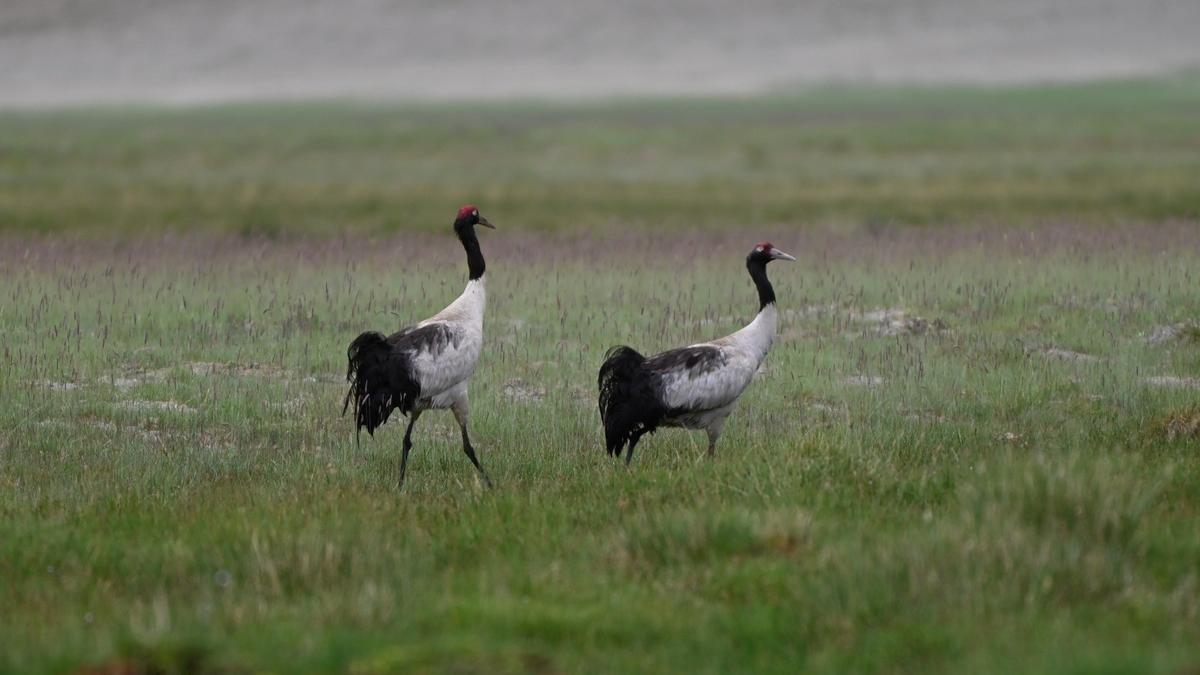
In a bid to conserve the Black-necked Crane, a culturally significant and vulnerable species, the Ladakh administration has undertaken a massive dog sterilisation programme.
Over 2,950 dogs have been sterilised in the region to mitigate the threat they pose to the cranes and other wildlife. The Black-necked Crane, which is the state bird of Ladakh, is listed as 'vulnerable' globally, with fewer than 100 individuals surviving in India.
The estimated world population of the Black-necked Crane is roughly 11,000-12,000, with the majority found on the Tibetan Plateau. The species holds immense cultural significance in Ladakh, making conservation efforts crucial.
The dog sterilisation programme is a key component of the conservation strategy, as dogs are known to prey on the cranes and their habitats. By reducing the dog population, the administration aims to create a safer environment for the cranes to thrive.
Ladakh's unique biodiversity and ecosystem make it an ideal habitat for various species, including the Black-necked Crane. However, human activities and invasive species have threatened the delicate balance of the ecosystem, necessitating conservation efforts.
The Black-necked Crane is an iconic species in Ladakh, featuring prominently in the region's culture and folklore. Its conservation is not only essential for maintaining the ecological balance but also for preserving the cultural heritage of the region.
The success of the dog sterilisation programme will be crucial in determining the fate of the Black-necked Crane in Ladakh. The administration's efforts to conserve the species are a testament to the region's commitment to protecting its unique biodiversity.
In conclusion, the conservation of the Black-necked Crane is a pressing concern that requires immediate attention and action. The Ladakh administration's efforts to sterilise dogs and protect the cranes' habitat are a step in the right direction, and it is essential to continue and expand these efforts to ensure the long-term survival of the species.
The fate of the Black-necked Crane in India hangs in the balance, and the success of conservation efforts in Ladakh will be critical in determining the species' future. With continued support and action, it is possible to protect the Black-necked Crane and preserve the unique cultural and ecological heritage of Ladakh.
The conservation of the Black-necked Crane is not just a local issue but also a global concern, as the species is found in other parts of the world, including the Tibetan Plateau. International cooperation and collaboration will be essential in protecting the species and its habitat.
Ultimately, the conservation of the Black-necked Crane requires a multi-faceted approach that involves the government, local communities, and conservation organisations. By working together, it is possible to protect the species and preserve the delicate balance of the ecosystem in Ladakh.
The Black-necked Crane's survival is a collective responsibility, and it is essential to take immediate action to protect the species and its habitat. The Ladakh administration's efforts to conserve the species are a positive step, and it is crucial to continue and expand these efforts to ensure the long-term survival of the Black-necked Crane.
Frequently asked questions
Why are dogs being sterilised in Ladakh?
Dogs are being sterilised in Ladakh to protect the Black-necked Crane and other wildlife from the threat posed by dogs.
How many Black-necked Cranes survive in India?
Fewer than 100 Black-necked Cranes survive in India, while the estimated world population is roughly 11,000-12,000 individuals.