Government: UPI to Remain Free for Consumers
No transaction charges for person-to-person UPI payments. Merchant transactions may be charged.
'%3E%3Crect%20width%3D'96'%20height%3D'96'%20fill%3D'%230B6E4F'%2F%3E%3Ccircle%20cx%3D'30'%20cy%3D'24'%20r%3D'44'%20fill%3D'%23fff'%20opacity%3D'.12'%2F%3E%3Ccircle%20cx%3D'60'%20cy%3D'74'%20r%3D'40'%20fill%3D'%23000'%20opacity%3D'.10'%2F%3E%3C%2Fg%3E%3Cg%20fill%3D'none'%20stroke%3D'%23fff'%20stroke-width%3D'3.2'%20stroke-linecap%3D'round'%20stroke-linejoin%3D'round'%3E%3Cpolyline%20points%3D'31%2C59%2041%2C49%2049%2C54%2063%2C37'%2F%3E%3Cpolyline%20points%3D'55%2C37%2063%2C37%2063%2C45'%2F%3E%3C%2Fg%3E%3C%2Fsvg%3E)
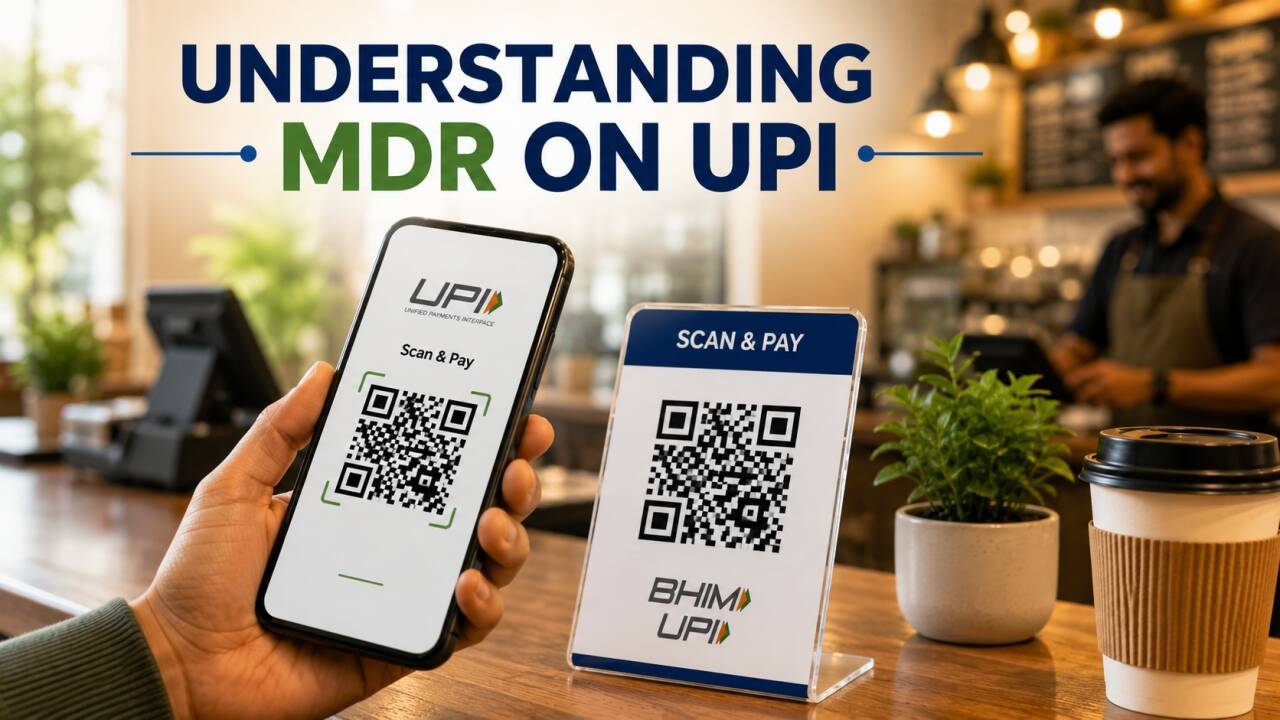
The Indian government has announced that the Unified Payments Interface (UPI) will continue to be free for consumers, with no transaction charges applicable to person-to-person payments. This move aims to promote digital transactions and encourage the use of UPI among the general public.
The government has also clarified that if a Merchant Discount Rate (MDR) is introduced in the future, it will only be applicable to a limited category of merchant transactions. This means that businesses and merchants may be required to pay a small fee for certain types of transactions, but individual consumers will not be charged.
The decision to keep UPI free for consumers is a significant one, as it will help to increase the adoption of digital payments in India. UPI has already gained immense popularity in the country, with millions of transactions taking place every day. By keeping the service free for consumers, the government hopes to further boost the growth of digital payments and reduce the reliance on cash transactions.
The introduction of MDR for merchant transactions, on the other hand, is likely to have a limited impact on consumers. Since the charge will only be applicable to a specific category of transactions, most consumers will not be affected. However, businesses and merchants may need to factor in the additional cost when accepting UPI payments.
The government's decision on UPI and MDR is also expected to have implications for the digital payments industry as a whole. With UPI remaining free for consumers, other digital payment platforms may need to reassess their pricing strategies to remain competitive. Additionally, the introduction of MDR for merchant transactions may lead to a more level playing field for different payment platforms.
In the context of India's digital payments landscape, the government's decision is a significant step forward. The country has been actively promoting digital payments and has introduced several initiatives to encourage their adoption. The decision to keep UPI free for consumers is in line with this goal and is expected to contribute to the growth of digital payments in India.
Overall, the government's clarification on UPI and MDR provides much-needed clarity on the future of digital payments in India. With UPI remaining free for consumers and MDR only being applicable to a limited category of merchant transactions, the digital payments industry is likely to continue growing and evolving in the coming years.
The significance of this decision lies in its potential to increase financial inclusion and promote digital literacy in India. By making digital payments more accessible and affordable, the government hopes to bring more people into the formal financial system and reduce the reliance on cash transactions. As the digital payments industry continues to grow and evolve, it will be important to monitor the impact of this decision and make adjustments as needed.
In conclusion, the government's decision to keep UPI free for consumers and introduce MDR for a limited category of merchant transactions is a positive step forward for the digital payments industry in India. It is expected to promote the growth of digital payments, increase financial inclusion, and reduce the reliance on cash transactions.
What it means for Mumbai and India is that digital payments will continue to be a convenient and affordable option for consumers, and businesses will need to adapt to the new pricing strategies. The government's decision is a significant step towards a digital economy, and its impact will be felt across the country.
Frequently asked questions
Will I be charged for using UPI for person-to-person transactions?
No, UPI will remain free for consumers and no transaction charges will be applicable to person-to-person payments.
Who will pay the MDR if it is introduced?
If an MDR is introduced, it will only be applicable to a limited category of merchant transactions, meaning businesses and merchants will pay the charge.