Panvel Municipal Corporation Intensifies Fogging Amid Dengue Concerns
Panvel Municipal Corporation launches fogging drive to prevent dengue and malaria. Residents urged to participate in efforts to prevent mosquito breeding.
'%3E%3Crect%20width%3D'96'%20height%3D'96'%20fill%3D'%23B3261E'%2F%3E%3Ccircle%20cx%3D'30'%20cy%3D'24'%20r%3D'44'%20fill%3D'%23fff'%20opacity%3D'.12'%2F%3E%3Ccircle%20cx%3D'60'%20cy%3D'74'%20r%3D'40'%20fill%3D'%23000'%20opacity%3D'.10'%2F%3E%3C%2Fg%3E%3Cg%20fill%3D'%23fff'%3E%3Crect%20x%3D'29'%20y%3D'49'%20width%3D'8'%20height%3D'19'%20rx%3D'1'%2F%3E%3Crect%20x%3D'39'%20y%3D'40'%20width%3D'9'%20height%3D'28'%20rx%3D'1'%2F%3E%3Crect%20x%3D'50'%20y%3D'45'%20width%3D'8'%20height%3D'23'%20rx%3D'1'%2F%3E%3Crect%20x%3D'60'%20y%3D'53'%20width%3D'7'%20height%3D'15'%20rx%3D'1'%2F%3E%3Crect%20x%3D'41'%20y%3D'34'%20width%3D'5'%20height%3D'6'%2F%3E%3C%2Fg%3E%3C%2Fsvg%3E)
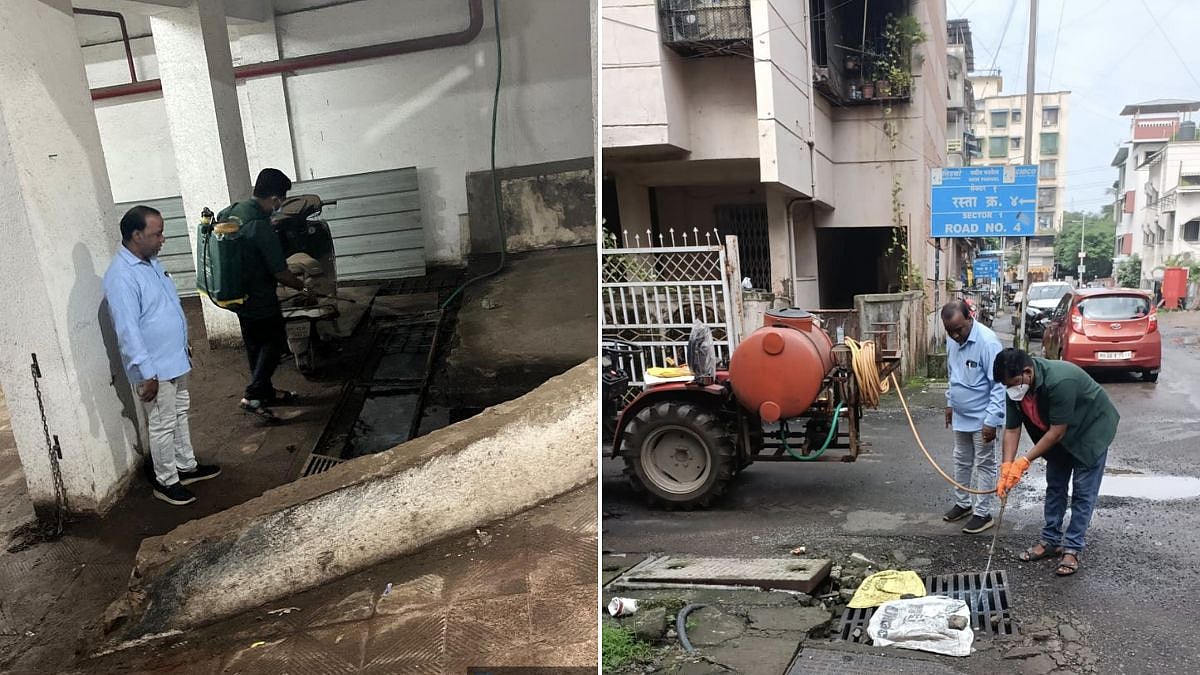
The Panvel Municipal Corporation (PMC) has launched an intensive fogging and surveillance drive to prevent vector-borne diseases such as dengue and malaria. The campaign is being conducted by the civic health department in accordance with guidelines under the National Vector Borne Disease Control Programme.
The decision to intensify fogging and surveillance efforts comes as weather conditions become favourable for mosquito breeding. According to civic officials, rainfall has reduced since the last week of August, leading to an increase in mosquito breeding sites and raising concerns over a possible rise in vector-borne diseases.
As part of the campaign, health workers are conducting door-to-door surveys across the municipal limits. During the surveys, stagnant and contaminated water is being emptied, fogging is being carried out and larvicides are being applied wherever necessary. Guppy fish are also being released in water bodies that cannot be drained to control mosquito larvae.
The civic body has undertaken a comprehensive fogging drive, with spraying being conducted in different areas based on requirements. Deputy Commissioner Dr Vaibhav Vidhate said special fogging and insecticide spraying drives have recently been conducted in Turbhe, Rohinjan, Devicha Pada, Padghe village, Navde village, Tondre village, Pisave village and Aave Camp.
Health officials are also distributing awareness leaflets door-to-door in villages and educating residents about dengue and malaria. People suffering from suspected fever have been urged to undergo blood tests at the earliest.
The PMC is also conducting awareness programmes in residential areas and schools, urging residents to observe a 'dry day' once a week. Residents have been advised to empty and clean water tanks, barrels, storage containers and other water-holding vessels at least once a week. Water tanks should be kept tightly covered, while care should be taken to prevent water from accumulating in scrap material, discarded containers, tyres and other objects.
Chief Medical Officer Dr Anand Gosavi urged citizens to cooperate with the civic body's preventive measures and ensure that potential mosquito-breeding sites are eliminated around their homes. PMC Commissioner Mangesh Chitale has also appealed to residents to actively participate in efforts to prevent mosquito breeding.
The intensive fogging and surveillance drive is a proactive measure to prevent the spread of vector-borne diseases in Panvel. With the civic body's efforts and the cooperation of residents, the risk of dengue and malaria can be minimized.
The Panvel Municipal Corporation's initiative is a significant step towards maintaining public health and preventing the spread of diseases. The corporation's efforts to educate residents and eliminate potential mosquito-breeding sites are crucial in preventing the spread of vector-borne diseases.
In conclusion, the Panvel Municipal Corporation's intensive fogging and surveillance drive is a necessary measure to prevent the spread of dengue and malaria in the city. With the cooperation of residents and the civic body's efforts, the risk of these diseases can be minimized, and public health can be maintained.
Frequently asked questions
What is the Panvel Municipal Corporation doing to prevent dengue and malaria?
The Panvel Municipal Corporation is conducting an intensive fogging and surveillance drive to prevent vector-borne diseases such as dengue and malaria.
How can residents help prevent mosquito breeding?
Residents can help prevent mosquito breeding by emptying and cleaning water tanks, barrels, storage containers and other water-holding vessels at least once a week, and keeping water tanks tightly covered.