Honeybees' Pesticide Survival Jumps to 90% with Diet Change
Honeybees' survival rate increases with dietary change. New research finds improved resilience.
'%3E%3Crect%20width%3D'96'%20height%3D'96'%20fill%3D'%23B3261E'%2F%3E%3Ccircle%20cx%3D'30'%20cy%3D'24'%20r%3D'44'%20fill%3D'%23fff'%20opacity%3D'.12'%2F%3E%3Ccircle%20cx%3D'60'%20cy%3D'74'%20r%3D'40'%20fill%3D'%23000'%20opacity%3D'.10'%2F%3E%3C%2Fg%3E%3Cg%20fill%3D'%23fff'%3E%3Crect%20x%3D'29'%20y%3D'49'%20width%3D'8'%20height%3D'19'%20rx%3D'1'%2F%3E%3Crect%20x%3D'39'%20y%3D'40'%20width%3D'9'%20height%3D'28'%20rx%3D'1'%2F%3E%3Crect%20x%3D'50'%20y%3D'45'%20width%3D'8'%20height%3D'23'%20rx%3D'1'%2F%3E%3Crect%20x%3D'60'%20y%3D'53'%20width%3D'7'%20height%3D'15'%20rx%3D'1'%2F%3E%3Crect%20x%3D'41'%20y%3D'34'%20width%3D'5'%20height%3D'6'%2F%3E%3C%2Fg%3E%3C%2Fsvg%3E)
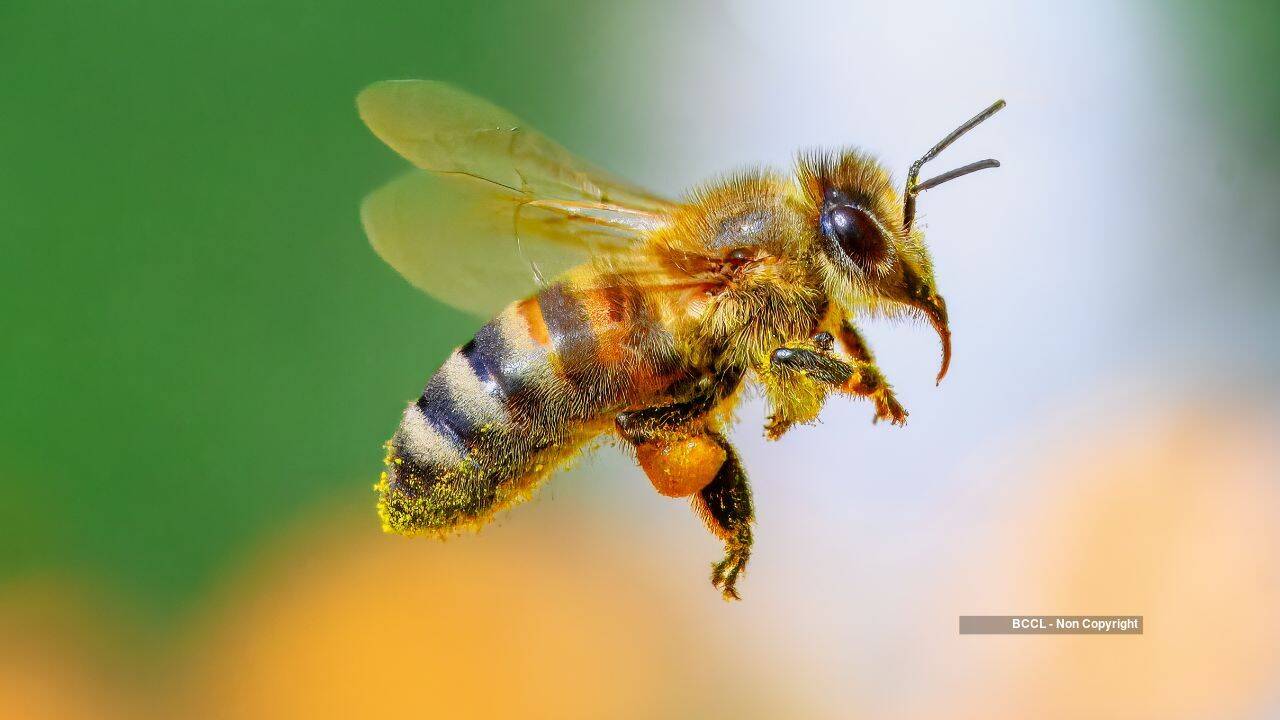
Honeybees exposed to pesticides can now survive at a rate of 90% due to a change in their diet. Researchers have found that feeding honeybees polyunsaturated fats significantly improves their survival rate, which was previously below 50%.
This breakthrough discovery not only enhances the bees' ability to withstand pesticide exposure but also supports their nerve function and energy balance. The study's findings suggest that nutrition plays a crucial role in strengthening bee resilience against various agricultural stressors.
The research focused on the impact of dietary changes on honeybees' health and well-being. By introducing polyunsaturated fats into their diet, the scientists observed a substantial increase in the bees' survival rate. This dietary component is essential for maintaining healthy nerve function and energy balance, which are critical for the bees' overall health.
Honeybees are vital pollinators, and their decline has raised concerns about the impact on food production and ecosystem health. The use of pesticides in agriculture has been identified as one of the primary factors contributing to the decline of honeybee populations. Therefore, finding ways to enhance their resilience is crucial for maintaining healthy pollinator populations.
The study's results have significant implications for beekeeping and pollinator conservation. By incorporating polyunsaturated fats into bee diets, beekeepers may be able to improve the health and survival of their colonies. Additionally, the findings can inform pollinator habitat planning, ensuring that bees have access to nutrient-rich food sources.
The importance of nutrition in supporting bee health cannot be overstated. A well-balanced diet is essential for maintaining healthy bee colonies, and this research highlights the potential benefits of dietary interventions. As the world grapples with the challenges of pollinator decline, this study provides valuable insights into the role of nutrition in promoting bee resilience.
In conclusion, the discovery that honeybees can survive pesticide exposure at a rate of 90% with a dietary change is a significant breakthrough. The findings of this research have far-reaching implications for beekeeping, pollinator conservation, and agriculture, and highlight the importance of nutrition in supporting the health and well-being of these vital pollinators.
The potential impact of this research on pollinator conservation and agriculture is substantial. By adopting dietary changes and habitat planning strategies that support bee health, we can work towards maintaining healthy pollinator populations and ensuring the long-term sustainability of our food systems.
Frequently asked questions
What is the new survival rate of honeybees exposed to pesticides?
The new survival rate of honeybees exposed to pesticides is 90% due to a change in their diet.
What type of dietary fat supports honeybee health?
Polyunsaturated fats support honeybee health, including nerve function and energy balance.