Mumbai Railway Terminus Plan Hits Roadblock
Dispute over 65-acre defence land stalls project. New terminus to handle 48-50 trains
'%3E%3Crect%20width%3D'96'%20height%3D'96'%20fill%3D'%23B3261E'%2F%3E%3Ccircle%20cx%3D'30'%20cy%3D'24'%20r%3D'44'%20fill%3D'%23fff'%20opacity%3D'.12'%2F%3E%3Ccircle%20cx%3D'60'%20cy%3D'74'%20r%3D'40'%20fill%3D'%23000'%20opacity%3D'.10'%2F%3E%3C%2Fg%3E%3Cg%20fill%3D'%23fff'%3E%3Crect%20x%3D'29'%20y%3D'49'%20width%3D'8'%20height%3D'19'%20rx%3D'1'%2F%3E%3Crect%20x%3D'39'%20y%3D'40'%20width%3D'9'%20height%3D'28'%20rx%3D'1'%2F%3E%3Crect%20x%3D'50'%20y%3D'45'%20width%3D'8'%20height%3D'23'%20rx%3D'1'%2F%3E%3Crect%20x%3D'60'%20y%3D'53'%20width%3D'7'%20height%3D'15'%20rx%3D'1'%2F%3E%3Crect%20x%3D'41'%20y%3D'34'%20width%3D'5'%20height%3D'6'%2F%3E%3C%2Fg%3E%3C%2Fsvg%3E)
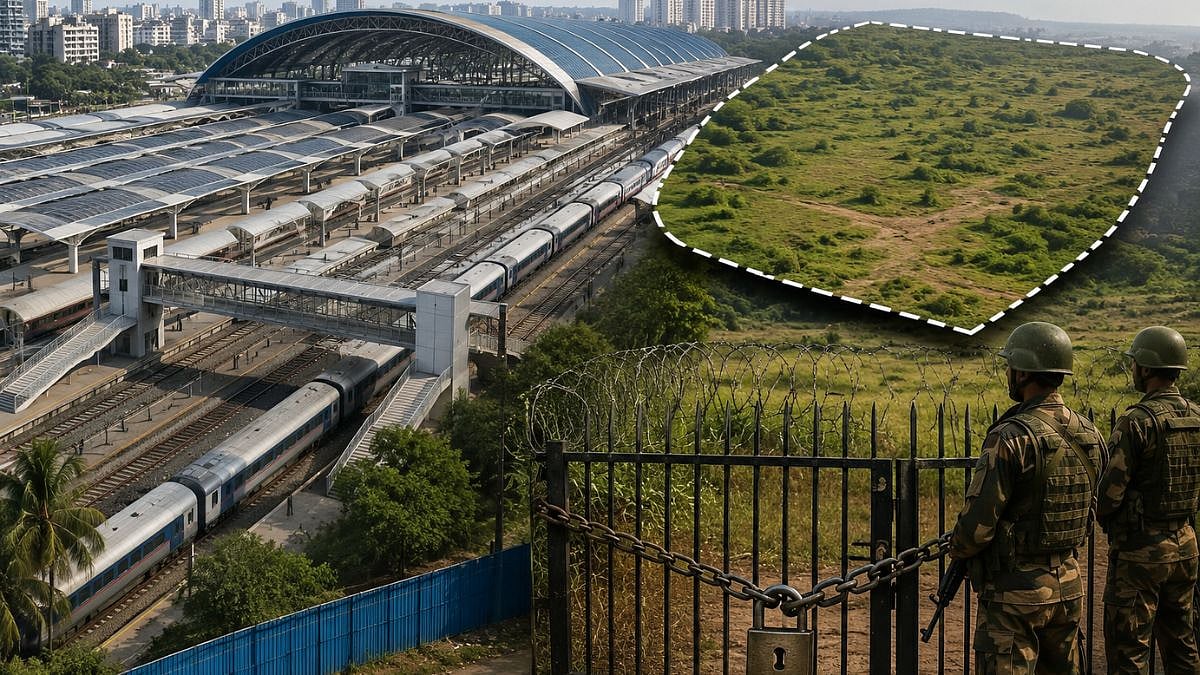
A major railway project in Mumbai has hit a roadblock due to a dispute between the Railways and the Ministry of Defence over a 65-acre land parcel in Kandivali. The land, currently occupied by the Central Ordnance Depot, staff quarters, and defence offices, is crucial for the construction of Mumbai's largest long-distance railway terminus.
The proposed terminus, which would be capable of handling 48-50 pairs of long-distance trains, has been in the planning stages for several years. Railway officials believe that the land is perfectly suited for the project, which would spare passengers from western Mumbai from having to travel to Mumbai Central or Bandra.
Western Railway has prepared a detailed blueprint for the project, which includes nine 625-metre platforms for 24-coach trains, six pit lines, nine stabling lines, two shunting necks, and integrated sickline sheds. The maintenance facilities would support next-generation trains, including Vande Bharat services.
However, the Defence Ministry has not agreed to transfer the land to the Railways, citing future plans for the area. During a joint inspection in February 2025, only two railway officials were allowed inside the premises, and further surveys require fresh approval.
Railway Minister Ashwini Vaishnaw has been shown the proposed layout, and the Railway Board has approved plans to integrate Kandivali and Borivali stations. The terminus is expected to form part of the wider project, which aims to increase Mumbai's train-handling capacity by 50%.
The new terminus would ease waiting lists on trains to Gujarat, Uttar Pradesh, Bihar, and other northern states, while reducing pressure on Mumbai Central, Bandra Terminus, Lokmanya Tilak Terminus, and CSMT. The Railways are also examining a narrow vacant Defence parcel near Railway Line No. 6 between Kandivali East and Malad, which could accommodate supporting facilities such as pit, stabling, or maintenance lines.
The under-construction Jogeshwari terminus is expected to handle only 12 additional long-distance trains, making Kandivali the only identified location for a full-scale terminal. The project has been stalled due to the dispute over the defence land, and it remains to be seen how the issue will be resolved.
The construction of the new terminus would have a significant impact on the city's railway infrastructure, providing much-needed relief to passengers and reducing congestion at existing terminals. The project is a key part of the Railways' plans to modernize and expand Mumbai's railway network, and its completion would be a major boost to the city's transportation system.
In the context of Mumbai's growing population and increasing demand for railway services, the construction of a new terminus is crucial. The city's railway network is already under strain, and the addition of a new terminus would help to alleviate some of the pressure. The project would also provide a significant economic boost to the area, creating jobs and stimulating local businesses.
The dispute over the defence land highlights the challenges faced by the Railways in acquiring land for infrastructure projects. The Ministry of Defence has a significant presence in Mumbai, and the acquisition of land for railway projects often requires careful negotiation and planning. The resolution of the dispute will be crucial to the success of the project, and it remains to be seen how the issue will be resolved.
In conclusion, the construction of a new railway terminus in Kandivali is a critical project for Mumbai's railway infrastructure. The project has the potential to provide significant relief to passengers and reduce congestion at existing terminals. However, the dispute over the defence land has stalled the project, and it remains to be seen how the issue will be resolved. The completion of the project would be a major boost to the city's transportation system and would have a significant impact on the local economy.