Vehicles Invade Mumbai Footpaths
Mumbai pedestrians face danger, congestion worsens, health impacted.
'%3E%3Crect%20width%3D'96'%20height%3D'96'%20fill%3D'%23B3261E'%2F%3E%3Ccircle%20cx%3D'30'%20cy%3D'24'%20r%3D'44'%20fill%3D'%23fff'%20opacity%3D'.12'%2F%3E%3Ccircle%20cx%3D'60'%20cy%3D'74'%20r%3D'40'%20fill%3D'%23000'%20opacity%3D'.10'%2F%3E%3C%2Fg%3E%3Cg%20fill%3D'%23fff'%3E%3Crect%20x%3D'29'%20y%3D'49'%20width%3D'8'%20height%3D'19'%20rx%3D'1'%2F%3E%3Crect%20x%3D'39'%20y%3D'40'%20width%3D'9'%20height%3D'28'%20rx%3D'1'%2F%3E%3Crect%20x%3D'50'%20y%3D'45'%20width%3D'8'%20height%3D'23'%20rx%3D'1'%2F%3E%3Crect%20x%3D'60'%20y%3D'53'%20width%3D'7'%20height%3D'15'%20rx%3D'1'%2F%3E%3Crect%20x%3D'41'%20y%3D'34'%20width%3D'5'%20height%3D'6'%2F%3E%3C%2Fg%3E%3C%2Fsvg%3E)
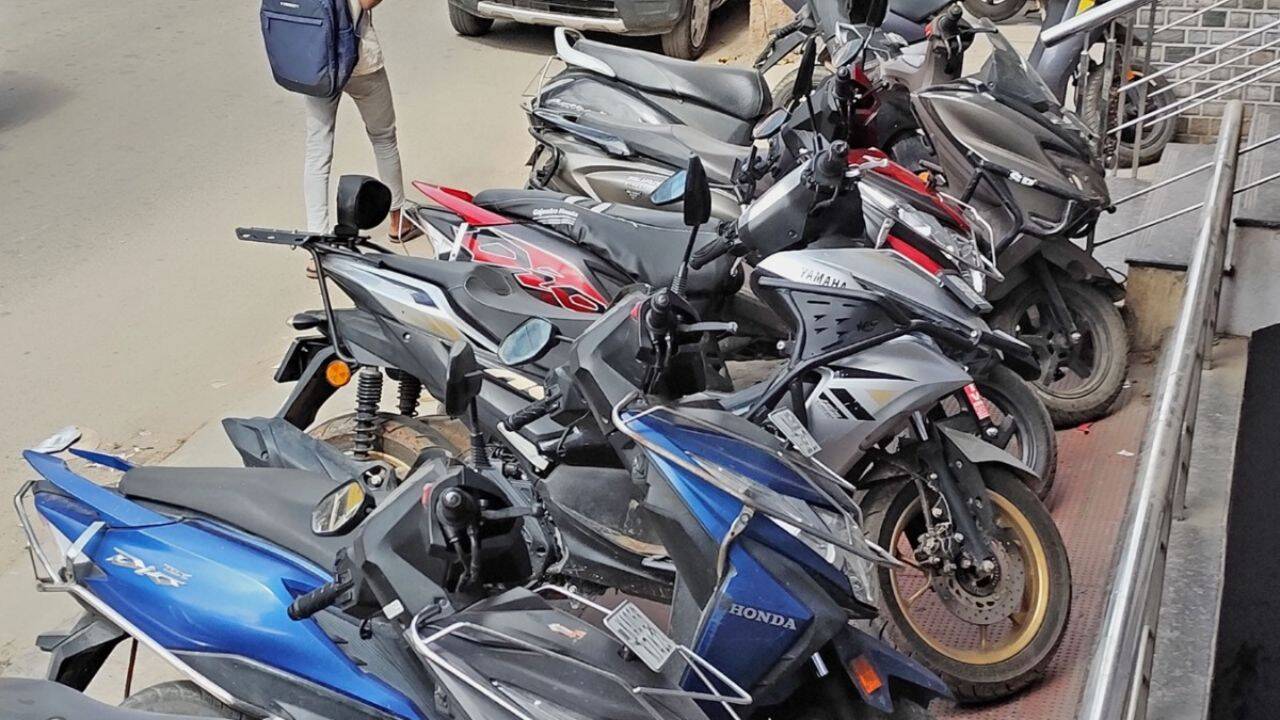
A growing concern has emerged in Mumbai, as footpaths are increasingly being used by vehicles, posing a significant threat to pedestrians. This trend, observed across major cities, has led to a hazardous environment for those on foot.
The primary culprits behind this issue are delivery riders and two-wheeler owners, who use footpaths as shortcuts to navigate through congested roads. The lack of effective enforcement and poorly designed infrastructure have exacerbated the problem, making it difficult for pedestrians to use the footpaths safely.
As a result, pedestrians are being forced to share the roads with vehicles, increasing the risk of accidents and injuries. This situation is not only a matter of concern for public safety but also has a negative impact on public health. Walking is an essential aspect of a healthy lifestyle, and the absence of safe pedestrian spaces discourages people from engaging in physical activity.
The congestion on Mumbai's roads is a major contributor to this problem. With the increasing number of vehicles on the road, the city's infrastructure is struggling to cope with the demand. The poor condition of footpaths, coupled with the lack of enforcement, has created an environment where vehicles feel emboldened to encroach upon pedestrian spaces.
To address this issue, a multi-faceted approach is necessary. Engineering solutions, such as designing footpaths that are inaccessible to vehicles, can help to prevent the problem. Additionally, enforcement needs to be strengthened, with stricter penalties for those who violate traffic rules.
Behavioral changes are also essential in reclaiming pedestrian spaces. A shift in mindset is required, where drivers and riders recognize the importance of respecting pedestrian rights. Public awareness campaigns can play a crucial role in educating people about the need to prioritize pedestrian safety.
The reclaiming of pedestrian spaces is not just a matter of public safety; it is also essential for urban sustainability. By creating safe and accessible footpaths, cities can promote walking and cycling, reducing the reliance on fossil fuels and decreasing congestion.
In conclusion, the invasion of footpaths by vehicles is a pressing concern that requires immediate attention. By implementing engineering solutions, strengthening enforcement, and promoting behavioral changes, Mumbai can reclaim its pedestrian spaces and create a safer, healthier, and more sustainable environment for its citizens.