SC Issues Notice To Centre On Plea For Parental Consent For Minors On Social Media
SC seeks Centre's response on plea for safeguards for minors on social media.
'%3E%3Crect%20width%3D'96'%20height%3D'96'%20fill%3D'%23B3261E'%2F%3E%3Ccircle%20cx%3D'30'%20cy%3D'24'%20r%3D'44'%20fill%3D'%23fff'%20opacity%3D'.12'%2F%3E%3Ccircle%20cx%3D'60'%20cy%3D'74'%20r%3D'40'%20fill%3D'%23000'%20opacity%3D'.10'%2F%3E%3C%2Fg%3E%3Cg%20fill%3D'%23fff'%3E%3Crect%20x%3D'29'%20y%3D'49'%20width%3D'8'%20height%3D'19'%20rx%3D'1'%2F%3E%3Crect%20x%3D'39'%20y%3D'40'%20width%3D'9'%20height%3D'28'%20rx%3D'1'%2F%3E%3Crect%20x%3D'50'%20y%3D'45'%20width%3D'8'%20height%3D'23'%20rx%3D'1'%2F%3E%3Crect%20x%3D'60'%20y%3D'53'%20width%3D'7'%20height%3D'15'%20rx%3D'1'%2F%3E%3Crect%20x%3D'41'%20y%3D'34'%20width%3D'5'%20height%3D'6'%2F%3E%3C%2Fg%3E%3C%2Fsvg%3E)
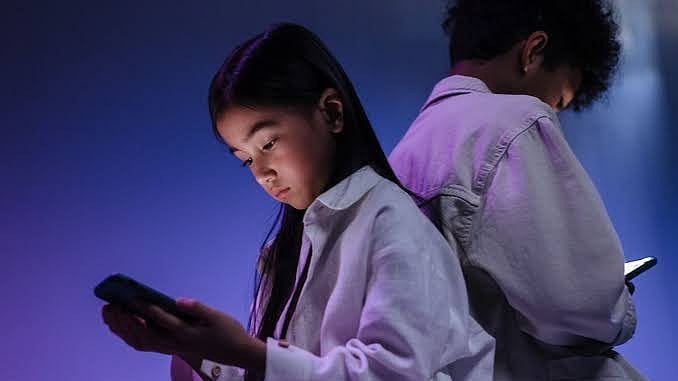
The Supreme Court has agreed to hear a plea seeking safeguards for minors accessing social media and other digital platforms. A bench of Chief Justice of India Surya Kant and Justices Joymalya Bagchi and V Mohana issued notices to the Centre and others on a plea filed by NGO Just Rights for Children Alliance.
The petition contended that despite strict penal provisions prohibiting the dissemination and storage of Child Sexual Exploitative and Abuse Material, internet platforms have failed to deploy automated content-filtering tools and age-verification mechanisms. The plea argued that platforms such as Facebook and Snapchat permit users to create accounts from the age of 13, while Indian law treats persons below 18 as minors.
The NGO, represented by senior advocate HS Phoolka, sought directions to amend the Information Technology (Intermediary Guidelines and Digital Media Ethics Code) Rules, 2021, or frame specific guidelines, to ensure that no digital platform enters into a contract with a child below 18 without the consent of the parent or lawful guardian. The petition also sought identity verification/e-KYC of the parent or guardian.
The Supreme Court's decision to hear the plea comes as a significant development in the ongoing debate about the need for safeguards for minors on social media. The court's remarks, 'We need some safeguards in India,' highlight the importance of protecting children from the potential risks associated with social media.
In recent years, there has been a growing concern about the impact of social media on children, with many experts arguing that it can have a negative effect on their mental health and well-being. The lack of effective age-verification mechanisms and content-filtering tools has made it easier for children to access inappropriate content, which can have serious consequences.
The Centre's response to the plea will be crucial in determining the next course of action. The government may need to consider amending existing laws or introducing new regulations to ensure that social media platforms prioritize the safety and well-being of minors.
The Supreme Court's decision to hear the plea is a step in the right direction, as it acknowledges the need for safeguards for minors on social media. The outcome of the case will have significant implications for social media platforms, parents, and children in India.
In conclusion, the Supreme Court's decision to hear the plea seeking safeguards for minors on social media is a significant development that highlights the need for protecting children from the potential risks associated with social media. The Centre's response to the plea will be crucial in determining the next course of action, and the outcome of the case will have significant implications for social media platforms, parents, and children in India.
The issue of social media safety for minors is a complex one, and it requires a multi-faceted approach. The government, social media platforms, and parents all have a role to play in ensuring that children are protected from the potential risks associated with social media. The Supreme Court's decision to hear the plea is a step in the right direction, and it is hoped that it will lead to meaningful changes that prioritize the safety and well-being of minors on social media.
The case has sparked a wider debate about the need for social media regulation in India. Many experts argue that social media platforms need to be held accountable for the content they host, and that the government needs to introduce stricter regulations to ensure that social media platforms prioritize the safety and well-being of users.
As the case progresses, it will be important to monitor the developments and see how the Centre responds to the plea. The outcome of the case will have significant implications for social media platforms, parents, and children in India, and it is hoped that it will lead to meaningful changes that prioritize the safety and well-being of minors on social media.
Frequently asked questions
What is the Supreme Court's decision on the plea for safeguards for minors on social media?
The Supreme Court has agreed to hear the plea and issued notices to the Centre and others.
What is the main argument of the plea seeking safeguards for minors on social media?
The plea argues that social media platforms have failed to deploy automated content-filtering tools and age-verification mechanisms, and that they permit users to create accounts from the age of 13, while Indian law treats persons below 18 as minors.