Indore High Court Demands Anti-Pollution Plan
Indore Bench seeks concrete plan, expresses dissatisfaction with authorities' response. Pollution control measures to be detailed.
'%3E%3Crect%20width%3D'96'%20height%3D'96'%20fill%3D'%23B3261E'%2F%3E%3Ccircle%20cx%3D'30'%20cy%3D'24'%20r%3D'44'%20fill%3D'%23fff'%20opacity%3D'.12'%2F%3E%3Ccircle%20cx%3D'60'%20cy%3D'74'%20r%3D'40'%20fill%3D'%23000'%20opacity%3D'.10'%2F%3E%3C%2Fg%3E%3Cg%20fill%3D'%23fff'%3E%3Crect%20x%3D'29'%20y%3D'49'%20width%3D'8'%20height%3D'19'%20rx%3D'1'%2F%3E%3Crect%20x%3D'39'%20y%3D'40'%20width%3D'9'%20height%3D'28'%20rx%3D'1'%2F%3E%3Crect%20x%3D'50'%20y%3D'45'%20width%3D'8'%20height%3D'23'%20rx%3D'1'%2F%3E%3Crect%20x%3D'60'%20y%3D'53'%20width%3D'7'%20height%3D'15'%20rx%3D'1'%2F%3E%3Crect%20x%3D'41'%20y%3D'34'%20width%3D'5'%20height%3D'6'%2F%3E%3C%2Fg%3E%3C%2Fsvg%3E)
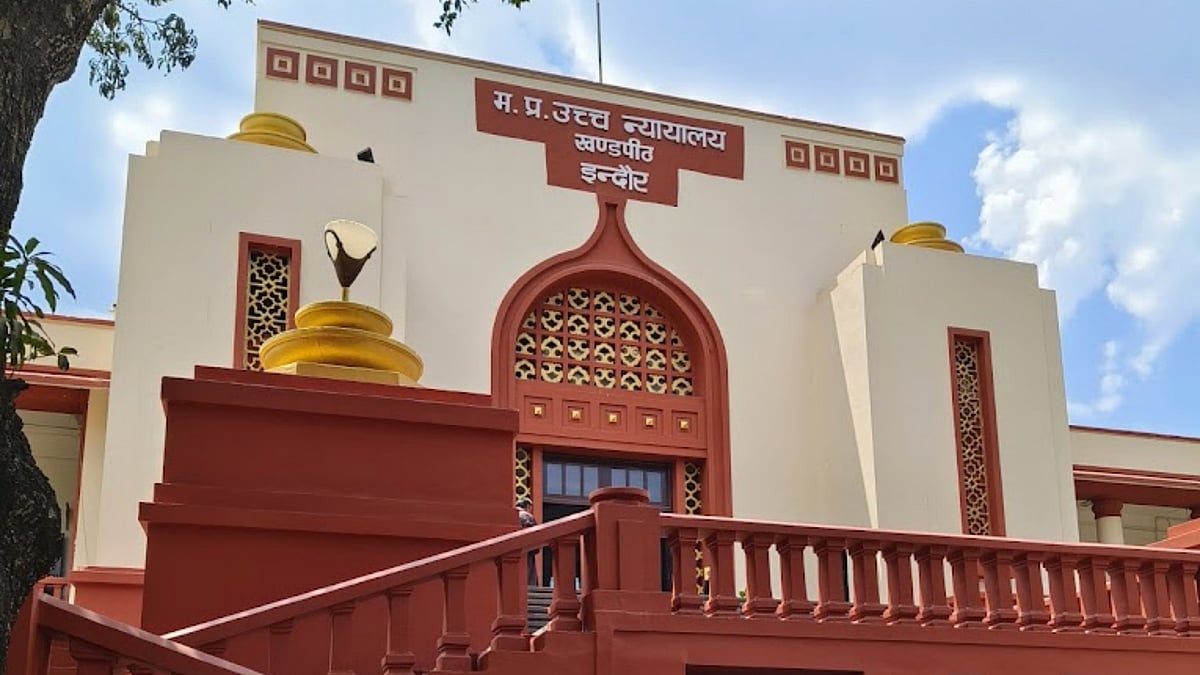
The Indore Bench of the Madhya Pradesh High Court has directed the concerned authorities to submit a detailed affidavit outlining the measures taken to curb pollution in the city. This comes after the court expressed dissatisfaction with the authorities' response to a Public Interest Litigation (PIL) on rising noise and environmental pollution in Indore.
A division bench of Justice Subodh Abhyankar and Justice Alok Awasthi observed that merely stating action is being taken against polluters is not sufficient. The court wants to know the specific details of the action taken, its effectiveness, and further steps proposed to curb pollution.
The petitioners were represented by advocate Abhinav P Dhanodkar, while government advocate Pradyumna Kibe appeared for the State. ACP Ashish Patel, ACP AS Jadon, and Madhya Pradesh Pollution Control Board regional officer Satish K Chouksey were personally present before the court.
During the hearing, the authorities submitted that appropriate action was being taken against those responsible for causing pollution. However, the bench expressed dissatisfaction, observing that the response lacked specific details on the nature of the action taken and its effectiveness.
The court directed the authorities to file a comprehensive affidavit detailing action taken against polluters, legal proceedings initiated against violators, the outcome of such action, and additional measures that can be implemented to effectively curb pollution in the city.
The bench also directed the State Government to specify the action taken by the district magistrate to ensure compliance with Section 18 of the Madhya Pradesh Kolahal Niyantran Adhiniyam, 1985. Emphasising that matters affecting public health and the environment require effective enforcement, the court said general or routine statements would not suffice.
The court directed the authorities to place concrete facts, documentary evidence, and a clear enforcement roadmap before the court. The matter has been listed for hearing in the week commencing August 17.
The Indore Bench's directive is a significant step towards addressing the growing concern of pollution in the city. The court's emphasis on effective enforcement and concrete action plans is likely to have a positive impact on the city's environment.
The case highlights the importance of public interest litigation in holding authorities accountable for environmental pollution. The court's decision is a reminder that the authorities must take concrete steps to address the issue of pollution, rather than just making routine statements.
In the context of Indore's growing pollution problem, the court's directive is a welcome move. The city's residents have been complaining about the rising levels of noise and environmental pollution, and the court's decision is likely to bring some relief.
The outcome of the case will be closely watched, as it has significant implications for the city's environment and public health. The court's emphasis on effective enforcement and concrete action plans is likely to set a precedent for similar cases in the future.
In conclusion, the Indore Bench's directive is a significant step towards addressing the growing concern of pollution in the city. The court's emphasis on effective enforcement and concrete action plans is likely to have a positive impact on the city's environment, and the outcome of the case will be closely watched.
Frequently asked questions
What is the Indore Bench of the Madhya Pradesh High Court seeking from the authorities?
The court is seeking a detailed affidavit outlining the measures taken to curb pollution in the city.
Why is the court dissatisfied with the authorities' response?
The court is dissatisfied because the authorities' response lacks specific details on the nature of the action taken and its effectiveness.