'Vasteguna Huiya' Reaches Lok Sabha
Viral Gen Z phrase used in Parliament, internet culture influences politics
'%3E%3Crect%20width%3D'96'%20height%3D'96'%20fill%3D'%231A5276'%2F%3E%3Ccircle%20cx%3D'30'%20cy%3D'24'%20r%3D'44'%20fill%3D'%23fff'%20opacity%3D'.12'%2F%3E%3Ccircle%20cx%3D'60'%20cy%3D'74'%20r%3D'40'%20fill%3D'%23000'%20opacity%3D'.10'%2F%3E%3C%2Fg%3E%3Cg%20fill%3D'%23fff'%3E%3Cpath%20d%3D'M31%2041%20L48%2031%20L65%2041%20Z'%2F%3E%3Crect%20x%3D'33'%20y%3D'43'%20width%3D'4'%20height%3D'17'%2F%3E%3Crect%20x%3D'41'%20y%3D'43'%20width%3D'4'%20height%3D'17'%2F%3E%3Crect%20x%3D'51'%20y%3D'43'%20width%3D'4'%20height%3D'17'%2F%3E%3Crect%20x%3D'59'%20y%3D'43'%20width%3D'4'%20height%3D'17'%2F%3E%3Crect%20x%3D'30'%20y%3D'62'%20width%3D'36'%20height%3D'4'%20rx%3D'1'%2F%3E%3C%2Fg%3E%3C%2Fsvg%3E)
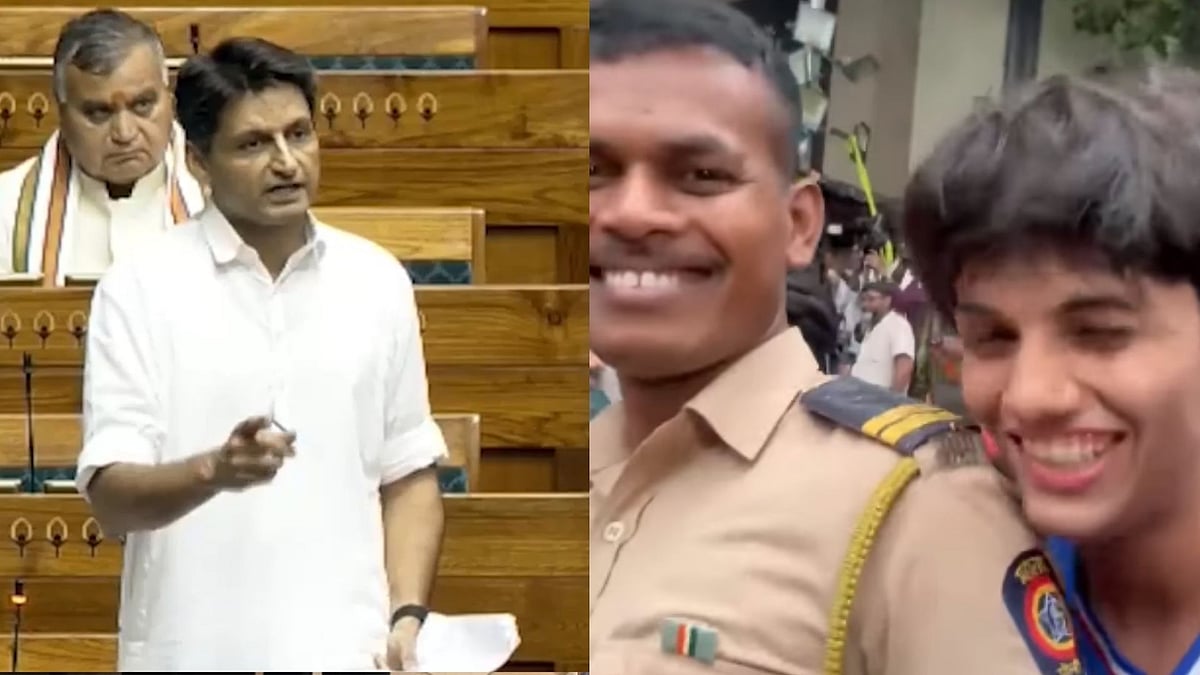
A viral internet meme has made its way into India's political discourse, with Congress MP Deepender Singh Hooda using the phrase 'Vasteguna Huiya' during a debate on the Anti-Paper Leak Bill in the Lok Sabha.
The phrase, which has been trending on Instagram, was used by Hooda to take a swipe at the Centre, surprising fellow MPs and grabbing the internet's attention. Clips of his remarks were widely shared across social media, with users amused to see a meme usually associated with Instagram Reels making its way into Parliament.
The phrase 'Vasteguna Huiya' has no recognised meaning in any Indian language and is essentially a humorous, nonsensical phrase that has become popular because of its distinctive pronunciation and comic delivery. Its appeal lies less in what it means and more in how it is said, with creators repeating it simply because it is catchy and instantly recognisable.
The trend went viral after a video linked to the recent Gen-Z-led protest at Delhi's Jantar Mantar began circulating online. In one widely shared clip, a young woman says 'Vasteguna Huiya' in a distinctive tone while interacting with a police officer. The unusual delivery quickly turned the audio into a meme template, with thousands of creators using it in their own Reels.
Many social media users believe 'Vasteguna Huiya' is a desi, heavily modified version of the 2015 Vine catchphrase 'Can I get a Hoya?' While this explanation has become widely circulated online, there is no definitive evidence directly linking the two.
Regardless of its exact origins, the phrase has evolved into an internet joke with a life of its own. With its jump from Instagram memes to parliamentary debate, 'Vasteguna Huiya' has become an example of how viral internet slang can quickly cross over into mainstream public and political conversations.
This moment highlights how internet culture is increasingly influencing political communication, with lawmakers borrowing popular online references to connect with younger audiences. The use of 'Vasteguna Huiya' in Parliament shows that even the most unlikely of internet memes can make its way into the highest levels of political discourse.
In conclusion, the phrase 'Vasteguna Huiya' has become a cultural phenomenon, symbolising the power of internet culture to shape and influence mainstream conversations. Its use in Parliament is a testament to the evolving nature of political communication and the importance of staying connected with younger audiences.
The significance of this event lies in its ability to showcase the intersection of internet culture and politics, highlighting the need for lawmakers to be aware of and engage with online trends and memes. As the internet continues to play a larger role in shaping public discourse, it will be interesting to see how politicians and lawmakers adapt to and utilise online culture to connect with their constituents.
The use of 'Vasteguna Huiya' in Parliament is a sign of the times, indicating a shift towards a more informal and internet-savvy approach to political communication. As the lines between online and offline culture continue to blur, it is likely that we will see more examples of internet memes and trends making their way into mainstream political discourse.
Frequently asked questions
What does 'Vasteguna Huiya' mean?
The phrase has no recognised meaning in any Indian language and is essentially a humorous, nonsensical phrase.
How did 'Vasteguna Huiya' become popular?
The phrase went viral after a video linked to the recent Gen-Z-led protest at Delhi's Jantar Mantar began circulating online.