Gitanjali J Angmo Calls For Media Reform Before Education
Gitanjali J Angmo demands media reform, citing its influence on public opinion. She says media shapes people's views more than teachers.
'%3E%3Crect%20width%3D'96'%20height%3D'96'%20fill%3D'%231A5276'%2F%3E%3Ccircle%20cx%3D'30'%20cy%3D'24'%20r%3D'44'%20fill%3D'%23fff'%20opacity%3D'.12'%2F%3E%3Ccircle%20cx%3D'60'%20cy%3D'74'%20r%3D'40'%20fill%3D'%23000'%20opacity%3D'.10'%2F%3E%3C%2Fg%3E%3Cg%20fill%3D'%23fff'%3E%3Cpath%20d%3D'M31%2041%20L48%2031%20L65%2041%20Z'%2F%3E%3Crect%20x%3D'33'%20y%3D'43'%20width%3D'4'%20height%3D'17'%2F%3E%3Crect%20x%3D'41'%20y%3D'43'%20width%3D'4'%20height%3D'17'%2F%3E%3Crect%20x%3D'51'%20y%3D'43'%20width%3D'4'%20height%3D'17'%2F%3E%3Crect%20x%3D'59'%20y%3D'43'%20width%3D'4'%20height%3D'17'%2F%3E%3Crect%20x%3D'30'%20y%3D'62'%20width%3D'36'%20height%3D'4'%20rx%3D'1'%2F%3E%3C%2Fg%3E%3C%2Fsvg%3E)
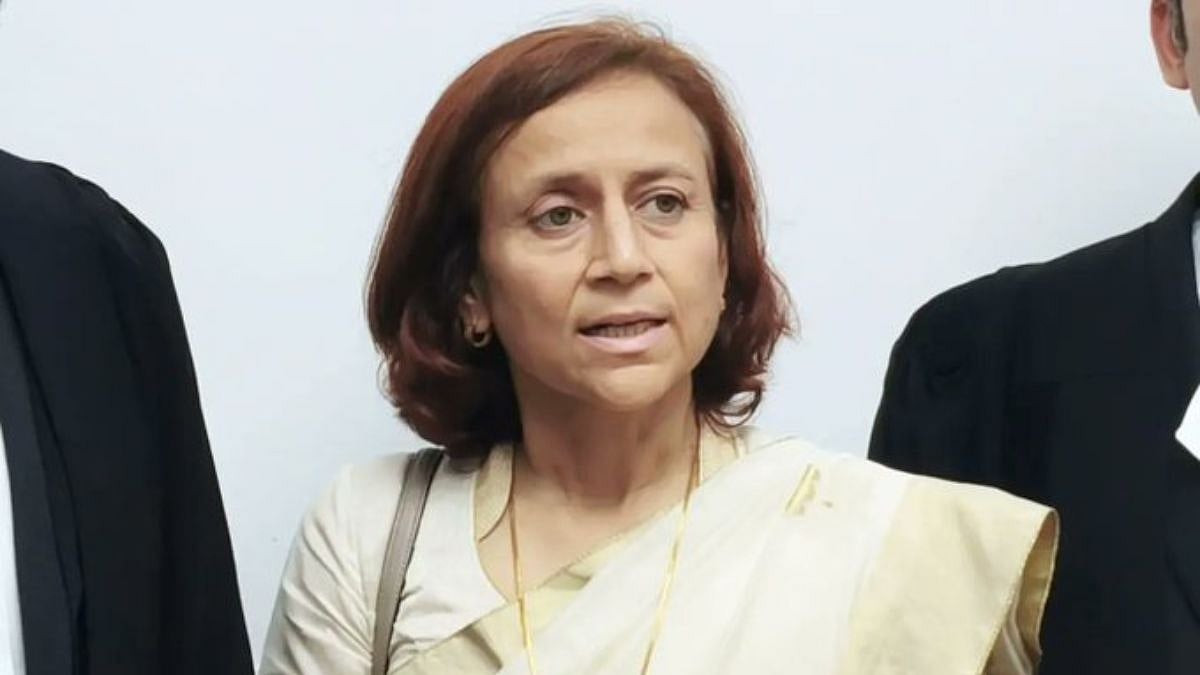
Gitanjali J Angmo, an educator and social entrepreneur, and wife of Sonam Wangchuk, has called for reforming the media before reforming the education system. She shared her views on social media, stating that the media has become a significant influencer in shaping public opinion, surpassing the role of teachers.
Angmo highlighted the impact of television studios, WhatsApp forwards, YouTube channels, and social media platforms on people's minds. She said that these platforms often teach people to hate, react without thinking, and choose narratives over truth. According to her, this has led to a partisan and narrow-minded society, where people are conditioned to follow political identities and ideological labels.
The educator emphasized that the media's influence is so profound that it has become a significant obstacle to educational reform. She argued that a nation fed propaganda every day cannot be truly educated, but only conditioned to think in a certain way. Angmo concluded by saying that reforming the media should be the first step towards any educational reform.
Angmo's comments come at a time when there are growing calls for educational reforms in India. The recent resignation of Dharmendra Pradhan has sparked a debate about the need for changes in the education system. However, Angmo's views suggest that the media's role in shaping public opinion and influencing people's minds should not be overlooked.
The media's influence on society is a well-known fact, and Angmo's comments highlight the need for responsible and unbiased reporting. The spread of misinformation and propaganda through social media and other platforms has become a significant concern in recent years. Angmo's call for media reform is a reminder that the media has a critical role to play in shaping public opinion and promoting critical thinking.
In the context of India's education system, Angmo's comments suggest that any reform efforts should take into account the media's influence on people's minds. This could involve promoting media literacy, encouraging critical thinking, and promoting responsible reporting practices. By addressing the media's influence, India can work towards creating a more informed and educated society.
The significance of Angmo's comments lies in their emphasis on the need for a holistic approach to educational reform. By recognizing the media's role in shaping public opinion, India can work towards creating a more nuanced and informed society. This, in turn, can have a positive impact on the country's education system and its overall development.
In conclusion, Gitanjali J Angmo's call for media reform before education reform is a timely reminder of the media's influence on society. Her comments highlight the need for responsible reporting, media literacy, and critical thinking. By addressing these issues, India can work towards creating a more informed and educated society, which is essential for the country's growth and development.
Frequently asked questions
Why does Gitanjali J Angmo think media reform is necessary?
Gitanjali J Angmo believes that the media has become a significant influencer in shaping public opinion, often teaching people to hate, react without thinking, and choose narratives over truth.
What is the impact of media on education?
According to Angmo, a nation fed propaganda every day cannot be truly educated, but only conditioned to think in a certain way.