Aravalis Definition: SC Panel Seeks 6 More Months
SC panel needs more time to define Aravalis, cannot use single criterion
'%3E%3Crect%20width%3D'96'%20height%3D'96'%20fill%3D'%23B3261E'%2F%3E%3Ccircle%20cx%3D'30'%20cy%3D'24'%20r%3D'44'%20fill%3D'%23fff'%20opacity%3D'.12'%2F%3E%3Ccircle%20cx%3D'60'%20cy%3D'74'%20r%3D'40'%20fill%3D'%23000'%20opacity%3D'.10'%2F%3E%3C%2Fg%3E%3Cg%20fill%3D'%23fff'%3E%3Crect%20x%3D'29'%20y%3D'49'%20width%3D'8'%20height%3D'19'%20rx%3D'1'%2F%3E%3Crect%20x%3D'39'%20y%3D'40'%20width%3D'9'%20height%3D'28'%20rx%3D'1'%2F%3E%3Crect%20x%3D'50'%20y%3D'45'%20width%3D'8'%20height%3D'23'%20rx%3D'1'%2F%3E%3Crect%20x%3D'60'%20y%3D'53'%20width%3D'7'%20height%3D'15'%20rx%3D'1'%2F%3E%3Crect%20x%3D'41'%20y%3D'34'%20width%3D'5'%20height%3D'6'%2F%3E%3C%2Fg%3E%3C%2Fsvg%3E)
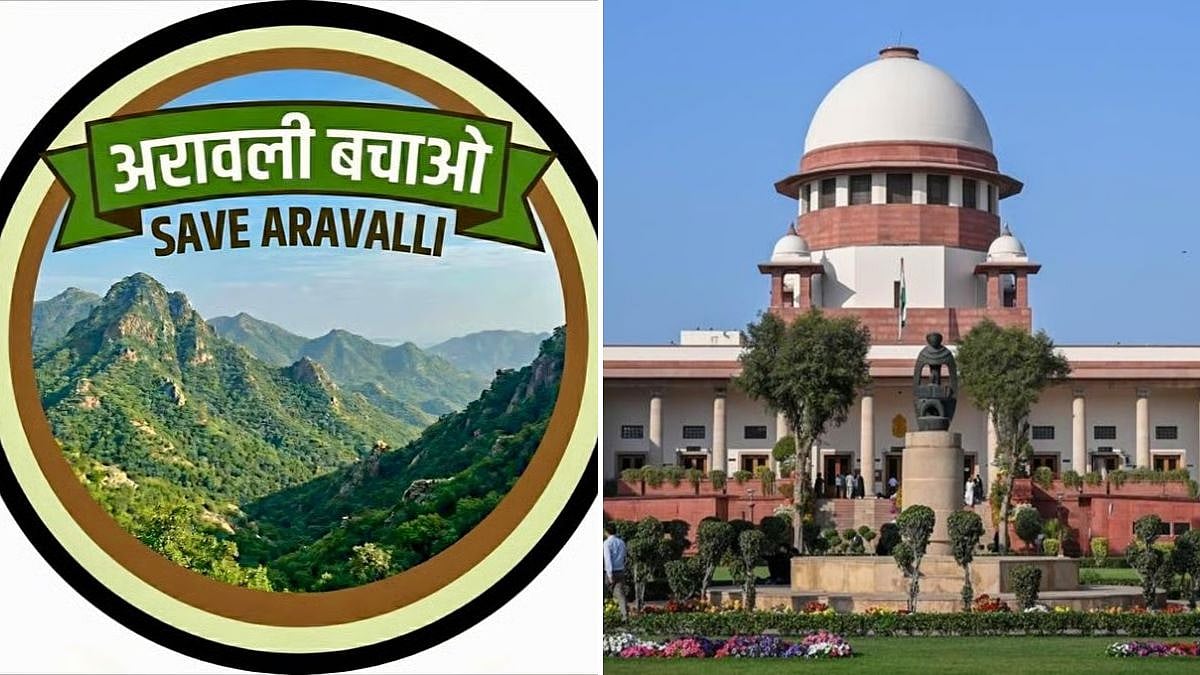
The Supreme Court-appointed high-powered committee (HPC) has stated that the Aravalis mountain range cannot be defined solely by its height or terrain. The panel has requested an additional six months to complete its work and submit its recommendations, with a new deadline of February 27.
The committee, led by Kanchan Devi, Director-General of the Indian Council of Forestry Research and Education, was originally tasked with submitting its report by August 31. However, the panel has found that the task requires a more comprehensive approach, including geospatial analysis, field validation, expert examination, and stakeholder consultations.
The HPC's assessment highlights the complexity of defining the Aravalis, which is a non-uniform mountain system in terms of geography and ecology. The committee's findings suggest that a rigid boundary cannot be drawn around the range using a single criterion, and that a more nuanced approach is needed to account for the relationships between the Aravalis' hills, forests, water systems, and other ecologically significant areas.
The HPC is considering an Aravali Ecosystem Landscape framework, which would assess the range as a comprehensive ecosystem rather than just a collection of hills and ridges. This approach will examine various aspects, including geological and geomorphological features, terrain, watersheds, hydrological systems, forests, biodiversity, and ecological connectivity.
The committee's work assumes significant importance, as a restrictive definition of the Aravalis could potentially exclude ecologically connected hills, forests, aquifers, and other landscapes from the protection framework. This could have far-reaching consequences, including making the Delhi-NCR region more vulnerable to dust storms.
The Supreme Court constituted the HPC in May 2026, after an Environment Ministry panel's definition of the Aravalis triggered widespread protests, particularly in Rajasthan. The earlier definition recognized only hills with an elevation of 100 meters or more as part of the Aravalis, which was stayed by the Supreme Court in December 2025.
The HPC's request for an extension is a testament to the complexity and importance of the task at hand. The committee's ultimate goal is to provide a comprehensive and meaningful definition of the Aravalis, one that takes into account the range's intricate relationships with its surrounding ecosystem.
The definition of the Aravalis has significant implications for the ecology of the northern plains and the Delhi-NCR region. A well-crafted definition could help protect the range's unique biodiversity and ecological features, while a restrictive definition could have devastating consequences.
In conclusion, the HPC's request for an extension is a necessary step towards providing a comprehensive and meaningful definition of the Aravalis. The committee's work will have far-reaching implications for the ecology of the northern plains and the Delhi-NCR region, and it is essential that the definition is crafted with care and attention to detail.
The Aravalis are a vital part of India's natural heritage, and their protection is essential for maintaining the country's ecological balance. The HPC's work is a crucial step towards ensuring the long-term conservation of the range and its surrounding ecosystem.
As the committee continues its work, it is essential that all stakeholders, including the government, civil society, and local communities, come together to support the effort. The definition of the Aravalis is a complex task that requires a collaborative and nuanced approach, and it is only through such an approach that we can ensure the long-term protection of this unique and vital ecosystem.
The Supreme Court's decision to constitute the HPC is a significant step towards protecting the Aravalis, and the committee's work will be closely watched by environmentalists, policymakers, and local communities. The outcome of the HPC's work will have far-reaching implications for the ecology of the northern plains and the Delhi-NCR region, and it is essential that the definition is crafted with care and attention to detail.
In the end, the definition of the Aravalis is not just a technical exercise, but a crucial step towards protecting India's natural heritage. The HPC's work is a vital part of this effort, and it is essential that we support and facilitate the committee's efforts to ensure the long-term conservation of the range and its surrounding ecosystem.
Frequently asked questions
What is the current status of the Aravalis definition?
The Supreme Court-appointed HPC has sought 6 more months to complete its work and submit its recommendations, with a new deadline of February 27.
Why is the definition of the Aravalis important?
A restrictive definition could potentially exclude ecologically connected hills, forests, aquifers, and other landscapes from the protection framework, making the Delhi-NCR region more vulnerable to dust storms.