RBI Governor Defends Early FCNR(B) Swap Window Closure
RBI Governor Sanjay Malhotra defends early closure, calls it a calibration. Move reflects changing market conditions.
'%3E%3Crect%20width%3D'96'%20height%3D'96'%20fill%3D'%230B6E4F'%2F%3E%3Ccircle%20cx%3D'30'%20cy%3D'24'%20r%3D'44'%20fill%3D'%23fff'%20opacity%3D'.12'%2F%3E%3Ccircle%20cx%3D'60'%20cy%3D'74'%20r%3D'40'%20fill%3D'%23000'%20opacity%3D'.10'%2F%3E%3C%2Fg%3E%3Cg%20fill%3D'none'%20stroke%3D'%23fff'%20stroke-width%3D'3.2'%20stroke-linecap%3D'round'%20stroke-linejoin%3D'round'%3E%3Cpolyline%20points%3D'31%2C59%2041%2C49%2049%2C54%2063%2C37'%2F%3E%3Cpolyline%20points%3D'55%2C37%2063%2C37%2063%2C45'%2F%3E%3C%2Fg%3E%3C%2Fsvg%3E)
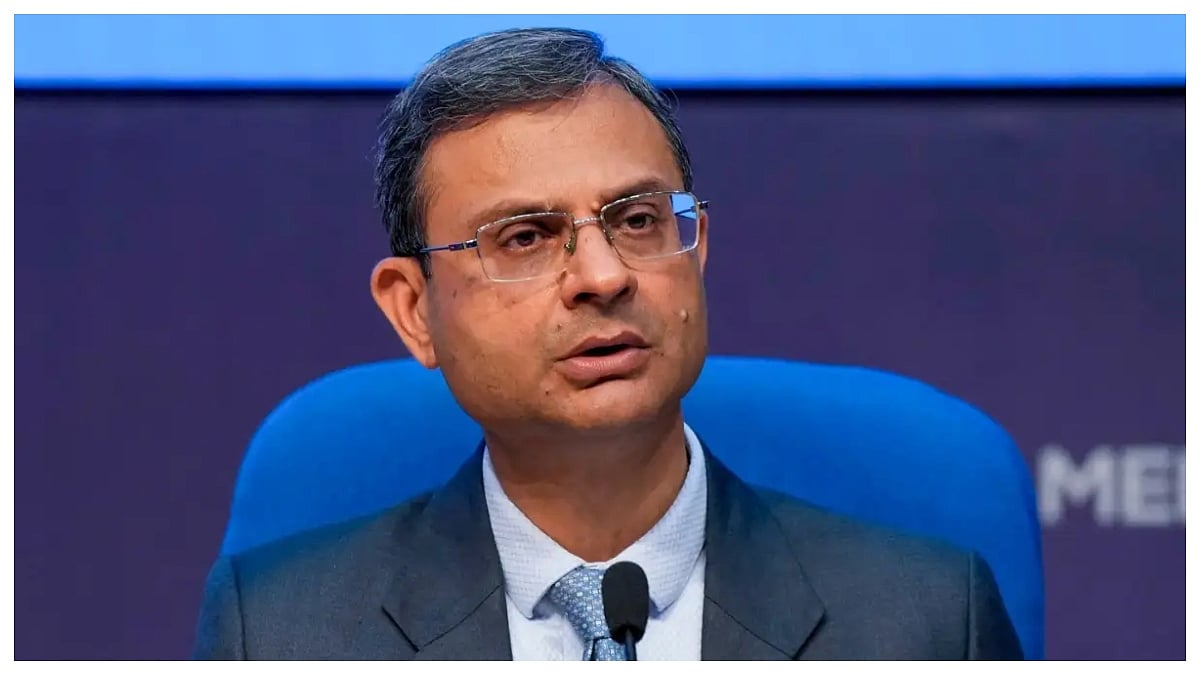
Reserve Bank of India (RBI) Governor Sanjay Malhotra has defended the central bank's decision to bring forward the closure of its special FCNR(B) swap window. The move, which was announced recently, reflects changing market conditions rather than a reversal in policy, according to Malhotra.
In an interview, Malhotra described the decision as well-thought-out, calibrated, prudent, and data-driven. He said the RBI's approach demonstrates its willingness to adjust policy in response to evolving economic and financial conditions.
The RBI has moved the deadline for banks to mobilise fresh Foreign Currency Non-Resident (Bank), or FCNR(B), deposits under the special facility to August 31, 2026, from the earlier September 30 deadline. As of August 13, banks had mobilised $52.3 billion through FCNR(B) deposits under the facility. Total inflows through the broader foreign exchange-related facilities stood at around $56.8 billion.
The early closure came after foreign currency inflows exceeded the RBI's initial expectations. The central bank expects its three related schemes—FCNR(B), external commercial borrowings (ECBs) and overseas foreign currency borrowings (OFCBs)—to attract at least $80 billion.
Malhotra said the strong inflows reflected India's robust macroeconomic fundamentals and could further strengthen the country's balance of payments. He also rejected criticism that the RBI had made a U-turn on its policy, saying that his earlier remarks had been taken out of context.
Malhotra had indicated after the August 5 Monetary Policy Committee meeting that there was no proposal to bring forward the FCNR(B) deadline. However, he had also said that the situation could change, and stakeholders would be informed if circumstances changed.
According to Malhotra, continuing the swap facility for longer would provide diminishing benefits as each additional dollar attracted through the scheme would offer less incremental value while increasing the cost of sterilising the resulting liquidity. He said banks and other stakeholders were given more than two weeks to prepare for the revised August 31 deadline.
The RBI's decision to close the FCNR(B) swap window early is a significant development in India's economic landscape. It reflects the central bank's efforts to manage the country's foreign exchange reserves and maintain economic stability.
The move is also expected to have implications for India's balance of payments and its macroeconomic fundamentals. With strong foreign currency inflows, India's balance of payments is likely to strengthen, which could have a positive impact on the country's economy.
In conclusion, the RBI's decision to close the FCNR(B) swap window early is a calibrated move that reflects changing market conditions. It demonstrates the central bank's willingness to adjust policy in response to evolving economic and financial conditions, and is expected to have a positive impact on India's economy.
The decision also highlights the importance of effective monetary policy management in maintaining economic stability. The RBI's efforts to manage the country's foreign exchange reserves and maintain economic stability are crucial in ensuring that India's economy continues to grow and develop.
Overall, the RBI's decision to close the FCNR(B) swap window early is a significant development that reflects the central bank's commitment to maintaining economic stability and promoting economic growth. It is expected to have a positive impact on India's economy and will be closely watched by economists and policymakers in the coming months.
Frequently asked questions
What is the new deadline for banks to mobilise FCNR(B) deposits?
The new deadline is August 31, 2026.
How much have banks mobilised through FCNR(B) deposits so far?
Banks have mobilised $52.3 billion through FCNR(B) deposits as of August 13.