India's Rivers Choke Under City Pollution
Rivers face sewage, erosion and development threats. Cities choke lifelines.
'%3E%3Crect%20width%3D'96'%20height%3D'96'%20fill%3D'%23B3261E'%2F%3E%3Ccircle%20cx%3D'30'%20cy%3D'24'%20r%3D'44'%20fill%3D'%23fff'%20opacity%3D'.12'%2F%3E%3Ccircle%20cx%3D'60'%20cy%3D'74'%20r%3D'40'%20fill%3D'%23000'%20opacity%3D'.10'%2F%3E%3C%2Fg%3E%3Cg%20fill%3D'%23fff'%3E%3Crect%20x%3D'29'%20y%3D'49'%20width%3D'8'%20height%3D'19'%20rx%3D'1'%2F%3E%3Crect%20x%3D'39'%20y%3D'40'%20width%3D'9'%20height%3D'28'%20rx%3D'1'%2F%3E%3Crect%20x%3D'50'%20y%3D'45'%20width%3D'8'%20height%3D'23'%20rx%3D'1'%2F%3E%3Crect%20x%3D'60'%20y%3D'53'%20width%3D'7'%20height%3D'15'%20rx%3D'1'%2F%3E%3Crect%20x%3D'41'%20y%3D'34'%20width%3D'5'%20height%3D'6'%2F%3E%3C%2Fg%3E%3C%2Fsvg%3E)
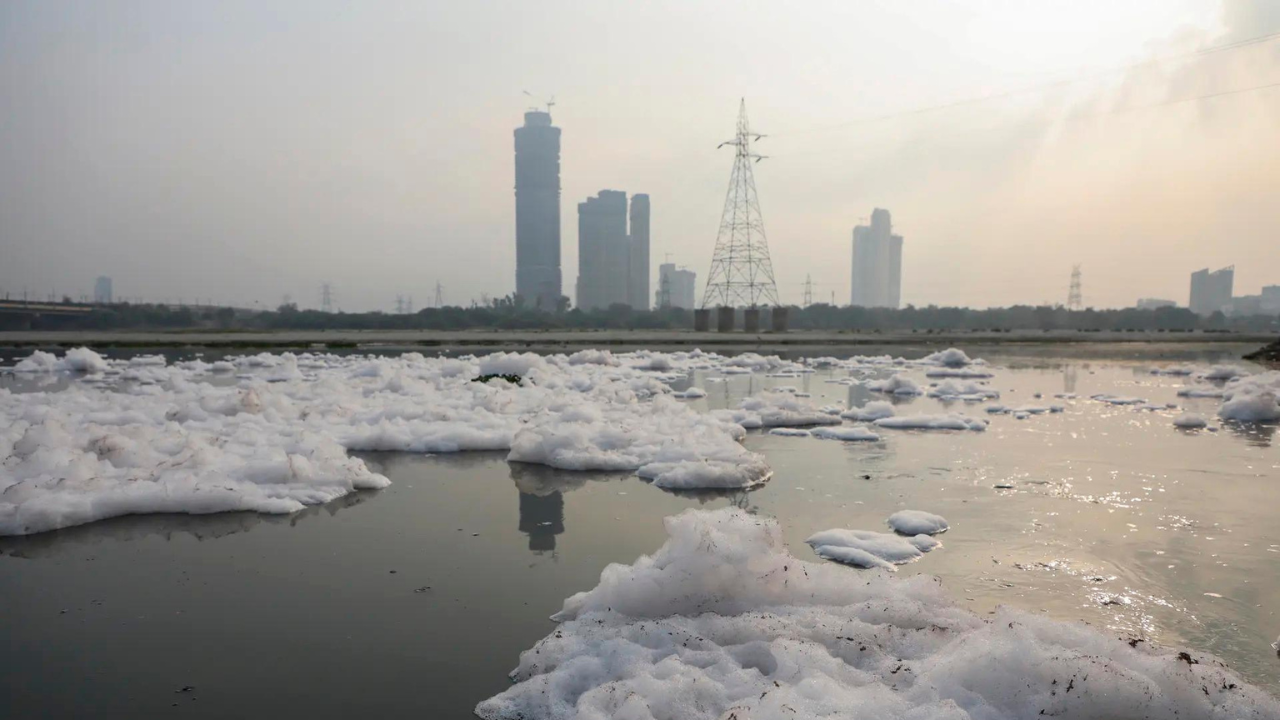
India's rapidly expanding cities are having a devastating impact on the country's rivers, with many waterways now carrying more sewage than freshwater. This not only harms the ecosystems that depend on these rivers but also affects the communities that rely on them for drinking water, fishing, and other essential needs.
The Brahmaputra river, for example, is facing severe erosion, while the Ganga is struggling to cope with the large amounts of industrial and ritual waste that are being dumped into it. The situation is further complicated by the fact that many cities are encroaching upon the rivers, reducing their width and flow.
Efforts to clean up these waterways are ongoing, but they face significant challenges from the ongoing pollution and development pressures. Protecting the floodplains of these rivers and managing the sewage that flows into them are crucial steps that must be taken if they are to survive.
The importance of rivers to India's ecosystem and economy cannot be overstated. They provide water for irrigation, drinking, and industry, and support a wide range of plant and animal life. However, the current rate of pollution and development is putting all of this at risk.
The need to protect India's rivers is not just an environmental issue, but also a social and economic one. The communities that depend on these rivers for their livelihoods are being severely impacted by the pollution and erosion that is occurring. It is essential that the government and other stakeholders take immediate action to address this issue and ensure the long-term survival of India's rivers.
One of the key steps that can be taken is to improve the management of sewage and industrial waste. This can be achieved through the construction of new treatment plants and the implementation of stricter regulations on pollution. Additionally, efforts must be made to protect the floodplains of these rivers and prevent further encroachment by cities.
The fate of India's rivers is a pressing concern that requires immediate attention. If action is not taken to address the issues of pollution and development, the consequences will be severe and long-lasting. It is essential that we take a proactive approach to protecting these vital waterways and ensure their survival for future generations.
In conclusion, the situation facing India's rivers is critical, and immediate action is needed to protect them. This requires a coordinated effort from the government, stakeholders, and the community to address the issues of pollution, development, and erosion. Only through collective action can we ensure the long-term survival of India's rivers and the ecosystems and communities that depend on them.
Frequently asked questions
What is the main threat to India's rivers?
The main threat to India's rivers is pollution from sewage and industrial waste.
Why are India's rivers important?
India's rivers are important because they provide water for irrigation, drinking, and industry, and support a wide range of plant and animal life.