Mumbai Hospital Completes 175 Paediatric Epilepsy Surgeries
Narayana Health SRCC Children's Hospital achieves milestone, aims for 200 surgeries soon.
'%3E%3Crect%20width%3D'96'%20height%3D'96'%20fill%3D'%23B3261E'%2F%3E%3Ccircle%20cx%3D'30'%20cy%3D'24'%20r%3D'44'%20fill%3D'%23fff'%20opacity%3D'.12'%2F%3E%3Ccircle%20cx%3D'60'%20cy%3D'74'%20r%3D'40'%20fill%3D'%23000'%20opacity%3D'.10'%2F%3E%3C%2Fg%3E%3Cg%20fill%3D'%23fff'%3E%3Crect%20x%3D'29'%20y%3D'49'%20width%3D'8'%20height%3D'19'%20rx%3D'1'%2F%3E%3Crect%20x%3D'39'%20y%3D'40'%20width%3D'9'%20height%3D'28'%20rx%3D'1'%2F%3E%3Crect%20x%3D'50'%20y%3D'45'%20width%3D'8'%20height%3D'23'%20rx%3D'1'%2F%3E%3Crect%20x%3D'60'%20y%3D'53'%20width%3D'7'%20height%3D'15'%20rx%3D'1'%2F%3E%3Crect%20x%3D'41'%20y%3D'34'%20width%3D'5'%20height%3D'6'%2F%3E%3C%2Fg%3E%3C%2Fsvg%3E)
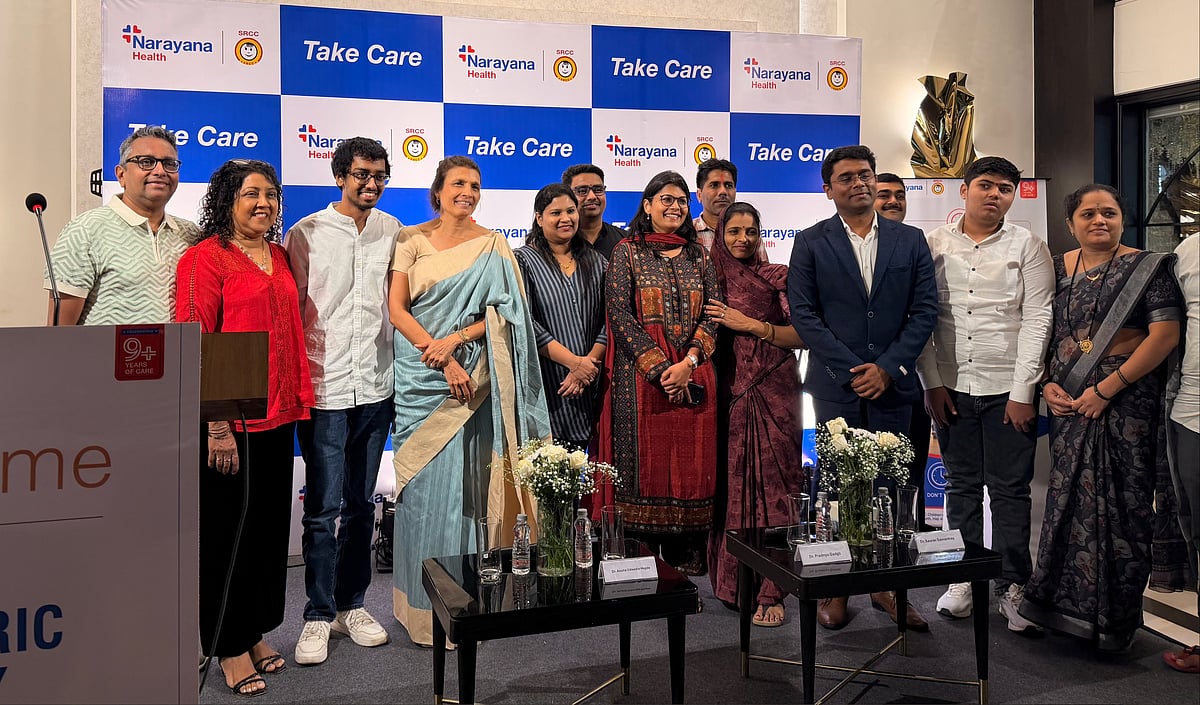
Narayana Health SRCC Children's Hospital in Mumbai has successfully completed over 175 paediatric epilepsy surgeries in the past 3.5 years. The hospital is now on track to cross the 200-surgery milestone, offering new hope to children living with drug-resistant epilepsy.
The hospital's dedicated complex paediatric epilepsy programme has achieved remarkable results, with 87% of children remaining seizure-free at a minimum one-year follow-up. This programme treats children whose seizures continue despite multiple medications and require highly specialised surgical intervention.
Epilepsy affects an estimated 0.8% of India's paediatric and adolescent population, with many cases developing during childhood. Around one-third of children with epilepsy are estimated to have drug-resistant epilepsy, which can significantly impact their quality of life. In India, it is estimated that 2-3 million people live with drug-resistant epilepsy, of whom around one million could potentially benefit from surgery.
However, only about two in every 1,000 eligible patients undergo epilepsy surgery, pointing to a significant treatment gap. Dr Anaita Udwadia Hegde, Head of Neurosciences, emphasized that complex paediatric epilepsy requires specialised infrastructure and a multidisciplinary team for accurate diagnosis and treatment.
The hospital's team of experts, including Dr Pradnya Gadgil, Head of the Complex Paediatric Epilepsy Programme, stress the importance of early identification of suitable surgical candidates. Uncontrolled seizures can affect both a child's safety and neurodevelopment, making timely intervention crucial.
The surgeries performed at the hospital include corpus callosotomy, hemispherectomy, and minimally invasive stereotactic radiofrequency ablation. Depending on the underlying condition, surgery may remove or disconnect the brain tissue responsible for seizures or substantially reduce the seizure burden.
In several cases, children have shown remarkable improvements after surgery. A six-year-old boy with daily drop attacks became seizure-free after corpus callosotomy, while a 10-year-old girl from Ratnagiri with extensive pre-birth brain damage and daily seizures underwent hemispherectomy and was seizure-free three months later.
Successful epilepsy surgery can extend beyond seizure control, with some children showing improvements in neurocognitive and developmental functioning after treatment. As the hospital continues to push the boundaries of medical care, it aims to provide new hope to children living with epilepsy and their families.
The achievement of 175 paediatric epilepsy surgeries is a significant milestone for Narayana Health SRCC Children's Hospital, and the team is committed to continuing their life-changing work. With their expertise and dedication, they hope to cross the 200-surgery milestone soon, bringing relief and new opportunities to many more children in need.
In the context of India's healthcare landscape, the work of Narayana Health SRCC Children's Hospital highlights the importance of specialised care and timely intervention in the treatment of complex paediatric epilepsy. As the hospital continues to innovate and expand its services, it is likely to have a significant impact on the lives of children and families affected by this condition.
In conclusion, the completion of 175 paediatric epilepsy surgeries by Narayana Health SRCC Children's Hospital is a testament to the hospital's commitment to providing world-class medical care to children in need. As the hospital strives to cross the 200-surgery milestone, it is likely to bring new hope and opportunities to many more children living with epilepsy.
Frequently asked questions
What is the success rate of paediatric epilepsy surgery at Narayana Health SRCC Children's Hospital?
87% of children remain seizure-free at a minimum one-year follow-up
How many people in India are estimated to live with drug-resistant epilepsy?
2-3 million people, with around one million potentially benefiting from surgery