US Attack On Iran's Submarine Facility May Alter Naval Warfare
A US attack on Iran's submarine repair facility could change naval warfare. Unmanned systems are becoming increasingly complex.
'%3E%3Crect%20width%3D'96'%20height%3D'96'%20fill%3D'%234A235A'%2F%3E%3Ccircle%20cx%3D'30'%20cy%3D'24'%20r%3D'44'%20fill%3D'%23fff'%20opacity%3D'.12'%2F%3E%3Ccircle%20cx%3D'60'%20cy%3D'74'%20r%3D'40'%20fill%3D'%23000'%20opacity%3D'.10'%2F%3E%3C%2Fg%3E%3Cg%20fill%3D'none'%20stroke%3D'%23fff'%20stroke-width%3D'3'%3E%3Ccircle%20cx%3D'48'%20cy%3D'48'%20r%3D'16'%2F%3E%3Cellipse%20cx%3D'48'%20cy%3D'48'%20rx%3D'6.5'%20ry%3D'16'%2F%3E%3Cline%20x1%3D'32'%20y1%3D'42'%20x2%3D'64'%20y2%3D'42'%2F%3E%3Cline%20x1%3D'32'%20y1%3D'54'%20x2%3D'64'%20y2%3D'54'%2F%3E%3C%2Fg%3E%3C%2Fsvg%3E)
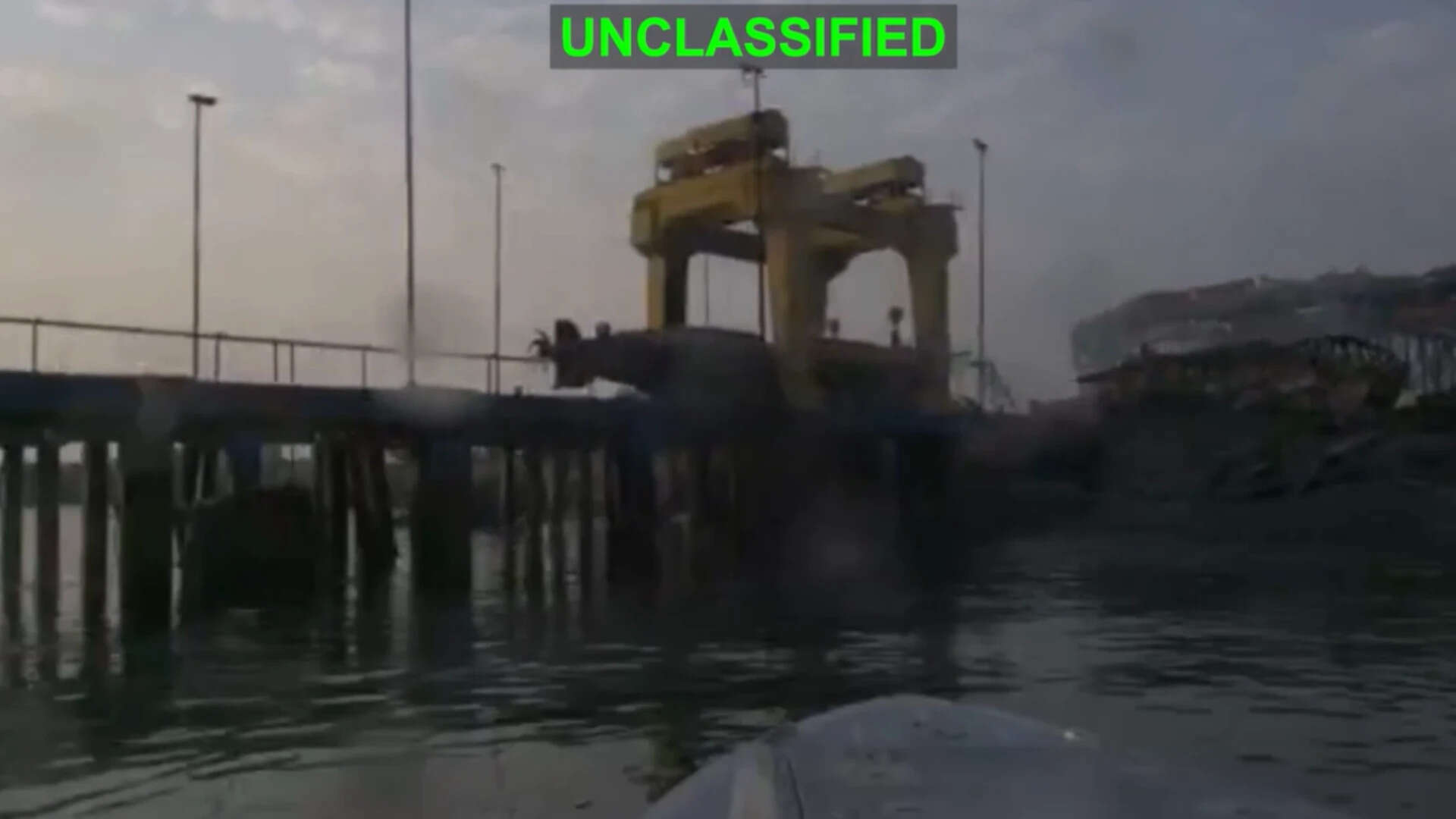
A recent attack by the United States on Iran's submarine repair facility has the potential to significantly alter the landscape of naval warfare. This development is part of a broader trend of increasing reliance on unmanned systems in modern conflict.
The use of unmanned systems, such as drones and autonomous vessels, is becoming more prevalent in military operations around the world. For example, Iran has been using drones to launch attacks on its neighbours, often bypassing expensive air defence systems.
In response to these developments, the United States has been exploring the use of unmanned systems in an offensive role. The US has used Corsair Unmanned Surface Vessels in attacks against Iran, demonstrating the potential of these systems in naval warfare.
Other countries, such as Ukraine, have also been using unmanned systems extensively in the Black Sea. The Ukrainians have found that these systems can be highly effective in a variety of roles, from reconnaissance to combat.
The increasing use of unmanned systems is fundamentally changing the face of modern conflict. These systems are often cheaper and more flexible than traditional manned systems, making them an attractive option for militaries around the world.
As the use of unmanned systems continues to grow, it is likely that we will see significant changes in the way that naval warfare is conducted. The attack on Iran's submarine repair facility may be just the beginning of a new era in naval warfare, one in which unmanned systems play a major role.
The implications of this shift are still unclear, but it is likely that it will have significant effects on the balance of power in regions such as the Middle East and the Black Sea. As countries continue to develop and deploy unmanned systems, we can expect to see new forms of conflict emerge, ones that are characterized by the use of autonomous and unmanned technologies.
In the end, the attack on Iran's submarine repair facility may be seen as a turning point in the development of naval warfare, one that marks the beginning of a new era in which unmanned systems play a dominant role.
The use of unmanned systems in naval warfare is a trend that is likely to continue, with significant implications for the future of conflict. As militaries around the world continue to develop and deploy these systems, we can expect to see significant changes in the way that wars are fought and won.