BRICS Nations Adopt 'Bhopal Declaration' On Cultural Cooperation
BRICS Cultural Conference concludes, nations commit to cultural heritage preservation and cooperation.
'%3E%3Crect%20width%3D'96'%20height%3D'96'%20fill%3D'%231A5276'%2F%3E%3Ccircle%20cx%3D'30'%20cy%3D'24'%20r%3D'44'%20fill%3D'%23fff'%20opacity%3D'.12'%2F%3E%3Ccircle%20cx%3D'60'%20cy%3D'74'%20r%3D'40'%20fill%3D'%23000'%20opacity%3D'.10'%2F%3E%3C%2Fg%3E%3Cg%20fill%3D'%23fff'%3E%3Cpath%20d%3D'M31%2041%20L48%2031%20L65%2041%20Z'%2F%3E%3Crect%20x%3D'33'%20y%3D'43'%20width%3D'4'%20height%3D'17'%2F%3E%3Crect%20x%3D'41'%20y%3D'43'%20width%3D'4'%20height%3D'17'%2F%3E%3Crect%20x%3D'51'%20y%3D'43'%20width%3D'4'%20height%3D'17'%2F%3E%3Crect%20x%3D'59'%20y%3D'43'%20width%3D'4'%20height%3D'17'%2F%3E%3Crect%20x%3D'30'%20y%3D'62'%20width%3D'36'%20height%3D'4'%20rx%3D'1'%2F%3E%3C%2Fg%3E%3C%2Fsvg%3E)
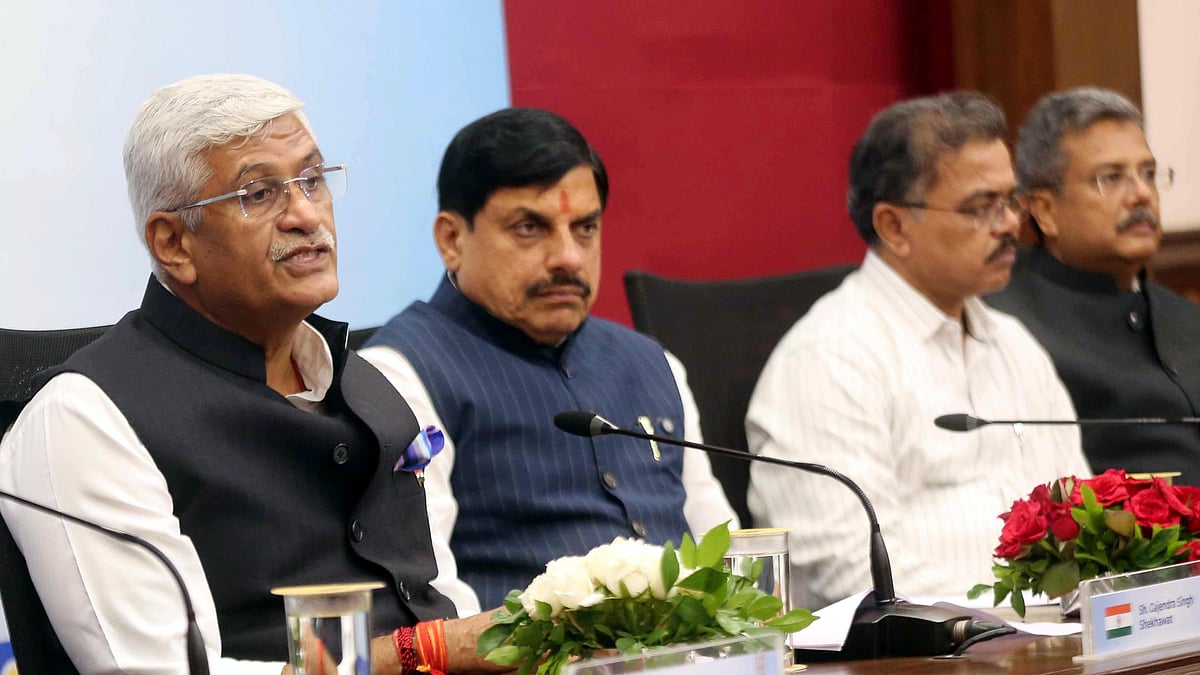
The 11th BRICS Cultural Conference concluded in Bhopal, Madhya Pradesh, with the adoption of the 'Bhopal Declaration' on Saturday. The four-day summit brought together 55 delegates from 14 countries to discuss cultural cooperation and exchange among BRICS nations.
The 'Bhopal Declaration' aims to reinforce the institutional framework of BRICS cultural cooperation, providing a comprehensive roadmap for both contemporary and traditional domains. A key focus area is collaboration within the creative economy, including exchanging best practices, supporting creators, and utilising digital platforms to broaden market access.
The declaration commits member nations to cooperative efforts under UNESCO multinational nomination processes to enhance the recognition and preservation of shared cultural heritage. It also targets provenance research and asset recovery as key priority areas, exploring potential applications of artificial intelligence-driven tracing tools.
In addition, the declaration underscores the importance of safeguarding traditional knowledge systems and intergenerational cultural expressions. Institutional partnerships among museums, libraries, and archives will be expanded, particularly regarding documentary heritage, digitisation, and conservation expertise.
As a key practical initiative under the BRICS Culture Track, India announced a pilot project to create a Voluntary Artist Registry. This project aims to provide a platform for artists to showcase their work and connect with other artists and organizations.
The summit was attended by Union minister Gajendra Singh Shekhawat, who addressed a press conference and highlighted the main objectives of the 'Bhopal Declaration'. Chief Minister Mohan Yadav also attended the summit and stated that hosting the conference was a matter of immense pride and honour for the entire state.
The BRICS Cultural Conference was centered around the theme of Resilience, Innovation, and Sustainability, and it provided a platform for nations to discuss and cooperate on cultural issues. The adoption of the 'Bhopal Declaration' marks a significant outcome of the summit, and it is expected to strengthen cultural cooperation among BRICS nations.
The 'Bhopal Declaration' is a significant step towards preserving and promoting cultural heritage among BRICS nations. It demonstrates the commitment of member nations to cooperate and work together to address common challenges and opportunities in the cultural sector.
In the context of India's cultural landscape, the 'Bhopal Declaration' is a welcome development. It is expected to provide new opportunities for Indian artists, cultural institutions, and organizations to engage with their counterparts in other BRICS nations.
Overall, the adoption of the 'Bhopal Declaration' is a positive development for cultural cooperation among BRICS nations. It is expected to have a significant impact on the cultural sector, and it demonstrates the commitment of member nations to work together to promote and preserve cultural heritage.
The significance of the 'Bhopal Declaration' lies in its potential to strengthen cultural cooperation among BRICS nations. It provides a framework for nations to work together to address common challenges and opportunities in the cultural sector, and it is expected to have a positive impact on the cultural landscape of member nations.
In conclusion, the 11th BRICS Cultural Conference was a significant event that marked a new chapter in cultural cooperation among BRICS nations. The adoption of the 'Bhopal Declaration' is a major outcome of the summit, and it is expected to have a lasting impact on the cultural sector.
The 'Bhopal Declaration' is a testament to the commitment of BRICS nations to cooperate and work together to promote and preserve cultural heritage. It is a significant step towards strengthening cultural cooperation among member nations, and it is expected to provide new opportunities for artists, cultural institutions, and organizations to engage with each other.
The declaration is also expected to have a positive impact on the tourism, handicrafts, and folk arts sectors in Madhya Pradesh. The state's cultural partnership with other BRICS nations is expected to deepen, and its tourism and handicrafts sectors are expected to gain a new identity at the international level.
In the long run, the 'Bhopal Declaration' is expected to contribute to the growth and development of the cultural sector in BRICS nations. It is expected to provide a framework for nations to work together to address common challenges and opportunities, and it is expected to have a positive impact on the cultural landscape of member nations.
The adoption of the 'Bhopal Declaration' is a significant development for India, as it is expected to provide new opportunities for Indian artists, cultural institutions, and organizations to engage with their counterparts in other BRICS nations. It is also expected to contribute to the growth and development of the cultural sector in India, and it is expected to have a positive impact on the country's cultural landscape.
In terms of its significance for Mumbai, the 'Bhopal Declaration' is expected to have a positive impact on the city's cultural sector. Mumbai is a major cultural hub in India, and it is expected to benefit from the increased cooperation and exchange among BRICS nations. The declaration is expected to provide new opportunities for artists, cultural institutions, and organizations in Mumbai to engage with their counterparts in other BRICS nations, and it is expected to contribute to the growth and development of the city's cultural sector.
Overall, the 'Bhopal Declaration' is a significant development for cultural cooperation among BRICS nations. It is expected to have a positive impact on the cultural sector, and it demonstrates the commitment of member nations to work together to promote and preserve cultural heritage.
The declaration is a major outcome of the 11th BRICS Cultural Conference, and it is expected to have a lasting impact on the cultural landscape of member nations. It provides a framework for nations to work together to address common challenges and opportunities in the cultural sector, and it is expected to contribute to the growth and development of the cultural sector in BRICS nations.
In conclusion, the adoption of the 'Bhopal Declaration' is a positive development for cultural cooperation among BRICS nations. It is expected to have a significant impact on the cultural sector, and it demonstrates the commitment of member nations to work together to promote and preserve cultural heritage.
What it means for Mumbai and India is that the 'Bhopal Declaration' is expected to provide new opportunities for artists, cultural institutions, and organizations to engage with their counterparts in other BRICS nations. It is expected to contribute to the growth and development of the cultural sector in India, and it is expected to have a positive impact on the country's cultural landscape.
The 'Bhopal Declaration' is a significant step towards strengthening cultural cooperation among BRICS nations, and it is expected to have a lasting impact on the cultural sector. It provides a framework for nations to work together to address common challenges and opportunities, and it is expected to contribute to the growth and development of the cultural sector in member nations.
In the end, the adoption of the 'Bhopal Declaration' is a major outcome of the 11th BRICS Cultural Conference, and it is expected to have a significant impact on the cultural sector. It demonstrates the commitment of BRICS nations to cooperate and work together to promote and preserve cultural heritage, and it is expected to provide new opportunities for artists, cultural institutions, and organizations to engage with each other.
Frequently asked questions
What is the 'Bhopal Declaration'?
The 'Bhopal Declaration' is a commitment by BRICS nations to cooperate and work together to promote and preserve cultural heritage.
What are the key areas of focus in the 'Bhopal Declaration'?
The key areas of focus include collaboration within the creative economy, preservation of cultural heritage, and cooperation in provenance research and asset recovery.