SC Overturns BCI Orders On Nalsar Row
SC rules on BCI's power, Nalsar row resolved. SC says BCI has no power over students.
'%3E%3Crect%20width%3D'96'%20height%3D'96'%20fill%3D'%231A5276'%2F%3E%3Ccircle%20cx%3D'30'%20cy%3D'24'%20r%3D'44'%20fill%3D'%23fff'%20opacity%3D'.12'%2F%3E%3Ccircle%20cx%3D'60'%20cy%3D'74'%20r%3D'40'%20fill%3D'%23000'%20opacity%3D'.10'%2F%3E%3C%2Fg%3E%3Cg%20fill%3D'%23fff'%3E%3Cpath%20d%3D'M31%2041%20L48%2031%20L65%2041%20Z'%2F%3E%3Crect%20x%3D'33'%20y%3D'43'%20width%3D'4'%20height%3D'17'%2F%3E%3Crect%20x%3D'41'%20y%3D'43'%20width%3D'4'%20height%3D'17'%2F%3E%3Crect%20x%3D'51'%20y%3D'43'%20width%3D'4'%20height%3D'17'%2F%3E%3Crect%20x%3D'59'%20y%3D'43'%20width%3D'4'%20height%3D'17'%2F%3E%3Crect%20x%3D'30'%20y%3D'62'%20width%3D'36'%20height%3D'4'%20rx%3D'1'%2F%3E%3C%2Fg%3E%3C%2Fsvg%3E)
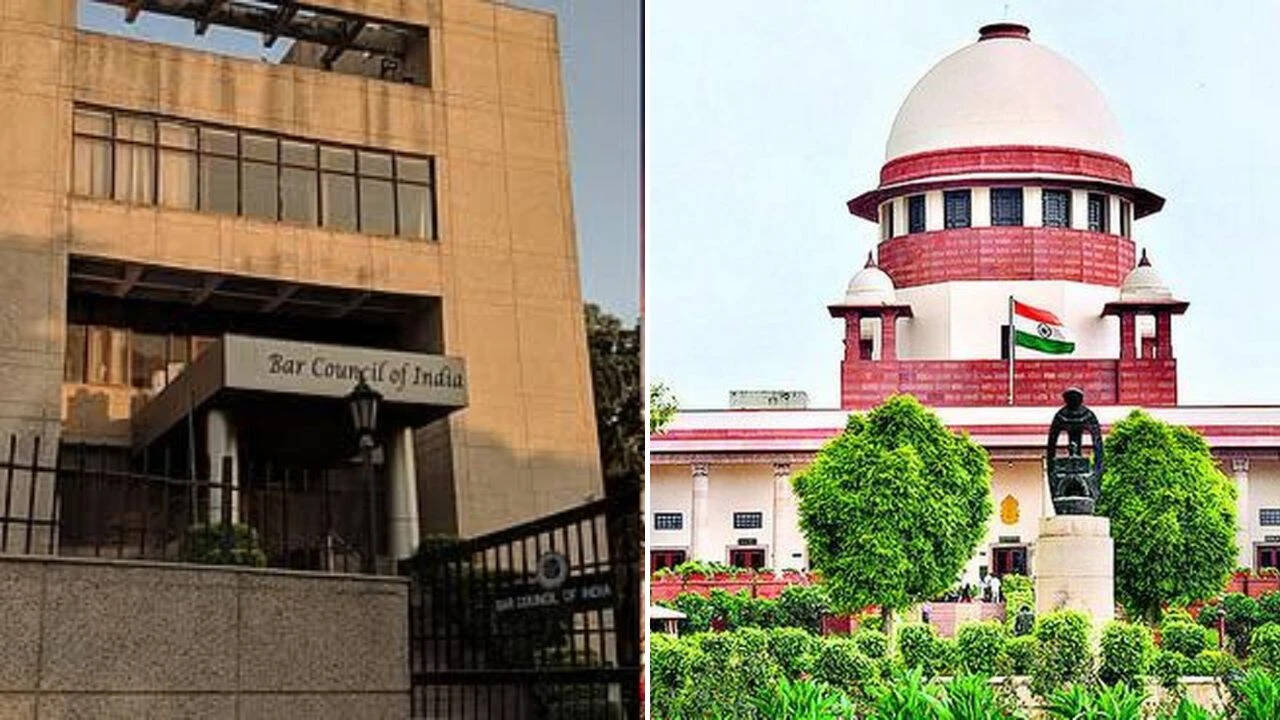
The Supreme Court has struck down the orders of the Bar Council of India (BCI) in the Nalsar row, stating that the BCI has no power to regulate students. This decision comes after a prolonged dispute between the BCI and the Nalsar University of Law, Hyderabad.
The BCI had issued orders regarding the university, which were challenged in the Supreme Court. The court's ruling has clarified the BCI's role and its limitations in regulating law students. The BCI is the primary regulatory body for legal education and the legal profession in India.
The Nalsar University of Law is a premier institution for legal education in India. The dispute between the BCI and the university had been ongoing, with the BCI attempting to exercise its regulatory powers over the university. However, the Supreme Court's decision has established that the BCI's powers do not extend to regulating students.
The BCI's primary function is to regulate the legal profession and ensure that law schools meet certain standards. However, the court's ruling has made it clear that the BCI does not have the authority to regulate students or interfere with the internal affairs of universities.
This decision is significant as it clarifies the role of the BCI and its limitations. It also ensures that universities have the autonomy to manage their internal affairs without undue interference from regulatory bodies. The ruling is expected to have implications for law schools and universities across the country.
The Supreme Court's decision has been welcomed by the Nalsar University of Law and other institutions, which had been affected by the BCI's orders. The decision is seen as a victory for academic autonomy and the freedom of universities to manage their own affairs.
In the context of legal education in India, this decision is crucial. It ensures that universities can focus on providing quality education without being subject to unnecessary regulatory interference. The decision also highlights the importance of autonomy in academic institutions and the need for regulatory bodies to respect this autonomy.
The implications of this decision will be far-reaching, and it is expected to have a significant impact on the legal education sector in India. The Supreme Court's ruling has provided clarity on the role of the BCI and its limitations, and it is expected to promote academic autonomy and excellence in legal education.
In conclusion, the Supreme Court's decision to strike down the BCI's orders in the Nalsar row is a significant development in the field of legal education. It clarifies the BCI's role and its limitations, ensuring that universities have the autonomy to manage their internal affairs without undue interference. This decision is expected to have a positive impact on the legal education sector in India, promoting academic autonomy and excellence.
Frequently asked questions
What was the Nalsar row about?
The Nalsar row was a dispute between the Bar Council of India (BCI) and the Nalsar University of Law, Hyderabad, regarding the BCI's regulatory powers over the university.
What was the Supreme Court's decision?
The Supreme Court struck down the BCI's orders, stating that the BCI has no power to regulate students.